
The principle of diffusion watering, simply explained
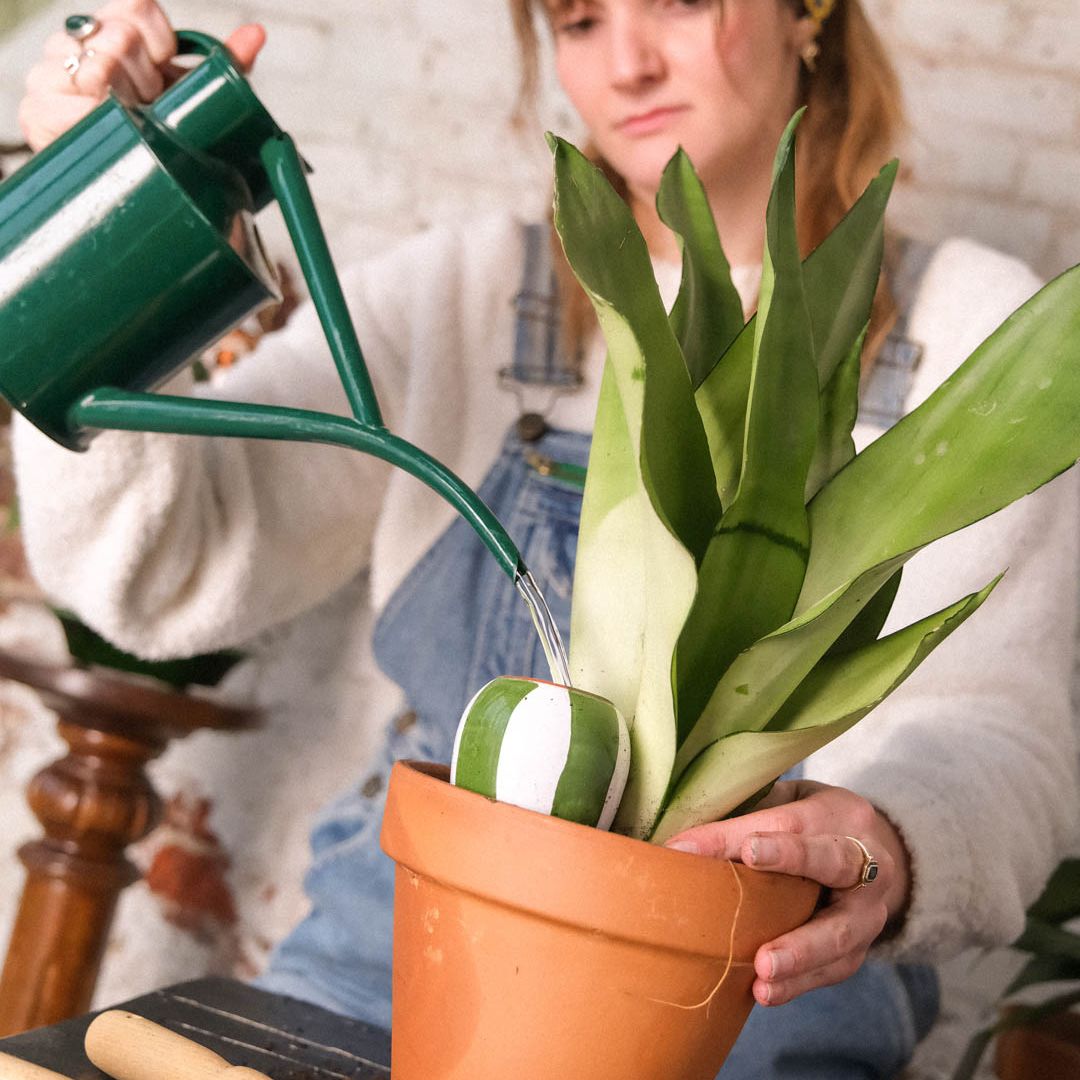
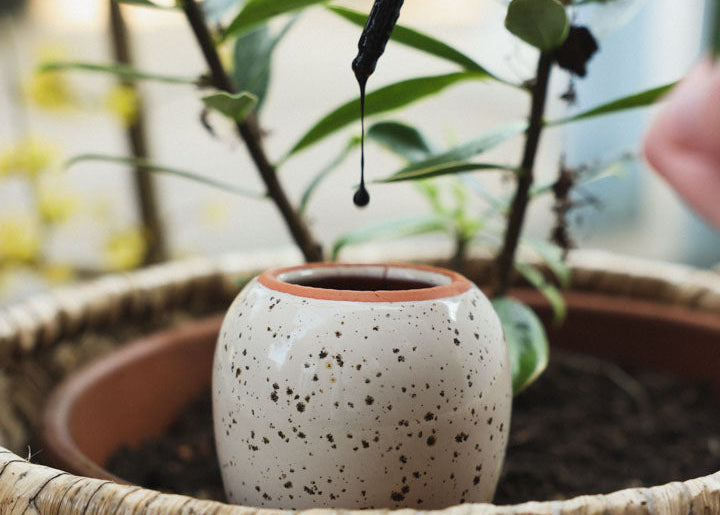
Imagine a water-soaked sponge resting on dry soil. Gently, without force, it releases its moisture into the surrounding earth. That's exactly how an olla works. This small terracotta reservoir, which you can discover through our selection of ollas, is based on a physical principle of elegant simplicity: the natural microporosity of terracotta.
In practice, thousands of micro-pores invisible to the naked eye run through the wall. Water escapes by capillary action, literally drawn in by the dry substrate surrounding the olla. And here's the fascinating part: it's not a constant flow. olla watering responds to the actual needs of your plants. When the roots absorb moisture from around the reservoir, suction increases and water passes through the wall. When the soil is sufficiently moist, diffusion slows down on its own.
This oya system for watering plants is nothing new. Traces of it have been found going back over 2,000 years in China, India, North Africa and Latin America. Modernity is simply rediscovering an ancestral technique that generations of farmers had already proven. Sometimes, the best innovations are the ones we've forgotten.
What the studies really say about water savings
So, are oyas effective beyond the pretty concept? The figures speak for themselves, and they're rather impressive.
The research of David Bainbridge, published in 2001 in the Arid Lands Newsletter under the title Buried Clay Pot Irrigation, is an essential reference. His work demonstrates water savings of between 50% and 70% compared to conventional surface watering. In France, teams from CIRAD and INRAE have confirmed these figures in Mediterranean and tropical contexts.
Why such a difference? When you water with a watering can, a good portion of the water evaporates before it even reaches the roots. Run-off carries the rest to the edges of the pot. And when you overwater, the excess water stagnates at the bottom and causes root rot. The olla eliminates all three problems at once: water is diffused beneath the surface, directly into the root zone, and only in the quantity that is actually absorbed.
Let's be honest: these results vary. The type of soil, the quality of the terracotta, the climate and the species being grown all influence actual water savings. Think of these figures as a reliable range, not a cast-iron guarantee. But even at the lower end of the range, the savings are still remarkable.
The impact on root health: why your plants prefer it
You know what? Roots are smarter than we give them credit for. They are naturally hydrotropic, meaning they grow towards moisture. Place an olla in a pot, and you'll see the roots gradually migrate towards this stable water source. The result: a denser, deeper, better-anchored root system.
Compare this with conventional top watering. Water flows down by gravity, wets the surface and then quickly seeps in. The roots then tend to stay clustered near the surface, where moisture is most fleeting. They become vulnerable to heat spikes, forgotten waterings, and sudden temperature changes. In short, they live in instability.
Autonomous plant watering with an olla completely changes this dynamic. Moisture remains constant and even around the reservoir, without the stressful cycles between waterlogged and dried-out soil. Agronomists specialising in subsurface irrigation (notably in work on subsurface irrigation) confirm that this regularity promotes healthier growth and better resistance to water stress. For your indoor potted plants, where the volume of substrate is limited, this is a considerable advantage. The oya gives your plants water at their own pace, not yours.
The honest limitations of the method (and how to work around them)
We're not going to oversell the concept. Like any system, the olla has its limitations, and you deserve to know them before you take the plunge.
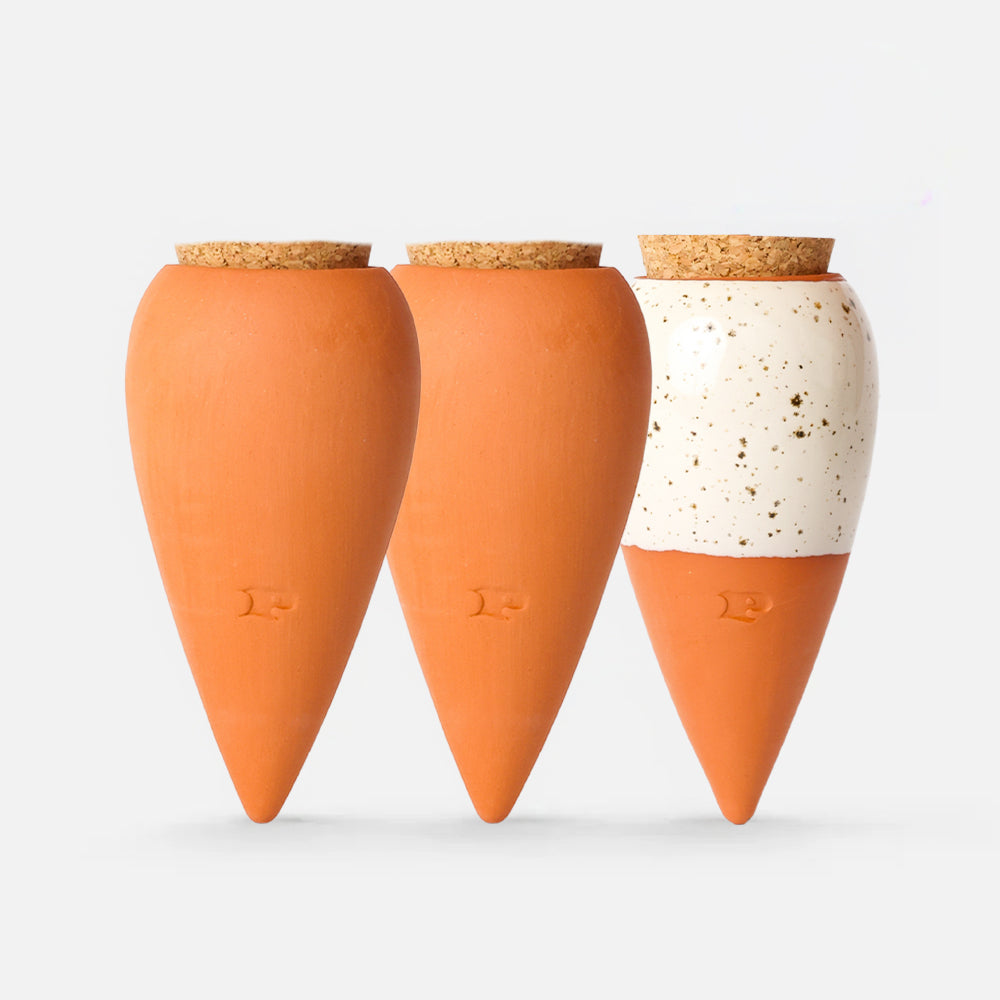
First reality: not all ollas are created equal. The quality of the terracotta, its thickness, and its actual porosity vary from one maker to another. An industrial, glazed or overly dense olla will diffuse poorly, if at all. Always opt for untreated, handmade terracotta.
Second point: in the height of summer or in a very warm room, a small olla can empty in two to three days instead of a week. That's not a flaw — it's logical: the plant consumes more, so the olla empties faster. The solution? Match the size of the reservoir to the volume of your pot and keep an eye on the level during the first few weeks to find your rhythm.
Choosing the right olla for your houseplants
Convinced by the principle? Now it's time to choose the right olla — and it's not just about size.
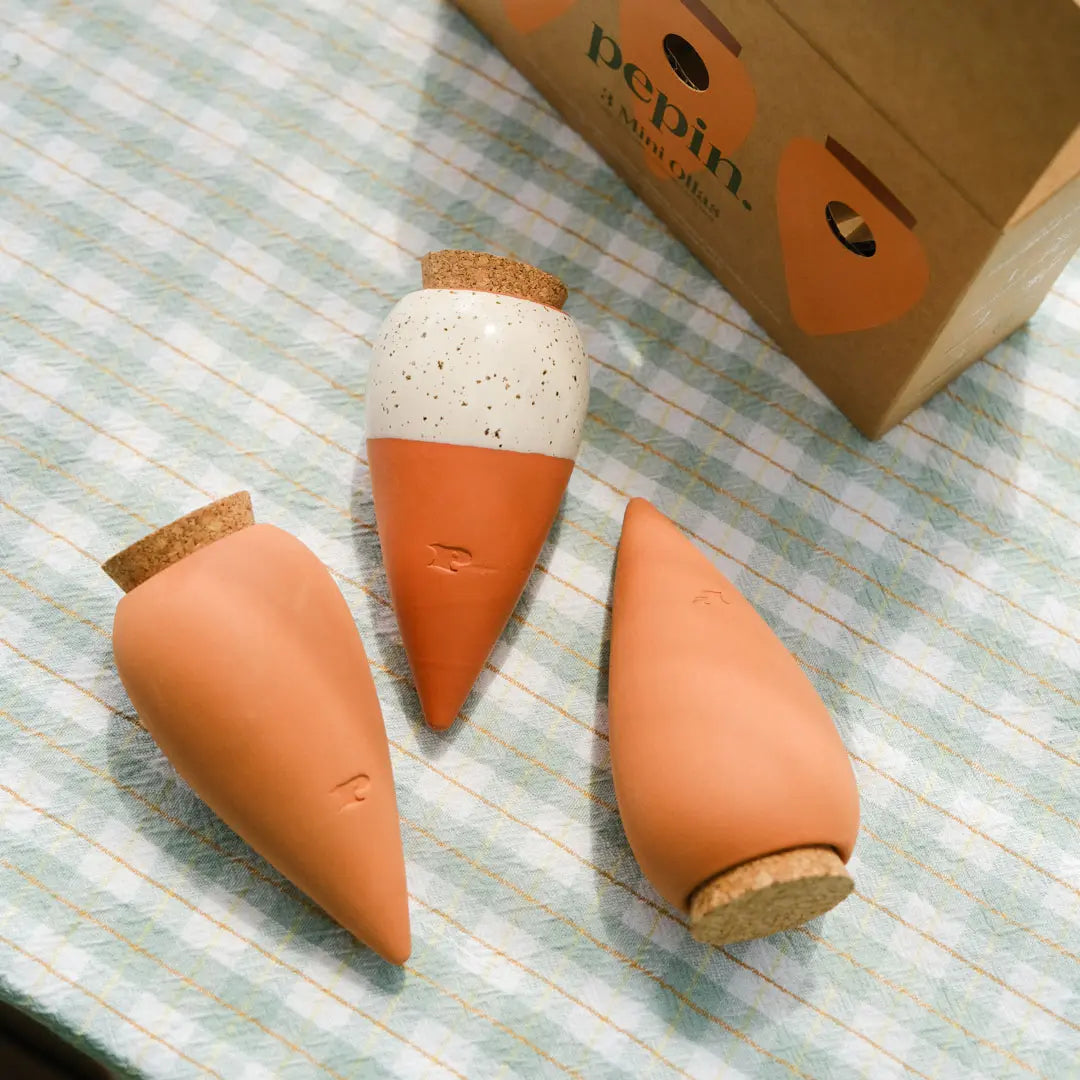
The basic rule: your olla should represent around 10 to 15% of the total volume of the substrate. For a pot with a diameter under 15 cm, a mini olla is enough. For a pot with a diameter over 15 cm, you'll need a standard olla.
The quality of the terracotta is key. A handmade olla offers optimal natural porosity. Industrial versions or those fired at too high a temperature lose this diffusion capacity. That's the difference between a system that truly works and a pretty decorative pot that does nothing.
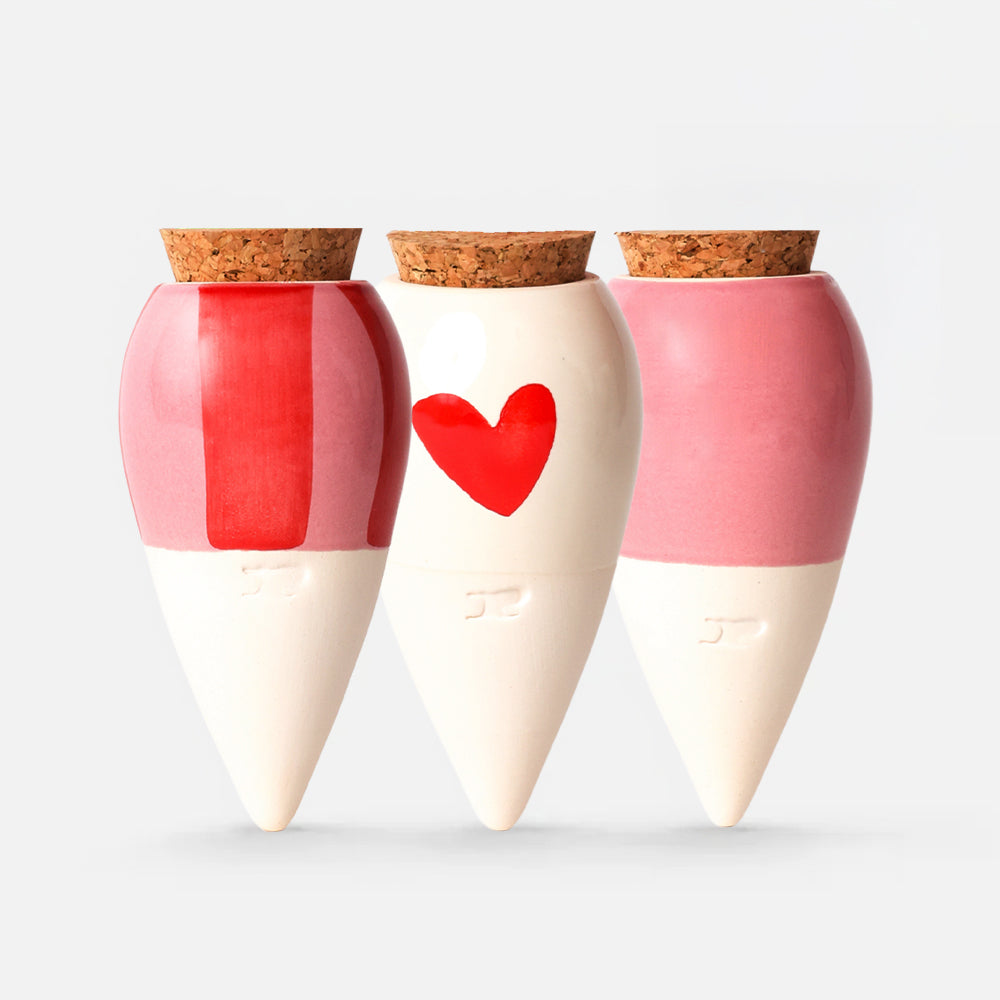
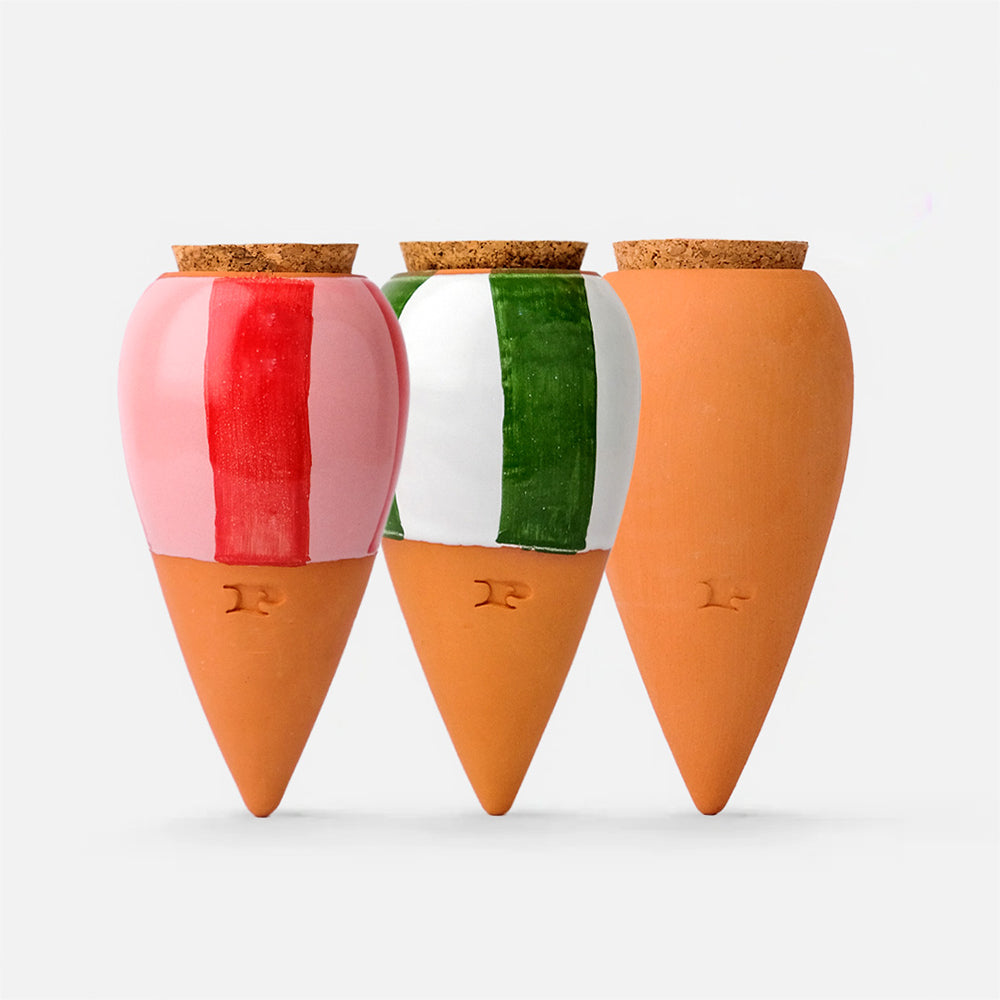
And then there's aesthetics — because an olla remains visible in your pot. It may as well be beautiful. That's the whole point of autonomous plant watering that also doubles as an intentional decorative object.
The essential: microporous, handmade terracotta, sized to suit the volume of your pot.
Frequently asked questions about oyas and diffusion watering
Are oyas effective?
Yes, and it's backed by science. Studies, notably those of Bainbridge (2001) and French agronomic research centres, show water savings of 50 to 70% compared to surface watering. Results vary depending on soil type, climate and the plant being grown, but the overall effectiveness of the system is solidly documented. For most houseplants, it's a reliable and proven solution.
What is an olla for?
An olla is a microporous terracotta water diffuser that is planted directly into the substrate. Filled with water, it releases it slowly through its porous walls, in response to the plant's actual needs. It keeps moisture constant without daily manual watering, making it an ideal tool for people who forget to water or who are away regularly.
What kind of pottery is used to water plants?
It's a microporous terracotta pottery that is neither glazed nor varnished. It's called "olla" (the Spanish and international term) or "oya" in its Anglicised form. The key is that the terracotta retains its natural porosity after firing, allowing water to pass through the walls. A glazed or surface-treated pottery won't work, as the micro-pores will be blocked.
What does the word olla mean?
The word "olla" comes from Spanish and literally means "pot" or "cauldron". Originally, these terracotta vessels were used for cooking food. Their natural porosity was then harnessed for irrigation — a practice documented for over 2,000 years across several civilisations. In English, the term "oya" has spread as a phonetic adaptation, but both spellings refer to the same object.