
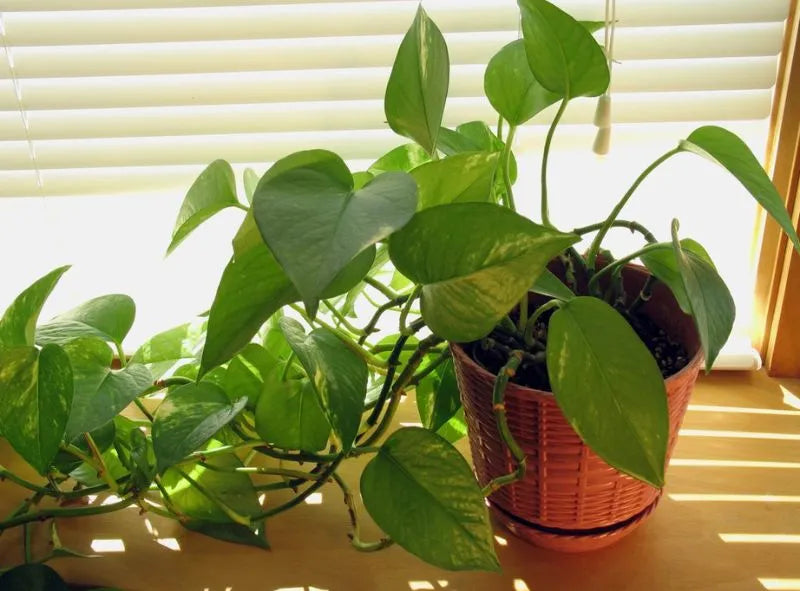
- ☀️ Light
Thrives in medium to low indirect light. Not suited to intense, direct sunlight.
- 💧 Watering
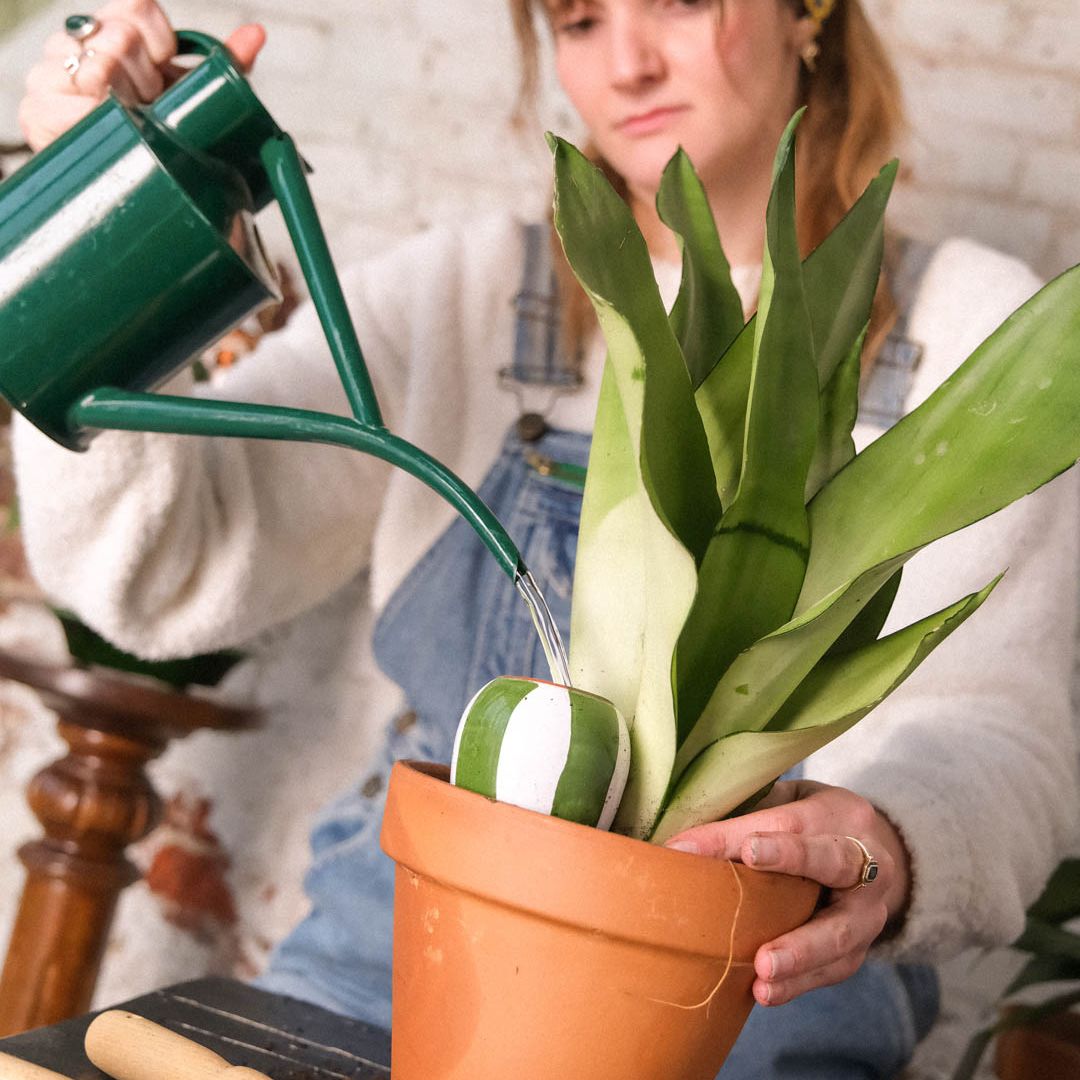
Water every 1 to 2 weeks, allowing the soil to dry out between waterings.
- 🤒 Signs of an unhappy plant
Yellowing leaves, black stems: overwatered
- ❤️🩹Ease of keeping alive
❤️🩹❤️🩹❤️🩹❤️🩹❤️🩹/5
The Pothos is a fascinating and hardy plant. Let's explore together, in detail, this exceptional plant, its characteristics and the best practices for caring for it.
Characteristics and origins of the Pothos
The Pothos is known for its vibrant green leaves, often speckled with white or yellow patches. This plant stands out for its ease of care and its ability to purify the air, making it a great choice for those who don't have green fingers.
Planted in a well-draining soil mix, the Pothos adapts quite well to different environments, even when placed near a north- or east-facing window.
If your home isn't very bright, the Pothos can be a good choice compared to some other plants.
Care and growing conditions
Watering the Pothos should be moderate. This plant doesn't need much water, reducing the risk of root rot.
In summer, it appreciates a slight increase in watering when the light is more intense.
To stimulate its growth, you can use our nourishing serum for green plants during the growing season (from March to October).
Using it couldn't be simpler! Add 3 drops to 250 ml of water, and use it every other watering.
The Pothos doesn't flower frequently indoors, but it propagates easily from cuttings. Stems can be cut and placed in water until roots develop, then transplanted into soil. This propagation method is simple and effective, allowing new plants to be created from a single one.
To stimulate the rooting of your cuttings after repotting, you can use our willow water. It will help ensure healthy growth for your cuttings.
The Pothos is a hardy plant, aesthetic and easy to care for, perfect for indoor plant lovers who don't necessarily have green fingers. With its moderate water needs, it adapts to a variety of environments and light conditions.
Now you know everything!