
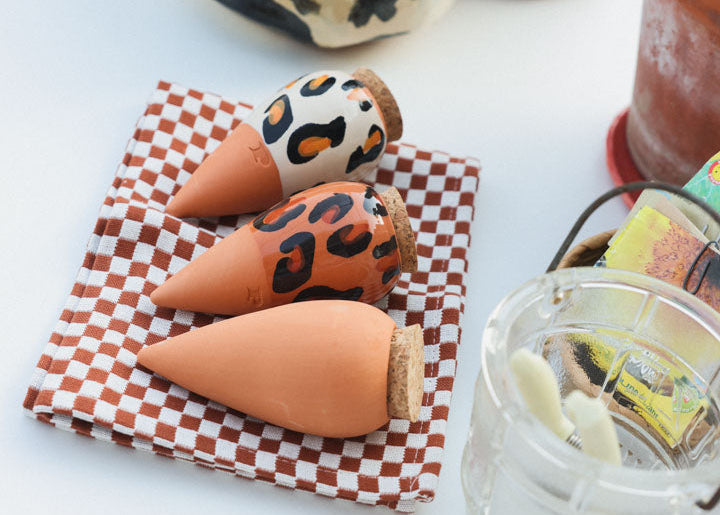
What an oya really is and why it changes everything
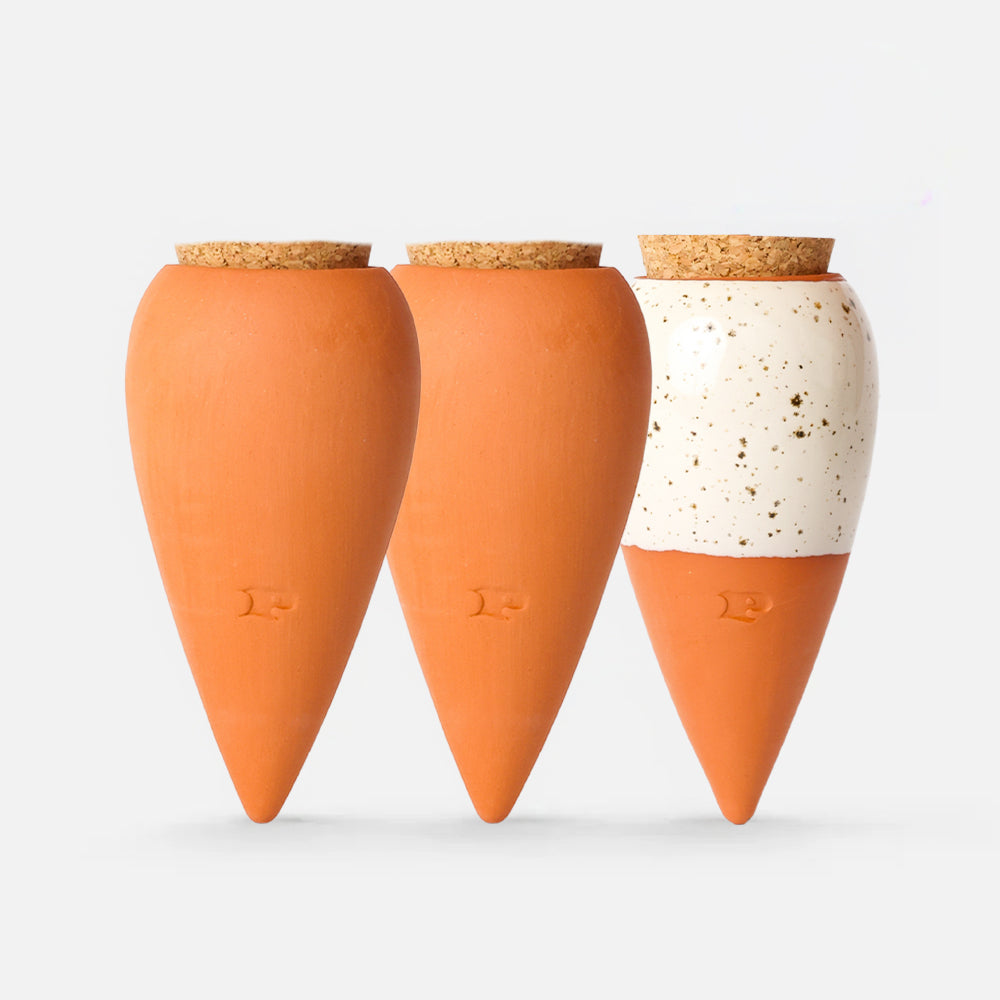
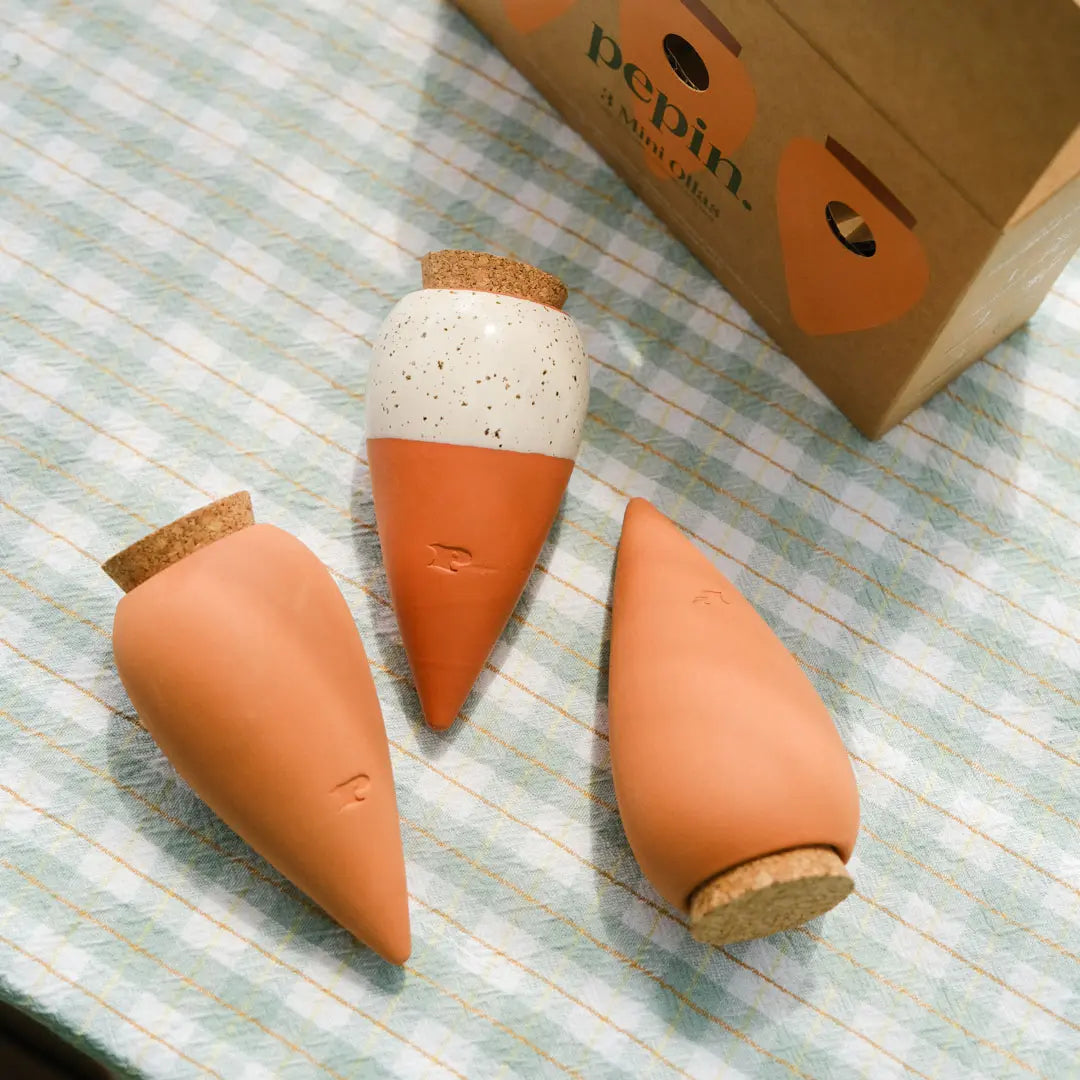
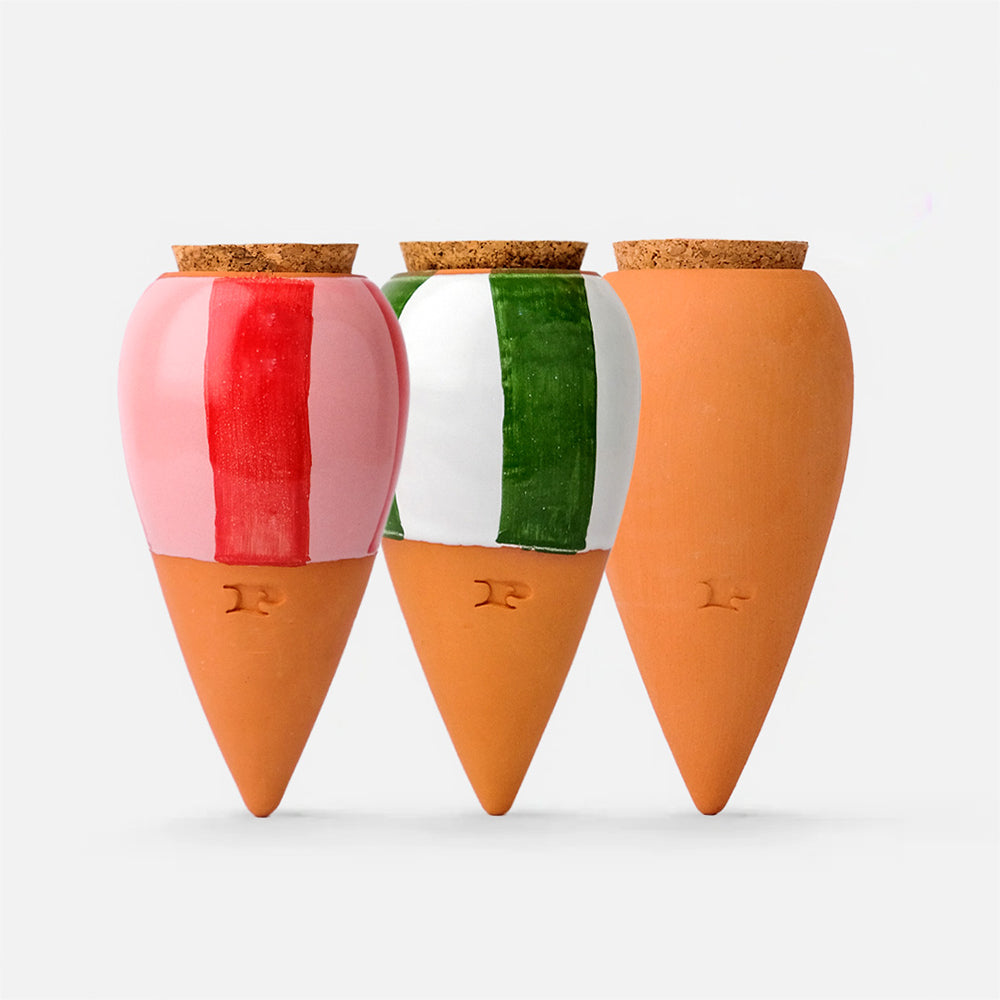
Imagine a small terracotta reservoir that you plant directly into your plant's pot. You fill it with water, and it does the rest. There you go, you've just understood the principle of the oya (also called olla). Simple, isn't it? And yet, this system has existed for millennia. Traces of it can be found in ancient agriculture, notably in China and North Africa, where farmers buried porous jars to irrigate their crops without wasting a single drop.
The secret lies in the material itself. The oya in terracotta without glaze is naturally microporous. Water seeps slowly through the walls by capillary action, only when the surrounding substrate is dry. When the soil is already moist, diffusion slows down on its own. It's a natural automatic watering system that self-regulates without electricity, without sensors, without programming. Just physics.
The difference from classic watering? You no longer drown your plants one day only to forget them the next. The oya delivers exactly what is needed, when it is needed. If you're looking for a reliable solution for your indoor plants, discover our selection of oyas designed for just that.
Why the oya is made for indoor plants
Let's be honest for two seconds. You have a life. Busy days, weekends where you take off on a whim, and that annoying tendency to forget that your monstera is thirsty (no judgement, promise). The problem is that your indoor plants need a regularity that your schedule doesn't always provide them with.
And here's what might surprise you: the number one cause of death for indoor plants isn't lack of water. It's excess. The classic "oh, it's been a while since I watered it" followed by a compensatory deluge. Result: roots rotting in silence. The oya for indoor plants eliminates this scenario. It diffuses water gradually, directly at root level, and only when the plant needs it.
Another benefit I really love: the roots develop naturally towards this constant source of moisture. They become deeper and more robust. Watering with oya happens at room temperature, without thermal shock, which suits sensitive tropical plants like pothos, ficus or monsteras perfectly. A true natural automatic watering system that works while you watch your series.
How to use an oya in a pot: the step-by-step guide
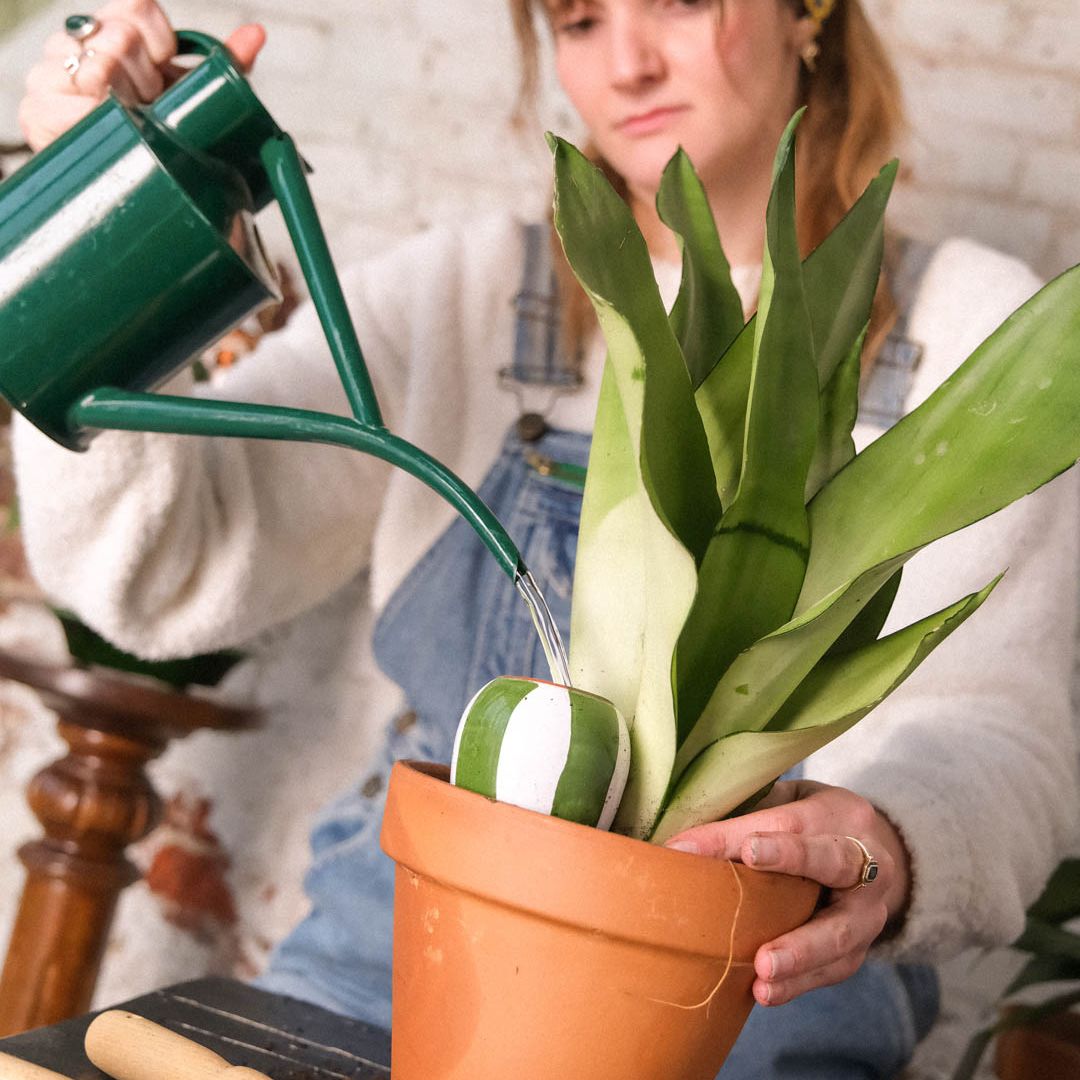
Nothing complicated here. Really. If you know how to fill a glass of water, you'll know how to use an oya. Here are the steps:
- Plant the olla in the soil, ideally in the centre of the pot. The terracotta part should be buried and the glazed part sticks out.
- Fill it with water. Tempered tap water or rainwater, both work very well.
- Check the level every 3 to 10 days. In summer or during the growth period, refill more often. In winter, the oya empties much more slowly.
You see? It's the most intuitive watering system there is. No 15-page manual, no batteries to change. To know how to water with oyas, all you need to do is fill and forget (a little). That's the whole point.
What size oya to choose depending on your pot and plant
This is THE question everyone asks. And the answer is quite logical once you have the right reference points.
For small pots (less than 15 cm in diameter), a mini oya does the job perfectly. It's the ideal format for herbs on the windowsill or small succulents that don't need much water. For medium pots (15 to 25 cm), go for a mid-size oya. It will easily last a week for a classic tropical plant. And for large planters over 30 cm, the best strategy is to position two oyas symmetrically to cover the entire substrate volume.
The capacity of the oya directly influences the refill frequency. A mini oya will empty in 3 to 5 days, while a larger model will easily last a week, or even ten days in winter. For indoor plants, compact formats remain the most practical and the most aesthetic. The terracotta oya integrates discreetly into the pot without taking up all the space.
A little tip: for a first try, start with an intermediate size on your thirstiest plant. You'll quickly see the rhythm that establishes itself.
The limits to know before getting started
We're not going to sell you a dream without nuance. oyas are wonderful, but they have their limits, and it's better to know them to avoid disappointments.
First things first: an oya doesn't completely free you from keeping an eye on things. It extends the watering autonomy of your plants, but it has a finite capacity. Depending on the size and the season, expect between 3 and 10 days before you need to refill it. It's not a "I'm off for two months with zero plan" kind of system.
The substrate also plays an important role. Very compact or clay-heavy soil slows down diffusion. The oya watering system works much better in a light, well-draining substrate. If your soil has been compacted for three years, it might be time for a repot.
Care-wise, nothing complicated — just remember to rinse your oya from time to time. Limescale from tap water can clog the micropores over time, and small green algae can appear inside. A gentle scrub and a soak in vinegar water sorts it out in five minutes.
These limitations are honestly pretty minor. Compared to the stress of classic watering (too much, too little, at the wrong time), oyas genuinely make life easier.
Frequently asked questions about the oya for indoor plants
How do you water with oyas?
It's really simple: plant the Olla in your plant's soil, fill it with water and put the stopper back in the neck. Water diffuses naturally through the porous terracotta. Just check the level every 3 to 10 days and top it up when it's empty. No special skills needed — it's the most intuitive watering system out there.
How many oyas do you need per pot?
For pots smaller than 15 cm, a mini oya is ideal. For most indoor pots (up to 25 cm in diameter), a single classic oya is more than enough. For large planters or window boxes over 30 cm, plan for two oyas positioned symmetrically to cover the entire substrate. The idea is that all the roots can access the moisture being diffused.
Where should you place the oya in my indoor plant's pot?
The oya goes directly into the substrate, ideally in the centre of the pot. The entire body should be buried below the surface of the compost, with only the glazed part remaining visible to allow refilling. If the plant is already well-rooted, create a small space with a stick before inserting the oya so you don't damage the roots.