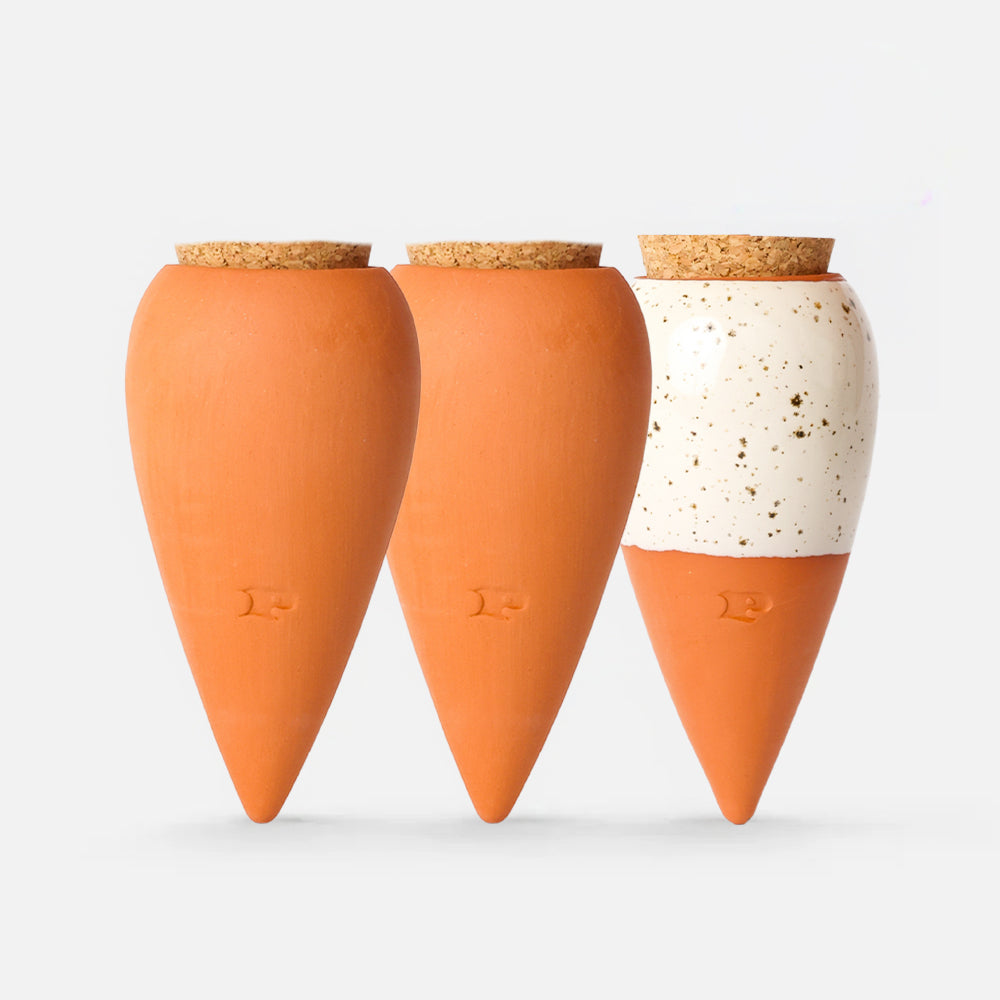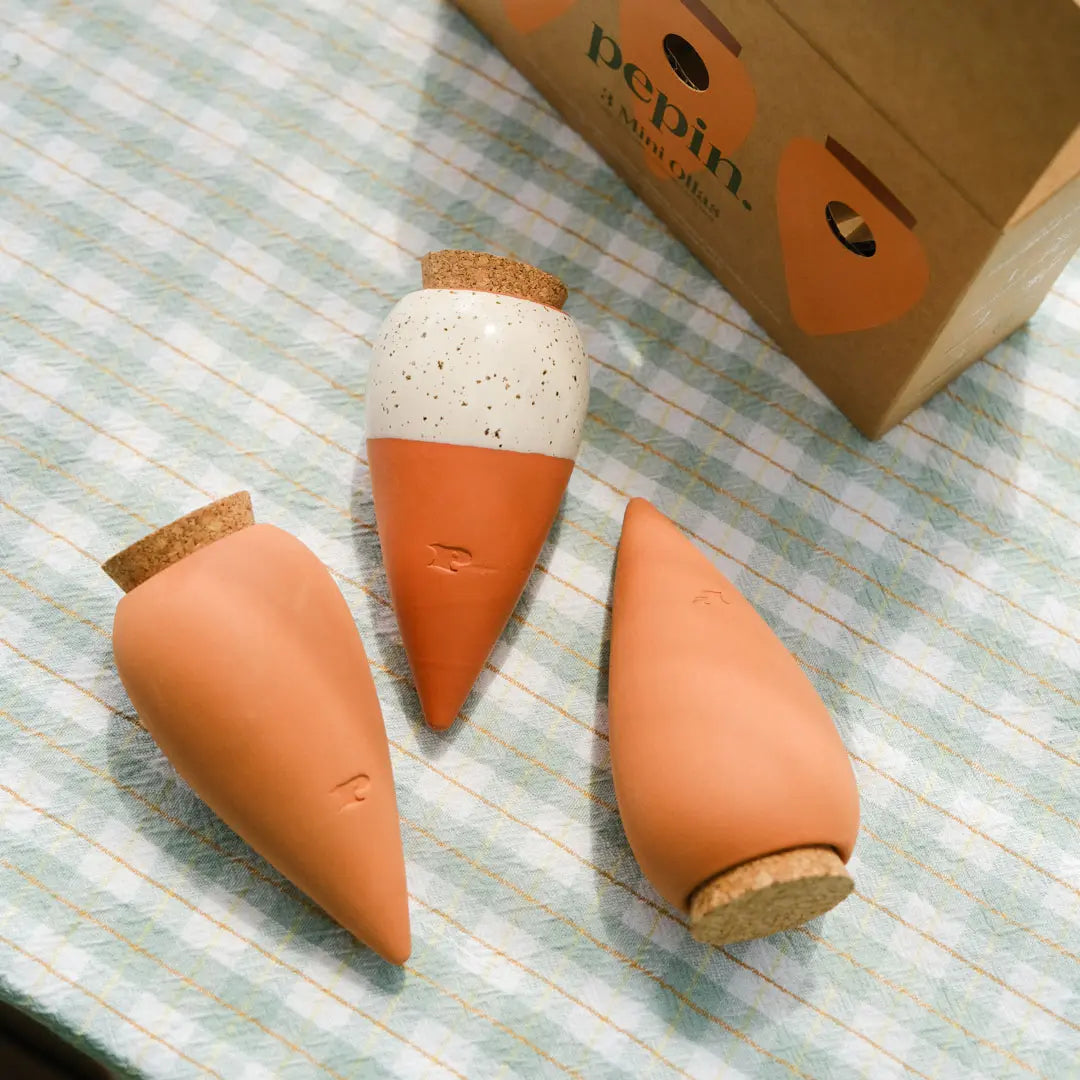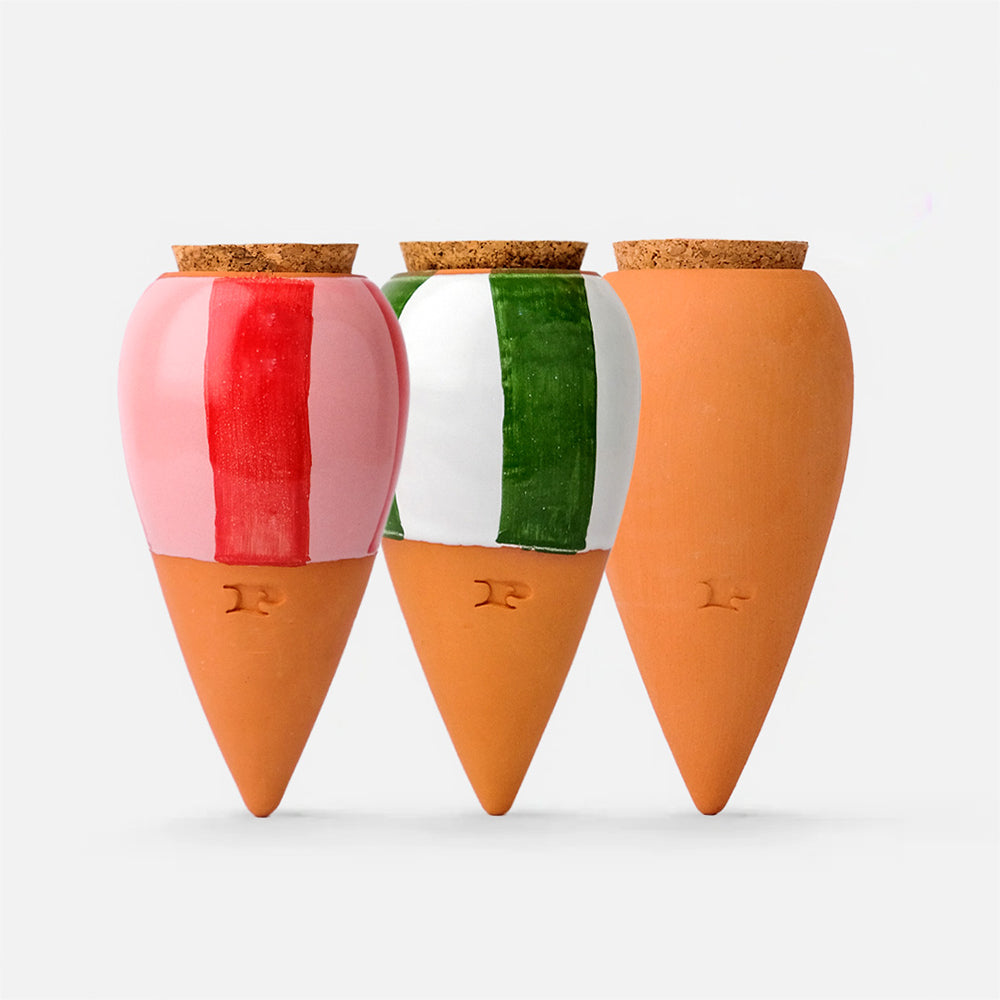

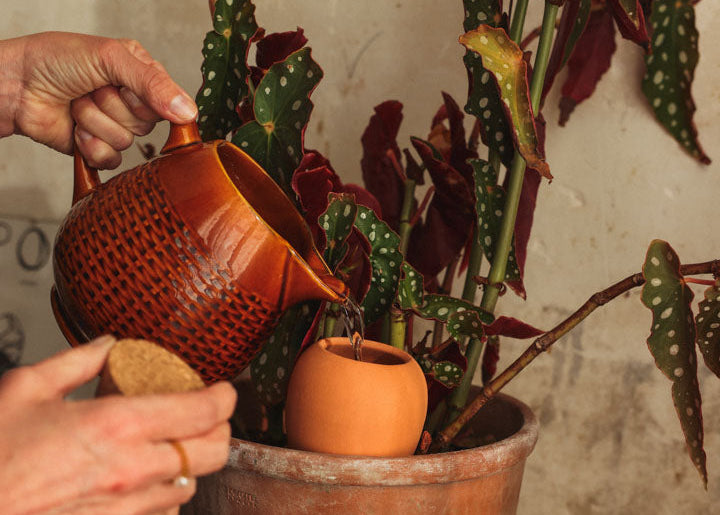
You love your plants, but regular watering isn't exactly your strong suit? Don't panic. There's a watering system so simple it's been working on its own for millennia. We're talking about the oya, that little terracotta jar that does the work for you. Let me explain how it works, why it's remarkably effective, and how to choose the right model from our selection of oyas. Promise, in five minutes you'll know everything.
The oya, a watering system 4,000 years in the making
Before it became a trending object for plant lovers, the oya has a fascinating history. The first traces of this irrigation system date back around 4,000 years, to China. Porous terracotta jars, buried in the ground, were already being used to irrigate crops passively. Ingenious, right?
Since then, the technique has spread far beyond Asia. In North Africa, India, and Latin America (where they're called "ollas"), generations of farmers have relied on these pots to water their crops without waste. The principle has always remained the same: you bury the jar, fill it up, and the terracotta does the rest.
If oya watering has survived millennia and crossed continents, it's simply because it works. And not just a little. But to understand why this oya irrigation is so effective, you need to look at a small physical phenomenon you already know without realising it.
Capillarity: the magic behind microporous terracotta
Have you ever placed a towel at the edge of a puddle and watched the water slowly rise through the fabric? That's exactly the same principle that makes an oya work. It's called capillarity.
Unglazed terracotta is made up of millions of micropores, invisible to the naked eye. Imagine a very fine sponge. When the oya is filled with water and buried in the substrate, the water gently migrates through these pores into the surrounding soil. What drives this migration is the difference in water tension: the wall of the oya is moist, the surrounding earth is drier, and water naturally moves towards the zone that needs it.
Here's the really clever bit about this oya watering system: diffusion self-regulates. When the surrounding soil is already nicely moist, the water stops passing through the wall. When it dries out (because the plant is thirsty), diffusion resumes. It's on-demand watering, with no sensor, no programming, no electricity. Just physics. The oya irrigates exactly what's needed, when it's needed. Hard to get more elegant than that.
Why the oya waters better than a classic watering can
With a watering can, a good part of the water evaporates at the surface of the pot or runs off without ever reaching the roots. You water the top, but the heart of the substrate sometimes stays dry. With oya watering, the water is diffused directly into the depths, right where the roots truly need it. Some agronomic studies, including work cited by the FAO on porous pottery irrigation, estimate that this method reduces water consumption by 30 to 70%. The figure is impressive, but logical.
Another considerable advantage: no more overwatering. Do you know what the number one cause of death is for houseplants? Too much water. The oya for watering eliminates this risk, since the plant only receives what it asks for. No more, no less.
Last point, and not a minor one: roots develop better. They grow naturally towards the moisture source, surround the oya and anchor themselves in depth. Result: more robust plants, more resistant to heat. Watering with oya doesn't just keep your plants alive — it makes them stronger.
How to use an oya in practice, from installation to everyday life
If you've never used an oya before, don't worry: it's disarmingly simple. Here's how to go about it, step by step.
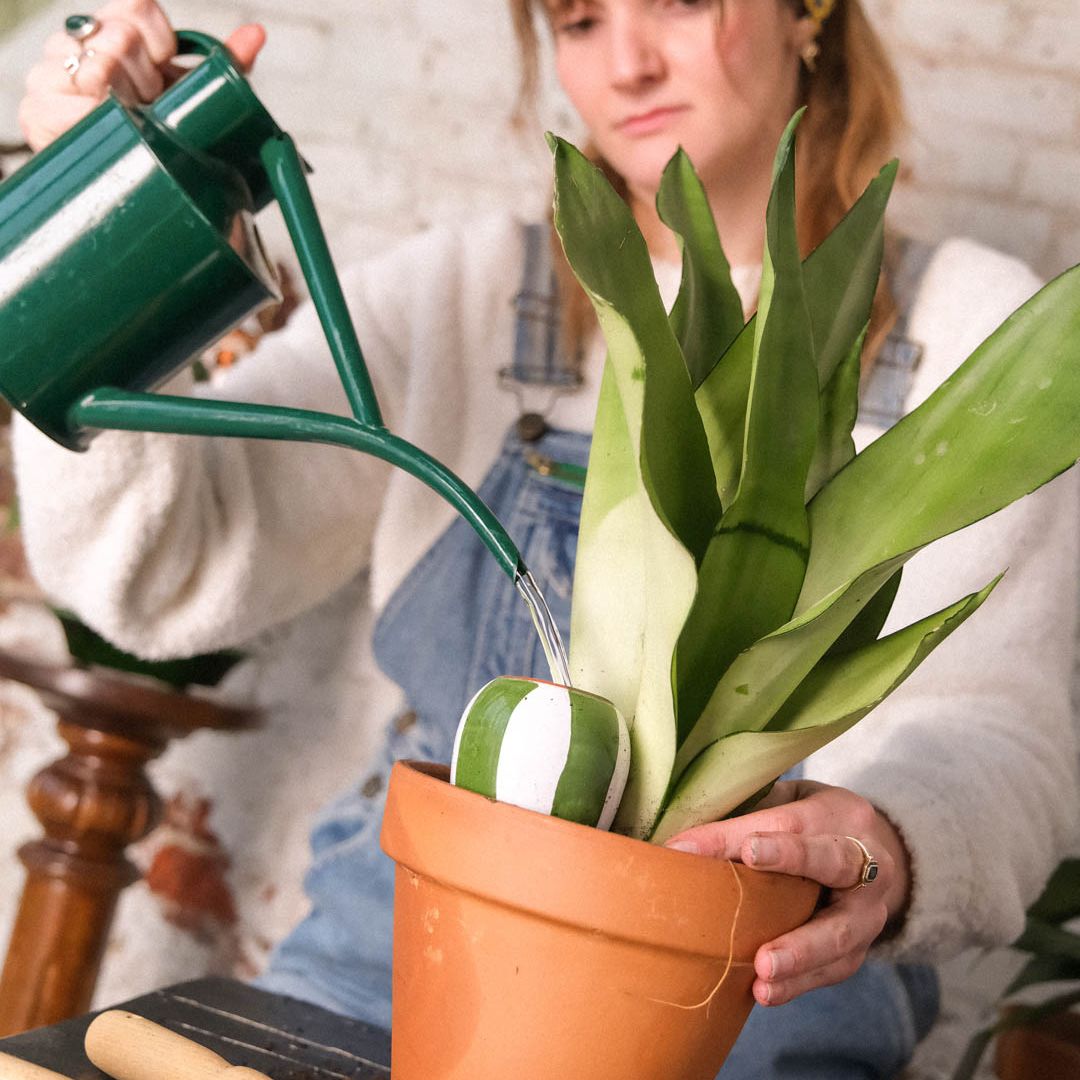
Installation: bury the oya in the substrate, in the centre of the pot or a few centimetres from the roots. Only the neck should stick out above the surface, so you can fill it easily. That's it.
Filling: Fill the olla with water then replace the cork stopper. This small step limits evaporation through the neck and maximises the efficiency of your oya watering system.
Frequency: in summer, plan on filling it roughly once a week. In winter, when plants consume less, every two weeks is generally enough. To know if it's time: if the oya is empty, it's time to refill it.
Maintenance: an occasional rinse is enough to prevent limescale build-up. Between seasons, you can leave it to air dry. Nothing complicated. Oya watering requires less than five minutes of attention per week. Your plants will thank you.
Which oya to choose based on your plant and your space
Not all oyas are equal in terms of size, and that's a good thing: each plant has different needs. The rule is simple. The bigger the pot and the thirstier the plant, the larger the oya needs to be.
For indoor pots up to 15 cm in diameter (herbs, small green plants), mini-ollas do the job perfectly. The trio of mini-ollas is ideal for getting started and equipping several pots at once.
For larger pots or thirstier plants like tomatoes on a balcony, a standard-size oya will be more suitable.
The important thing is not to go too small. An oya that's too small in a large planter will empty in a day and lose its purpose. With the right size, oya watering will become your best everyday ally.
Frequently asked questions about oya watering
How do you water with oyas?
It's very simple: bury the oya in the substrate leaving the neck sticking out, fill it with water then close it with the stopper. The water diffuses all on its own through the porous terracotta. You just need to fill it once a week in summer and every two weeks in winter.
What are the downsides of oyas?
oyas work less well in very clay-heavy soils, which limit the diffusion of water.
Where can you bury oyas?
Anywhere there's substrate or soil: in your indoor pots, your balcony planters, your raised beds. The only condition is that the opening remains accessible for filling.