
What is an oya exactly – and why it changes everything
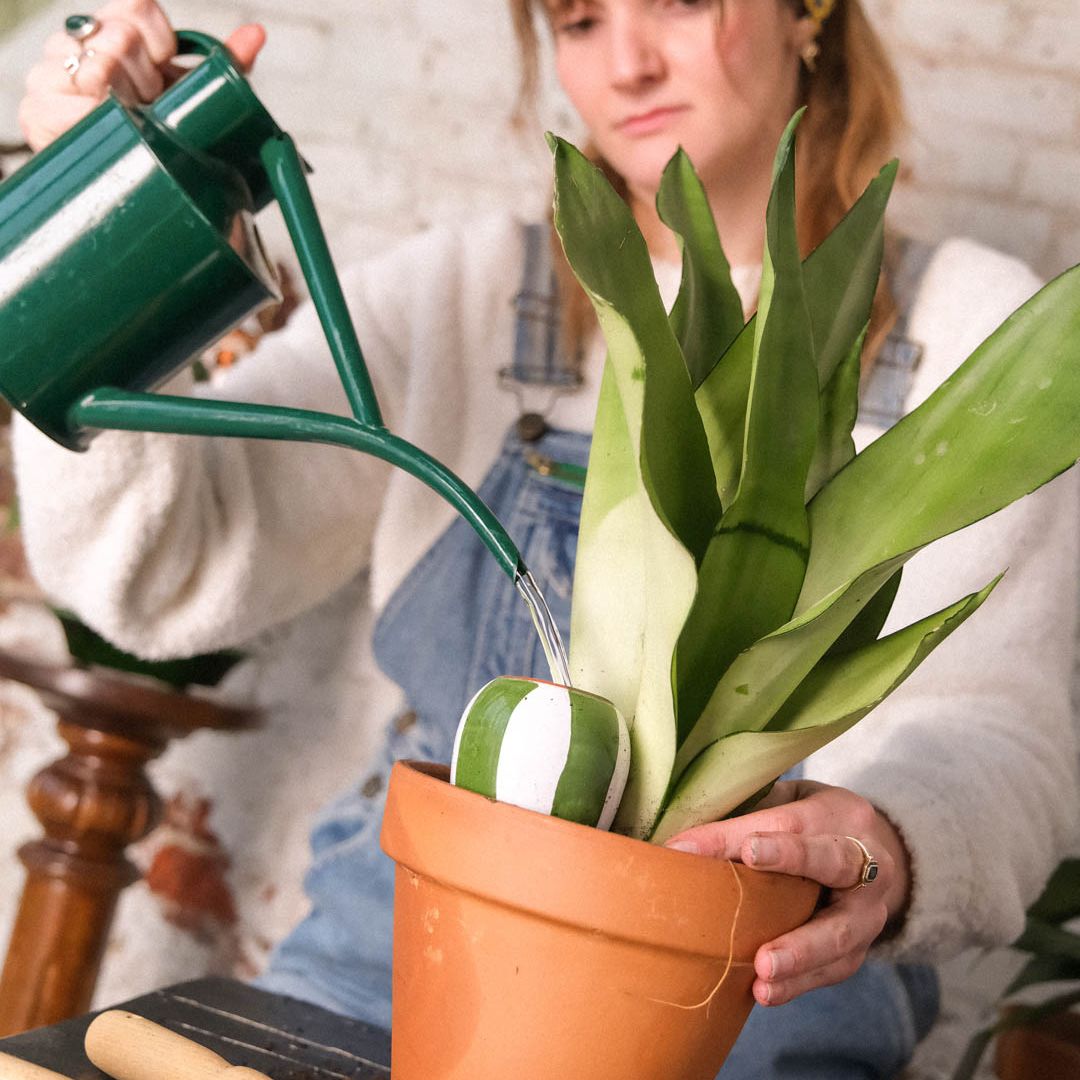
You may have already spotted these little terracotta objects planted in pots, without really understanding what they're for. Let me explain it simply. An oya (also called an "olla") is a terracotta water diffuser that you bury directly in your plant's soil. You fill it with water, and it does the work for you. Discover our oya selection to see what it looks like in practice.
The principle is nothing new. This oya watering system dates back over 4,000 years: traces of it can be found in ancient China, Iran and North Africa, where farmers were already using these porous clay jars to irrigate their crops while saving water. What has changed is the adaptation of this ancestral technique to our modern interiors.
How does it work? Terracotta is naturally microporous. Water seeps slowly through the walls and feeds the roots by capillary action. Your plants draw water only when they're thirsty. No overwatering, no drowned roots. And on the ecological side, a terracotta oya saves 50 to 70% of water compared to conventional watering. If you regularly forget to water (no judgement here), this is probably the best solution you'll find.
What size oya to choose for your pot
Here's the criterion that many people overlook: the size of the oya must match the diameter of your pot. Too small and it won't be enough. Too large and it risks saturating your soil and suffocating the roots. So how do you find your way?
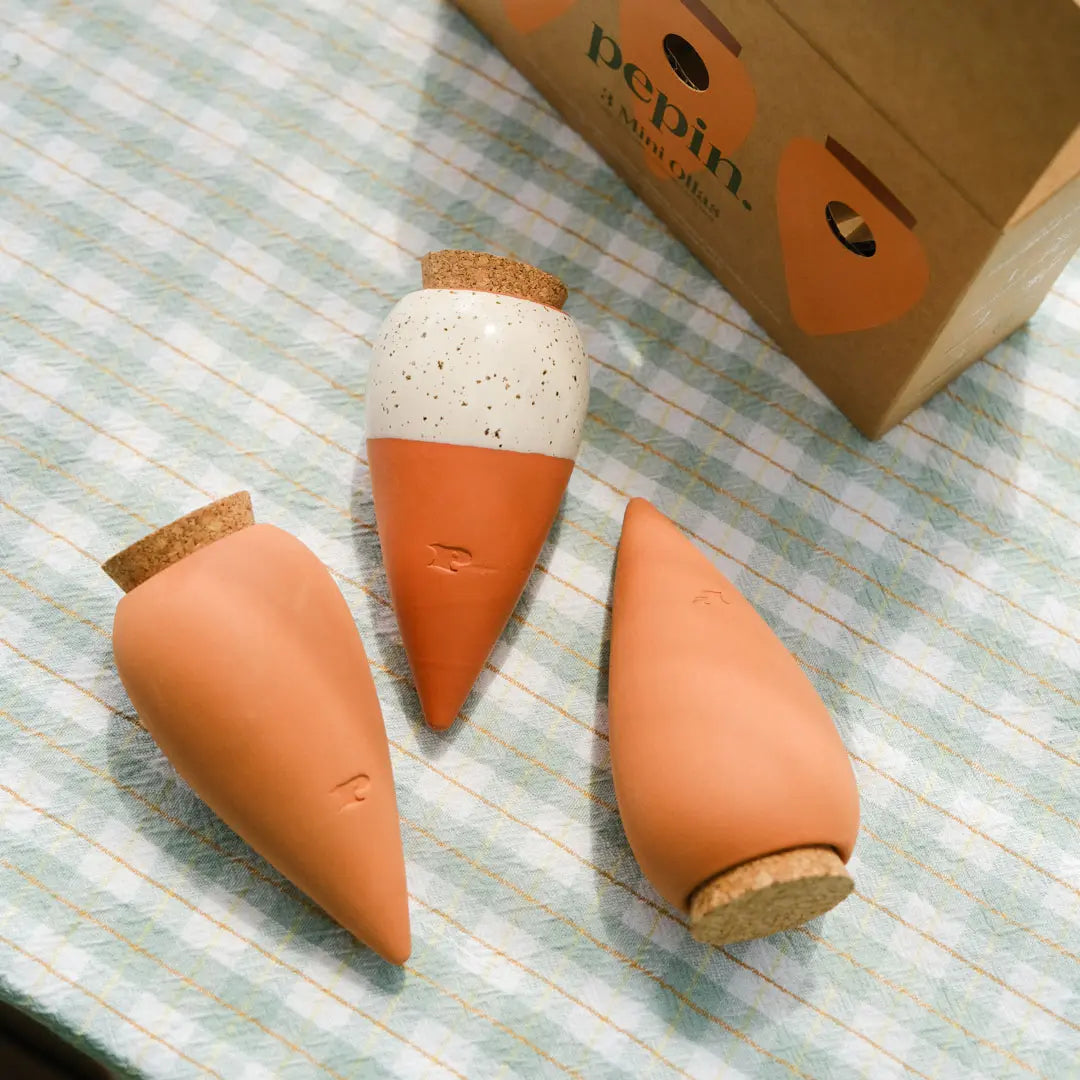
For pots with a diameter of less than 15 cm (your succulents, herbs, small pothos, compact calatheas), mini oyas are perfect. The Trio Mini Ollas are actually a very handy solution: three small oyas to equip several pots at once, or to spread around a slightly larger container.
For pots 15 cm in diameter or more – those housing your monsteras, ficus or philodendrons – a classic oya does the job perfectly. What area can an oya irrigate in a pot? Generally, count on a diameter of 20 to 30 cm around it, depending on the density of your compost. That's more than enough for most houseplants.
A practical tip for watering your plants with an oya: if you have a large planter, consider placing two rather than just one. The irrigation will be more even and your roots will thank you.
Natural terracotta or ceramic: which material for which use
Not all oyas are equal, and the material really makes the difference. The key point to understand: it's the buried part of the oya – the part in contact with the soil – that must be made of microporous terracotta for the diffusion to work.
Raw terracotta is the original material, the one that does all the work. Why? Because it's fully porous. Water flows freely through the micro-pores and reaches the roots in a steady, regular way. It's the material that has been used for millennia, and for good reason: nothing beats it for slow, consistent diffusion.
On the other hand, be wary of oyas entirely covered in glaze or varnish: a vitrified glaze blocks the micro-pores and makes the surface waterproof. If the entire buried part is glazed, diffusion stops altogether. Some products sold as oyas are in fact entirely varnished and therefore have no real effectiveness. Watch out for this trap.
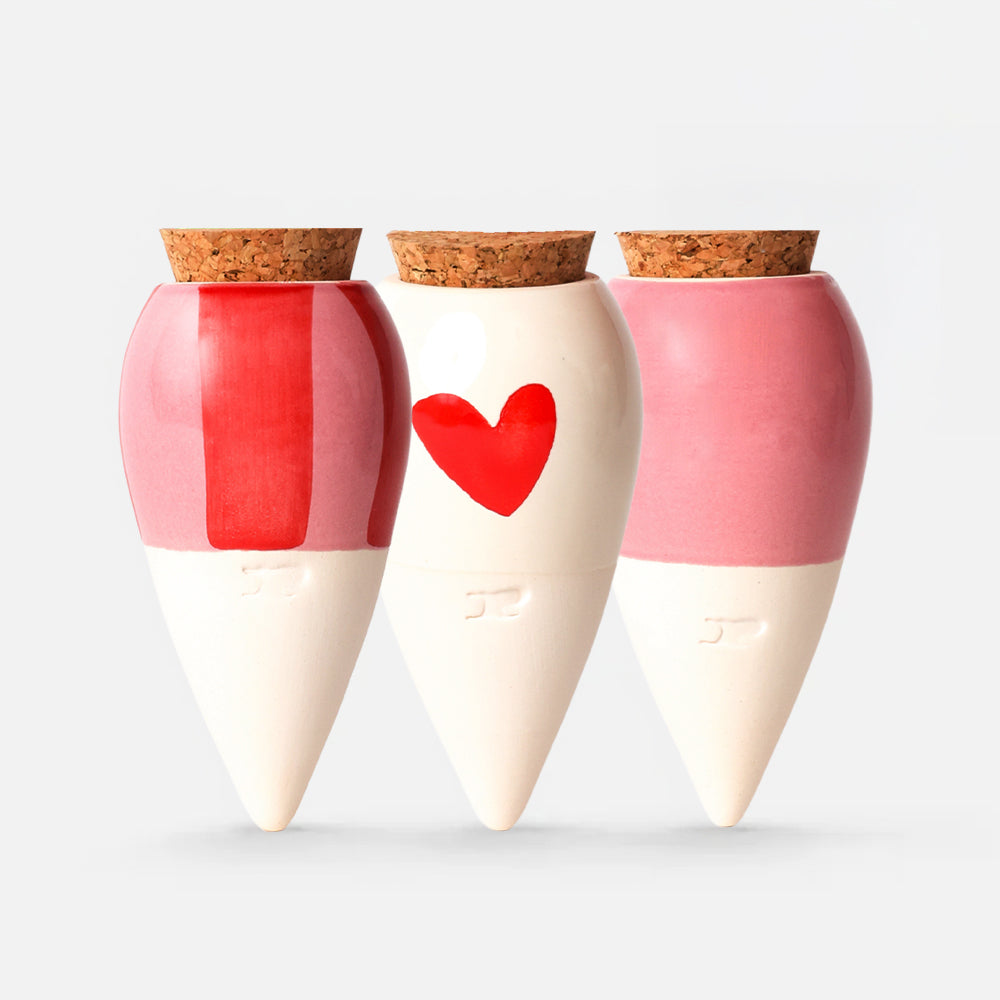
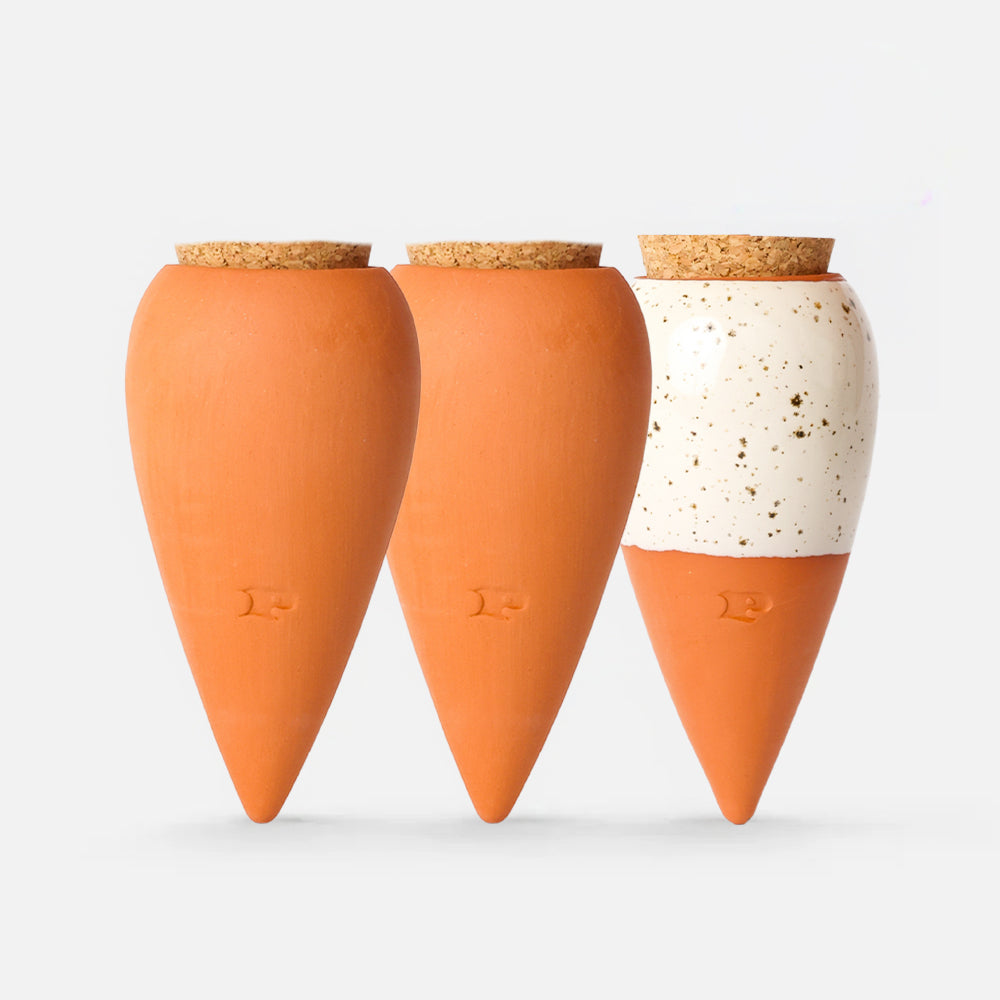
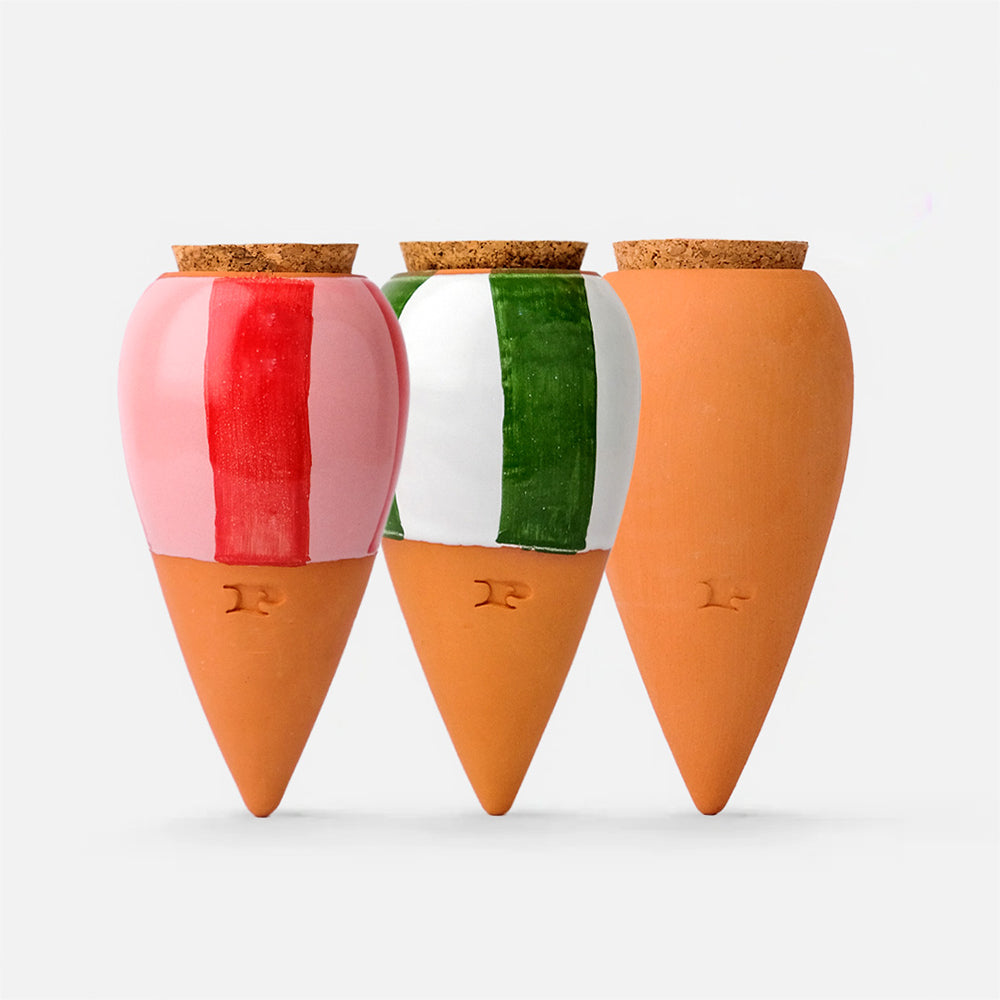
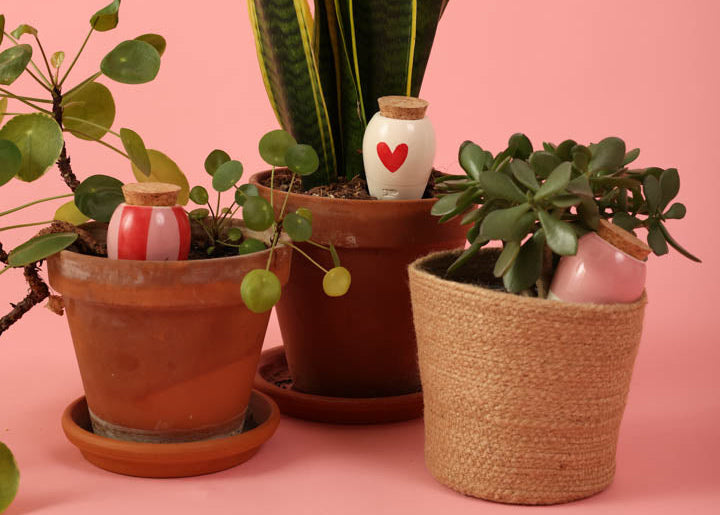
Good news: it's perfectly possible to combine a decorative finish on the visible part (the neck that sticks out of the pot) while keeping microporous terracotta on the buried part. That's actually the principle behind our ollas: refined finishes on the surface, and intact porosity where it counts. When you decide to buy an oya for watering your plants, simply check that the part in contact with the soil isn't entirely varnished.
Incorporating an oya into your décor without the garden centre look
Let's be honest: for a long time, oyas looked like kitchen garden accessories. Useful, yes. Pretty? Not really. Things have changed quite a bit.
Today's indoor oyas are designed as genuine decorative objects. Clean shapes, refined finishes, colour palettes that integrate naturally into your interior. A far cry from the rough terracotta jar buried in a tomato bed.
A few staging ideas that work well: pair a terracotta oya with a terracotta pot holder for a natural, cohesive look. For a Scandinavian or minimalist interior, a textured white oya pairs perfectly with light pots and blonde wood. And for a grouped effect on a shelf or windowsill, trios of mini oyas work wonders.
Some models also embrace a real aesthetic point of view. The Trio Mini Ollas The Striped ones play the graphic card, while the Trio Mini Ollas The Leopards bring a bold touch. The terracotta oya becomes a decorative element in its own right – not just a watering tool you try to hide.
Maintenance and what you're not always told
Maintenance is simple. Rinse your oya with clean water from time to time. Avoid soap and chemicals that would clog the pores. If limescale builds up (it happens, especially in hard water areas), leave it to soak overnight in water with a splash of white vinegar. It'll regain its full porosity. A tip: prefer filtered water or rainwater for filling. Less limescale means less maintenance.
Now, the downsides of oyas, because it would be dishonest not to mention them. First, you need to refill them regularly, every 3 to 7 days depending on the plant and the season. It's not a "set it and forget it for a month" system. Second, the soil must be loose enough to allow good diffusion: soil that's too compact or too free-draining reduces the oya's effectiveness. And in hard water areas, white deposits may appear on the terracotta over time, but a simple soak in diluted white vinegar sorts it out. For the vast majority of your indoor jungle, it's a smart and long-lasting investment.
Frequently asked questions about oya watering
What is the oya watering technique?
The principle is simple: the oya is a microporous terracotta reservoir that you bury in your plant's soil. Once filled with water, it seeps slowly through the walls by capillary action. The roots draw the water they need – no more, no less. No programming required; the plant regulates its own consumption.
What are the downsides of oyas?
The main downside is the need to refill the oya regularly, around every 3 to 7 days (some last up to 10 days in winter). The soil also needs to be loose enough for diffusion to work well. Finally, in hard water areas, white deposits may appear on the terracotta, but a simple soak in diluted white vinegar sorts it out.
How do you use an oya to water your plants?
Bury the oya in the soil up to the neck, taking care not to damage existing roots. Fill it with water through the top opening, then place the cork stopper to limit evaporation. Check the level every 3 to 7 days and adjust the frequency according to the season: in summer, plants drink more.
What size oya should I choose for my pot?
For pots with a diameter of less than 15 cm, a mini oya is sufficient. For pots 15 cm in diameter or more, opt for a classic oya. For large planters, it's best to use two oyas to ensure even irrigation across the entire soil surface.