
Microporous terracotta: a 4,000-year-old technology
What if the most intelligent watering system for your plants was invented long before electricity? The first terracotta ollas appeared over 4,000 years ago, in China and the Middle East. Back then, these buried jars were used to irrigate entire fields. Today, you can discover our selection of ollas to care for your houseplants using that same ancestral principle.
So what's the secret? Everything relies on the microporosity of terracotta. When clay is fired at low temperature, it retains millions of micro-pores invisible to the naked eye. Imagine an extremely fine sponge that only releases water on demand. That's exactly what happens. Water passes through the wall by capillary action and osmotic pressure, at a slow and perfectly steady pace.
It's not a leak. It's controlled diffusion. This plant-watering pottery works like a natural tap regulated by the soil itself. Microporous terracotta is no modern gadget: it's pure physics, tried and tested for millennia. And this mechanism has a direct impact on the health of your plants.
How slow diffusion changes everything for your plants
You know the classic scenario: you water all at once, the soil is waterlogged, then three days later it's as dry as a desert. This brutal cycle stresses your plants. Too much water drowns the roots (the number one cause of death for houseplants, according to horticulturalists). The drying-out that follows starves them. In short, it's far from ideal.
With an olla for plants, everything changes. Slow diffusion creates a zone of constant moisture around the ceramic. Your roots detect this water source through their absorbing hairs and naturally grow towards it. This phenomenon is called hydrotropism. Imagine your roots gently migrating towards the water source, like a child reaching out for a glass. The plant takes exactly what it needs. Never more, never less.
That's the true elegance of ceramic irrigation: it transforms watering into a dialogue between the terracotta and the roots. No more overwatering, no more water stress. Your handcrafted terracotta ollas become a self-regulating automatic watering system. You fill it up, the plant helps itself. Simple, isn't it?
Glazed or unglazed ceramic: what difference does it make for watering?
This is a question many buyers ask, and quite rightly so. All ceramics may look alike, but they don't work in the same way at all.
An olla made of raw (unglazed) terracotta keeps its pores open. Water passes through the wall, diffusion works fully. It's the ideal material. A glazed ceramic, on the other hand, is coated with a vitrified glaze that completely blocks the micro-pores. Result: the piece becomes watertight. Zero irrigation. Some products sold as ollas are actually glazed, and therefore have no real effectiveness. Watch out for this trap.
A reliable visual clue? The natural orange-brown colour of terracotta. If your ceramic olla is shiny or lacquered, there's a good chance it's glazed. And if you notice a slight white deposit (limescale) on the outside after a few weeks of use, don't panic. It's actually a good sign: it proves that the porosity is active and that water is genuinely passing through the wall. Maintenance is simple — a gentle brush is all it takes.
Olla vs other automatic watering systems: an honest comparison
Let's be straight: the watering olla isn't the only system on the market. But it has solid arguments against the competition.
Olla vs plastic watering spikes. Watering spikes release water by gravity, without adapting to the plant's actual needs. The flow rate depends on the angle, the stopper, and the temperature. It's unpredictable. The olla lets the plant decide the pace. Automatic plant watering becomes truly intelligent.
Olla vs electronic drip systems. These devices require a socket or batteries, settings, and sometimes an app. And when they break down? The olla works without electricity, without settings, without any risk of malfunction. Zero technical maintenance.
Olla vs glass watering bulbs. Pretty, certainly. But they empty by atmospheric pressure, sometimes too quickly, sometimes not at all depending on the substrate density. Ceramic irrigation adapts to root demand, not gravity.
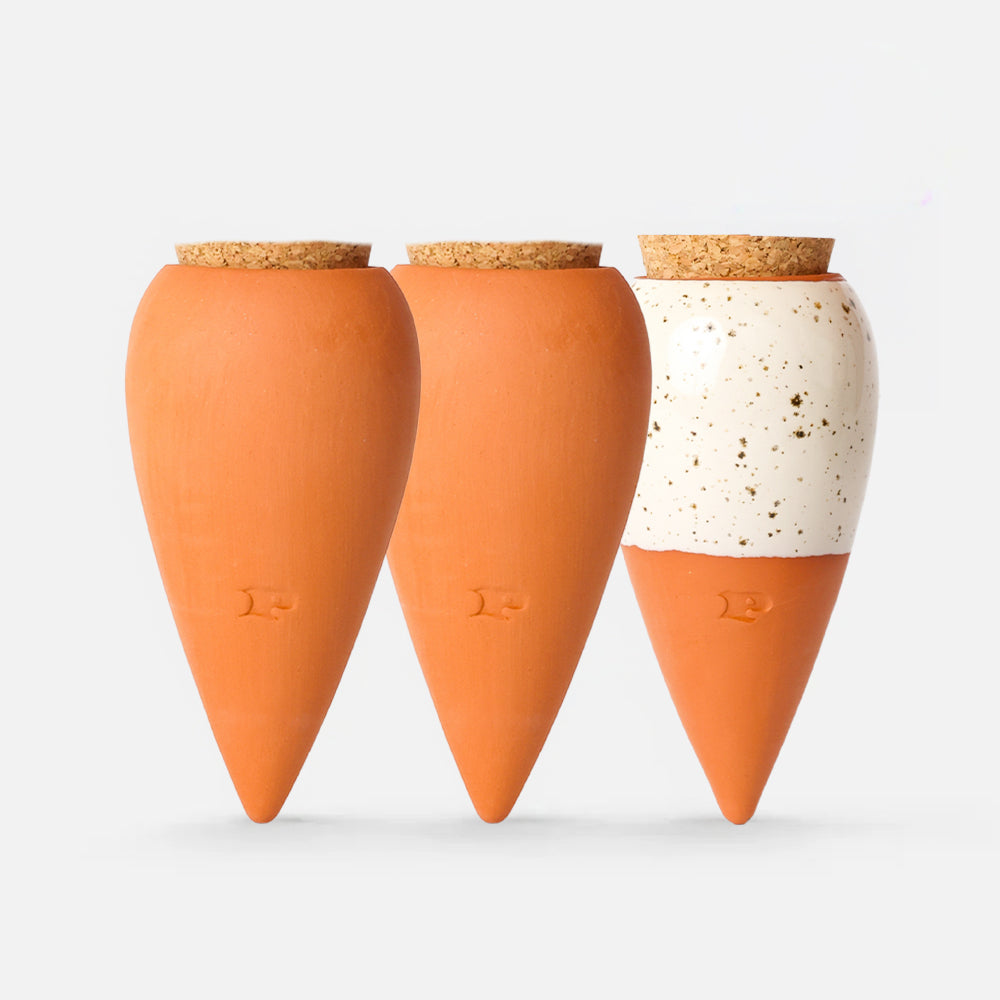
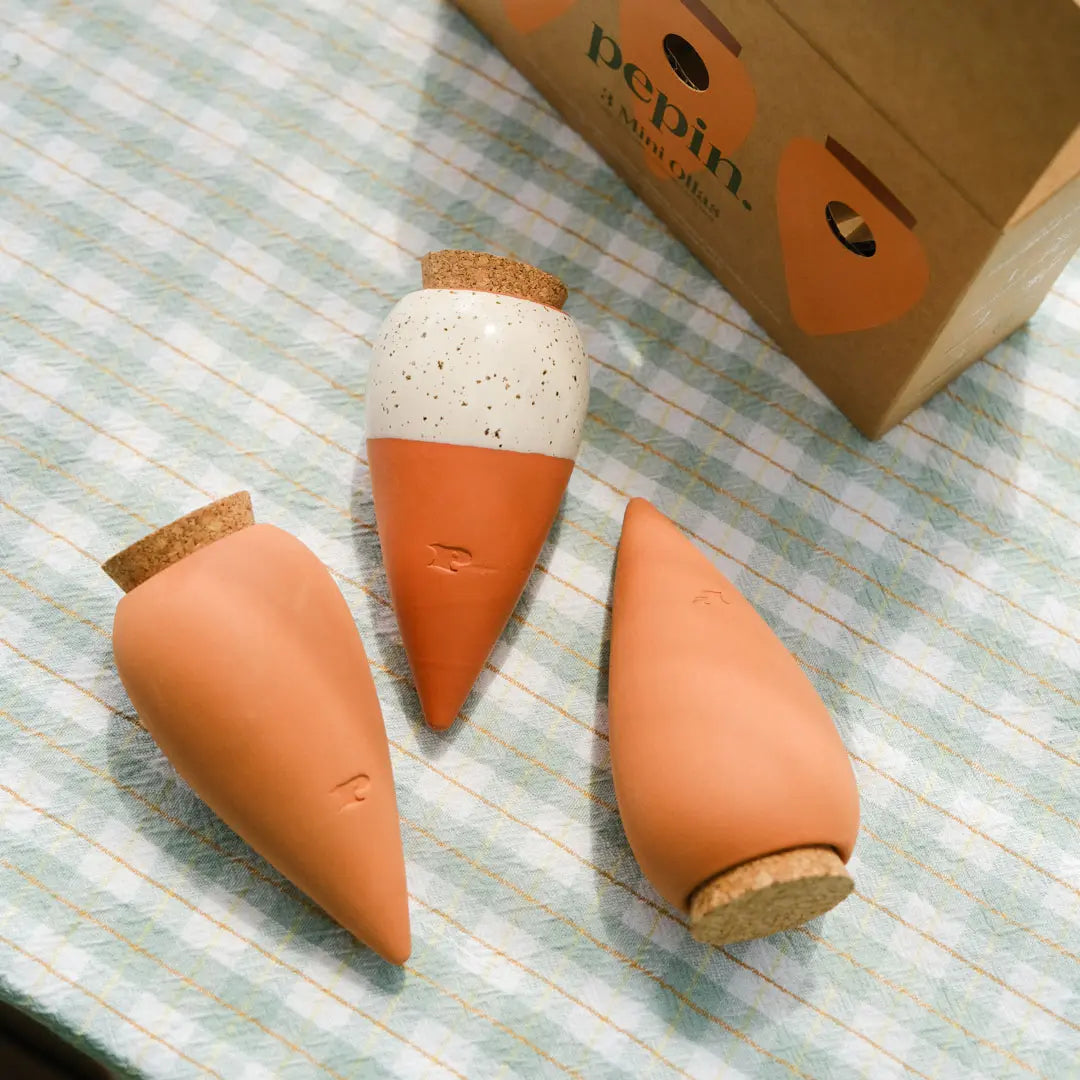
For the vast majority of tropical houseplants? It's the perfect tool. Want to try the concept easily? The Trio Mini Ollas lets you kit out several small plants at once.
Choosing your olla: size, shape, and material for your plants
You're sold on the principle. Now it's time to choose the right olla for your plants. Three criteria really matter.
Size. A mini olla suits pots with a diameter of less than 15 cm. Its autonomy? Between 3 and 7 days depending on the plant, the season, and the light exposure. In summer, when the plant drinks more, you'll refill it a little more often. In winter, it can easily last a good week without any trouble.
Shape. Elongated ollas diffuse water deep down, ideal for deep-rooted plants like monsteras or ficus. Rounder, more compact models suit shallow-rooted plants like pothos or calatheas.
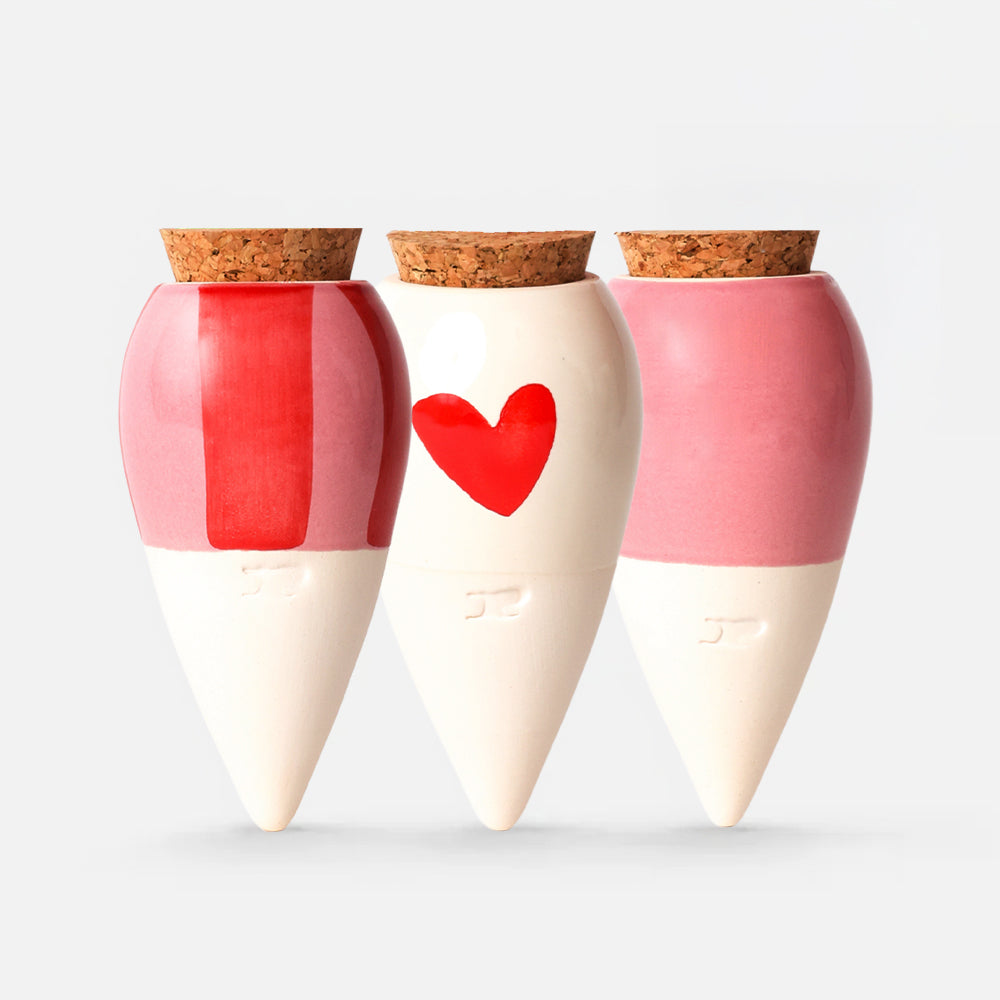
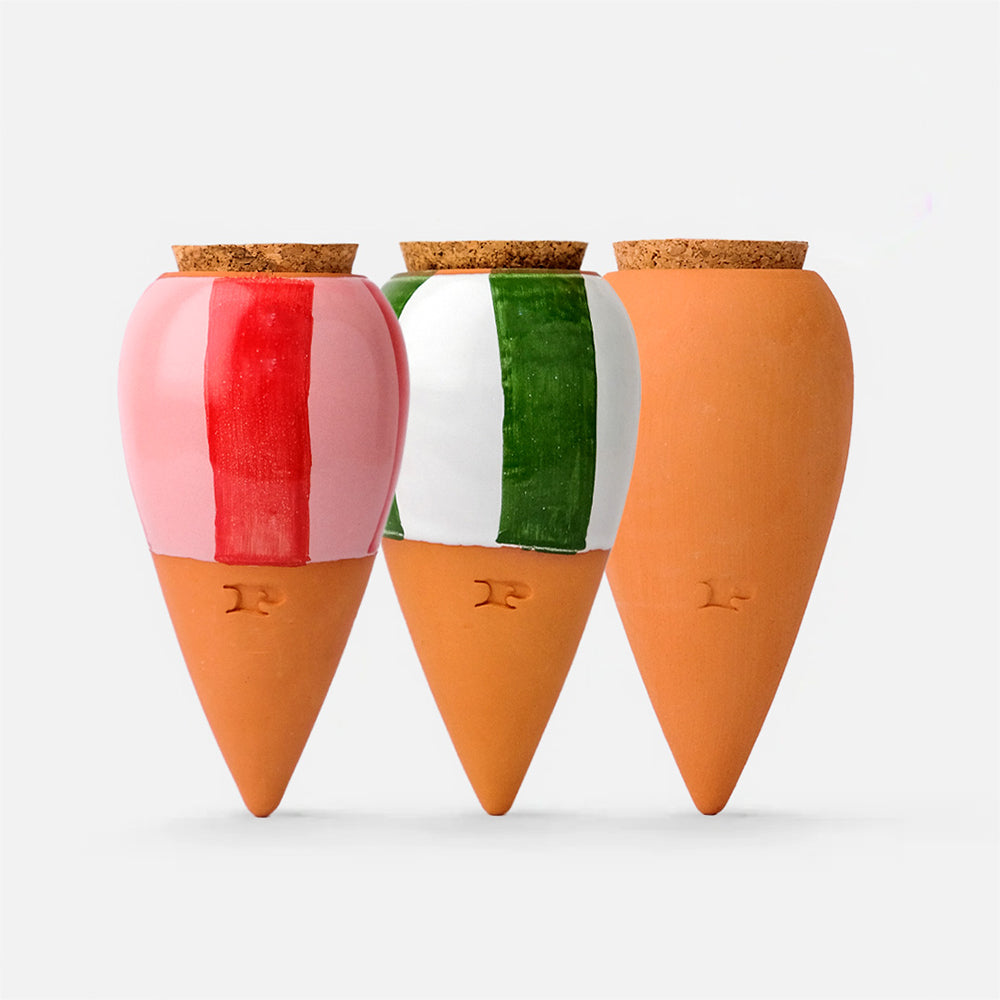
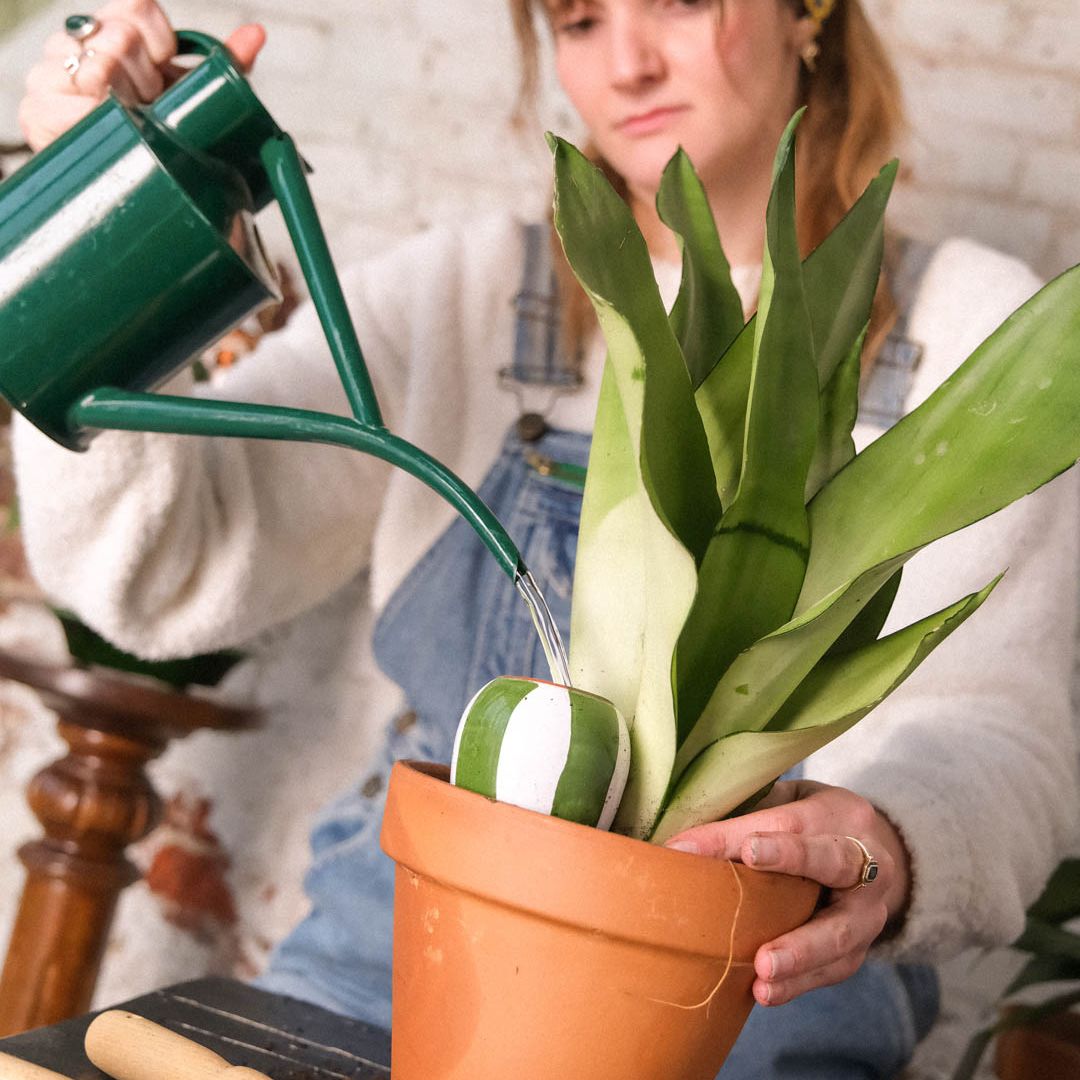
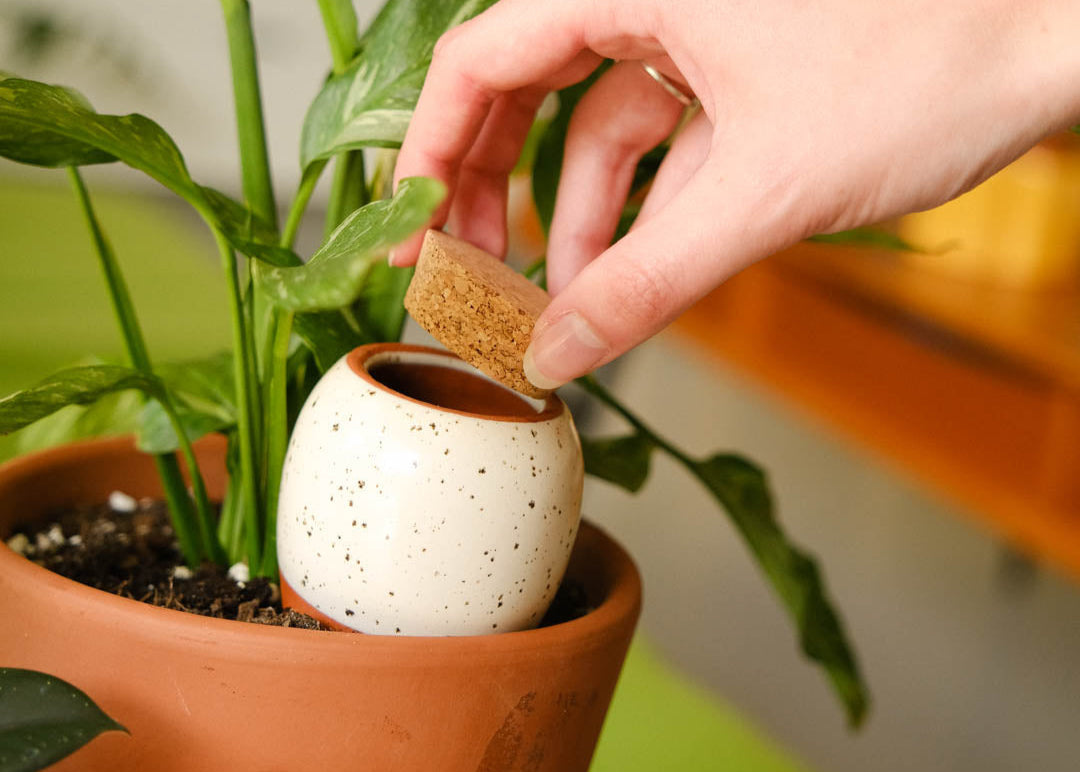
Material. It bears repeating: only unglazed terracotta really works. The good news is that there are aesthetic variations that preserve this essential porosity, such as the Olla Blanc grainé or the Trio Mini Ollas Les Rayées for a decorative touch.
Frequently asked questions about the olla and terracotta watering
What does olla mean?
The word "olla" comes from Spanish and originally refers to a jar or pot made of terracotta, used to store and carry water. In modern gardening, this term refers to a microporous terracotta water diffuser that is buried directly in a plant's substrate.
What is an olla used for?
An olla is used to water your plants slowly and autonomously. Filled with water and placed in the pot, it diffuses moisture through its microporous walls. The plant takes exactly the amount it needs, which prevents overwatering and water stress.
Are oyas effective?
Yes, oyas are effective thanks to the phenomenon of hydrotropism: roots naturally grow towards the source of moisture. They significantly reduce the risk of overwatering. Effectiveness does depend, however, on the quality of the terracotta, which must be unglazed to retain its porosity.
What pottery is used to water plants?
The pottery used to water plants is unglazed microporous terracotta, also known as terracotta. Fired at low temperature, it retains micro-pores that allow water to pass slowly through the wall. Glazed or varnished ceramics do not work for this purpose.