
What an oya really does in an indoor pot
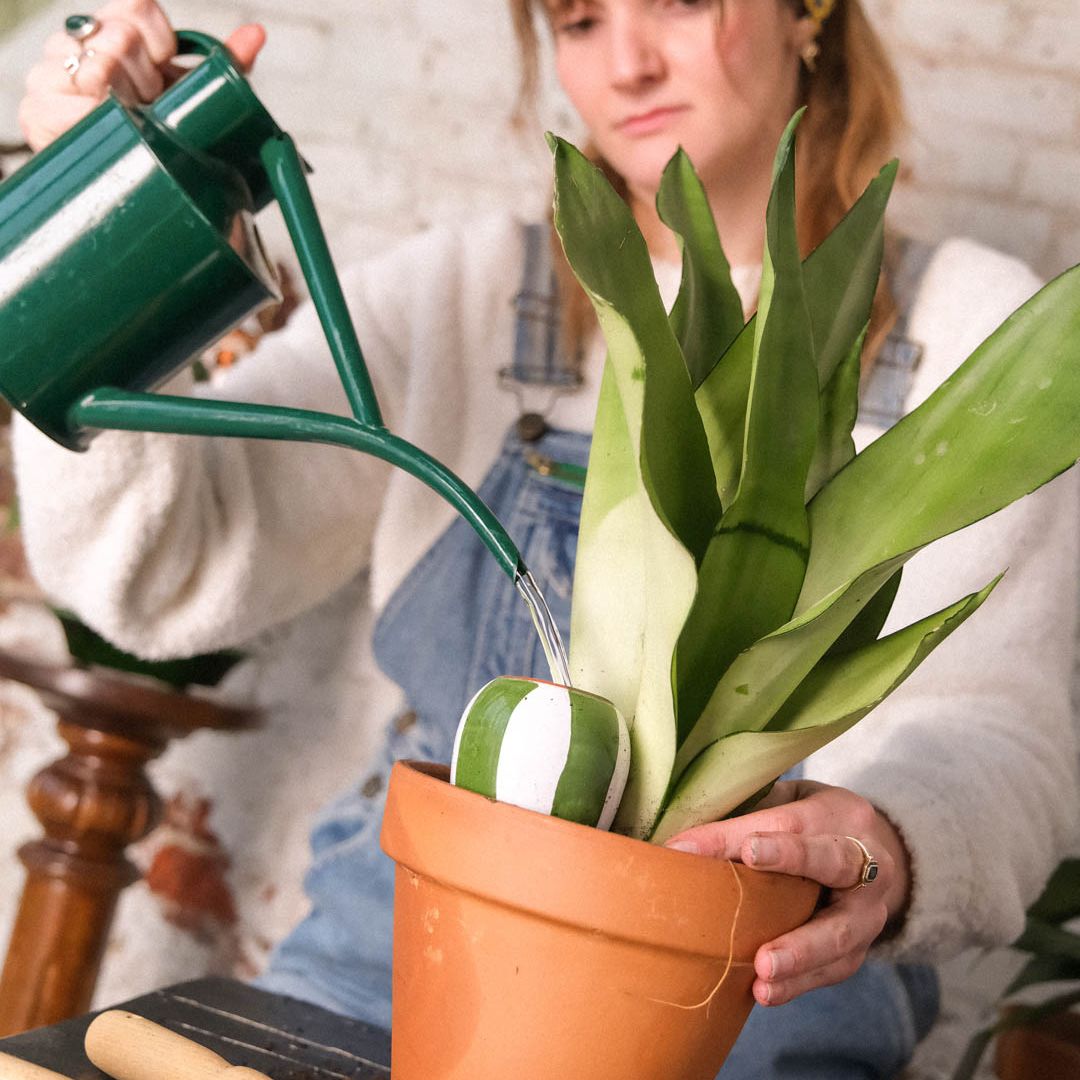
Ever heard of oyas without really understanding how they work? Let us break it down simply. An oya is a small porous terracotta vessel that you plant directly into the soil of your pot. The water inside doesn't flow out all at once: it passes through the micro-pores of the ceramic only when the surrounding soil is dry. This is called osmotic diffusion. No forced watering, just a natural response to your plant's thirst.
This oya watering system has existed for over 4,000 years (traces have been found in China, Iran, North Africa and the Middle East), but models designed for indoor pots are a recent adaptation. And honestly, for the user, it changes everything: no more overwatering that drowns the roots, no more forgetting that dries out the soil. oya watering works in silence while you get on with your life. Take a look at our selection of oyas to find the one that suits your situation.
What size oya to choose for your pot
It's often the first question we ask ourselves. At Pepin, we've deliberately kept the range super easy to read with two sizes, chosen according to the diameter of your pot:
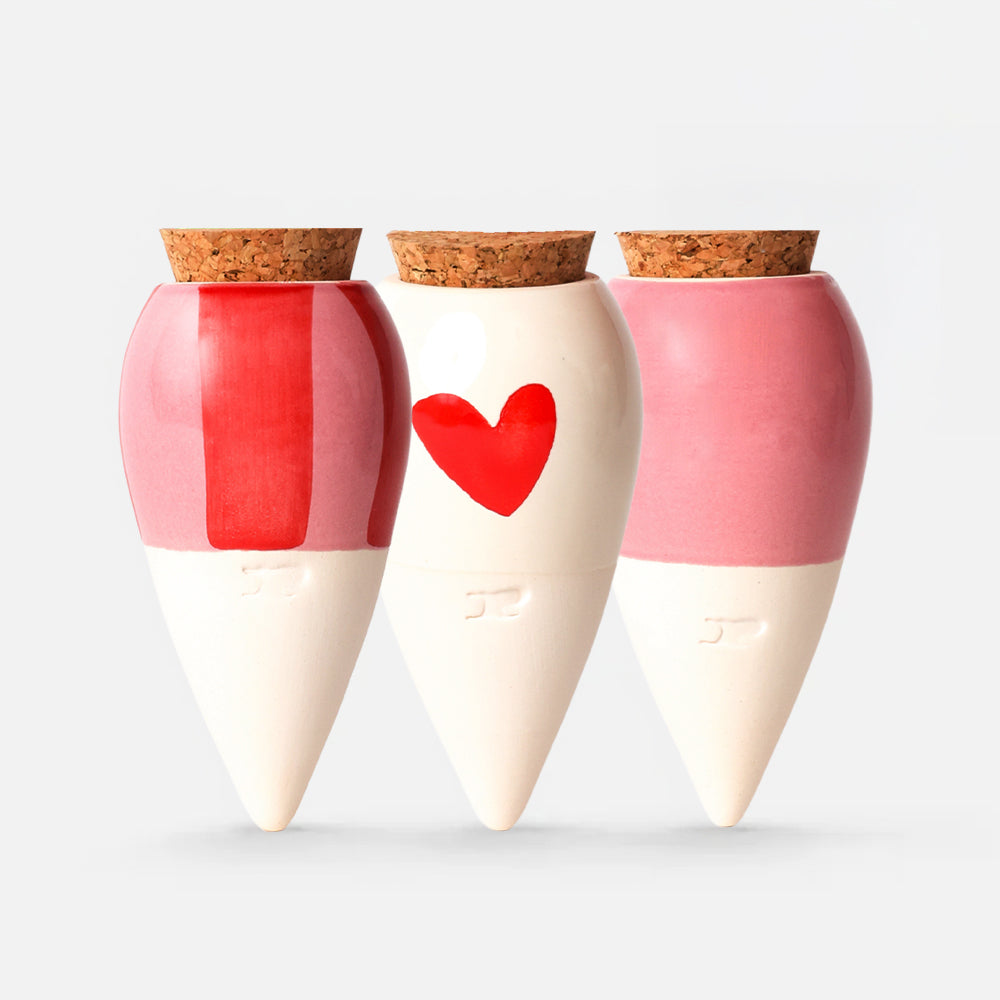
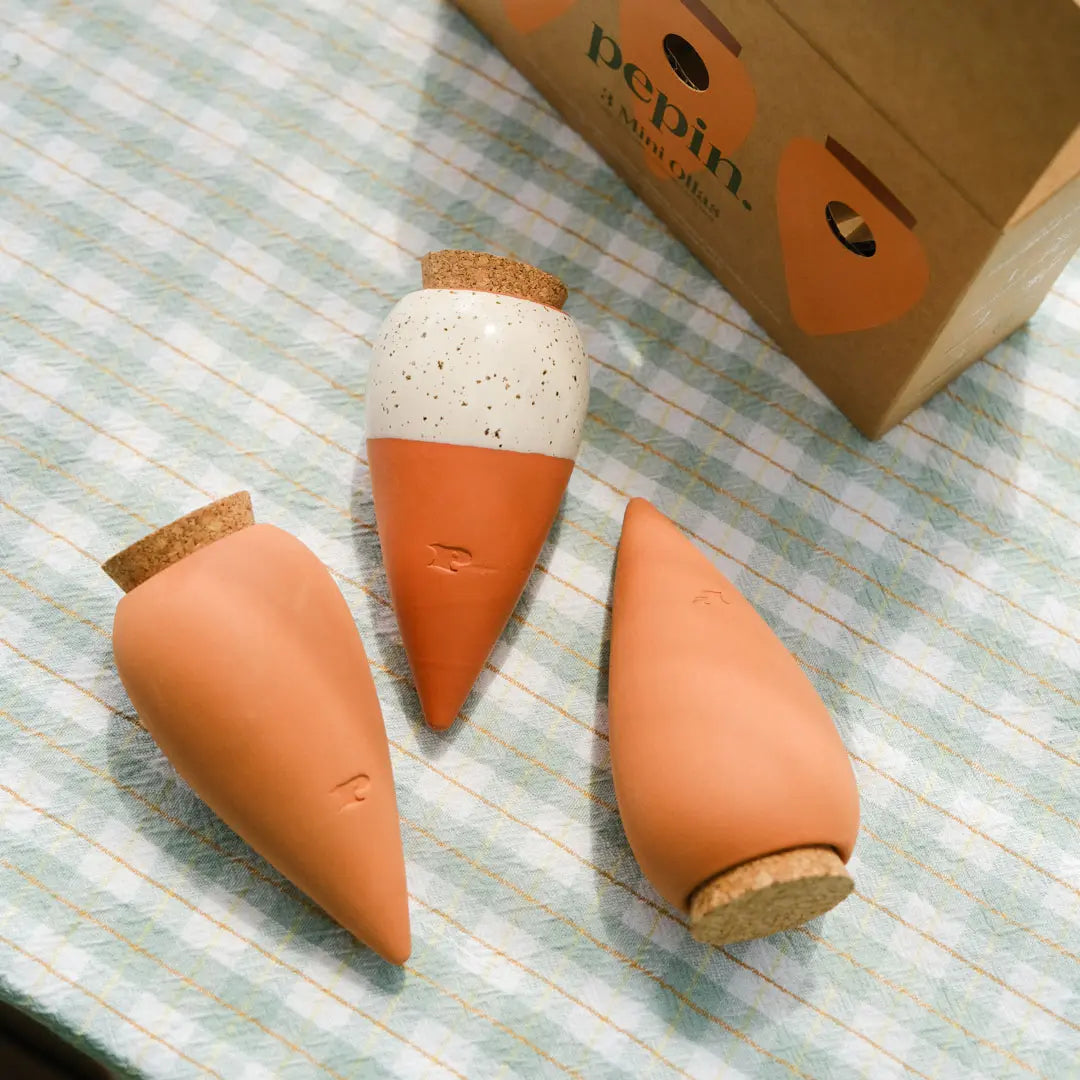
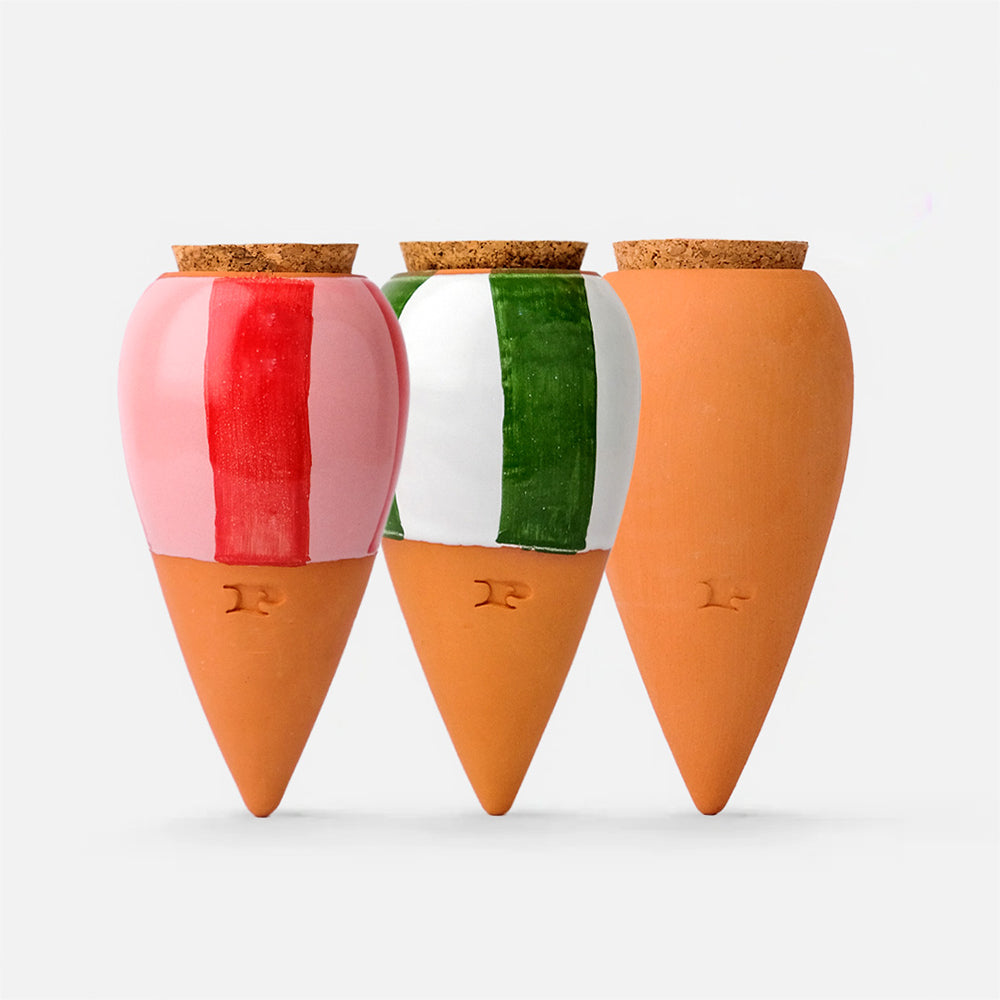
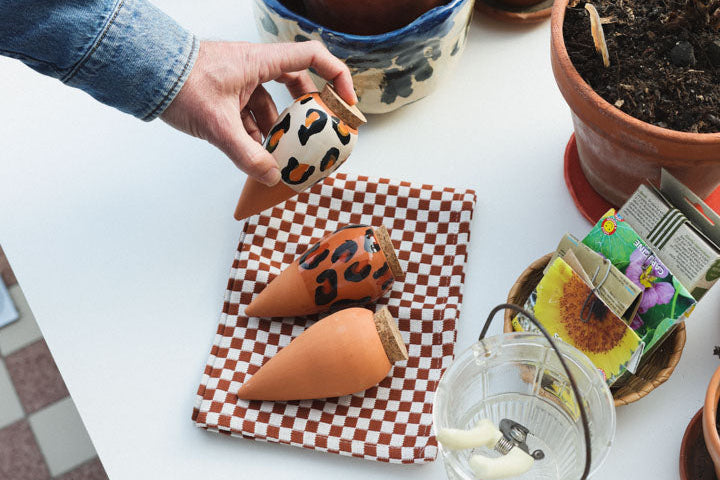
- Mini Oya — for pots under 15 cm in diameter. Ideal for small indoor plants: cacti, succulents, herbs, small pothos, peperomia, ivy. It comes in a trio (because you rarely have just one small plant at home), and is available in 4 colourways: Les Iconiques, Les Lovers, Les Léopards and Les Rayées.
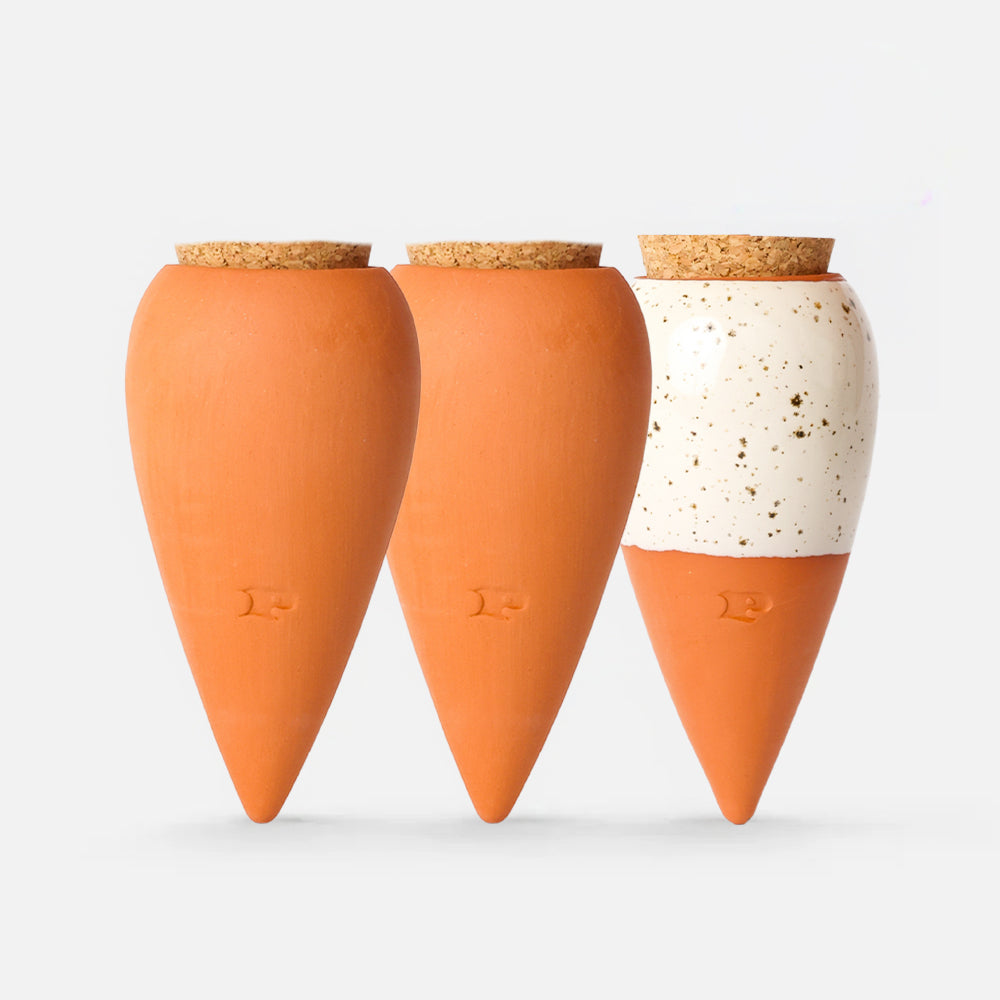
- Classic Oya — for pots over 15 cm in diameter. This is our hero product. Perfect for a monstera, a ficus, an adult philodendron, a rubber plant, an indoor palm, or a balcony pot. Available in a wide variety of colours and patterns (grainy white, sage green, mustard yellow, terracotta, heart, leopard, zebra, striped…).
A tip we wish we'd had from the start: it's better to go slightly undersized than too large. An oya that's too big for a small pot can saturate the soil and create exactly the problems you're trying to avoid. When you know how to use an oya, getting the size right is really the key.
How to plant and fill your oya: the exact steps
Here we go — the heart of the guide. Here's how to get the most out of oya watering:
1. Placement in the pot. Push the oya slightly away from the edge, not in the centre. Leave the neck sticking out 1 to 2 cm above the surface of the soil: this makes it easy to refill without getting your hands in the dirt every time.
2. Burial depth. Two thirds of the oya's body should be in the soil. Not fully buried (the neck must remain accessible), but not sitting on the surface either. Well anchored in the substrate — that's where it works best.
3. Filling. Use water at room temperature, fill up to the neck and place the stopper or saucer provided. If your tap water is very hard, consider mixing it with a little filtered water or rainwater. Limescale gradually clogs the micro-pores of the terracotta and reduces the effectiveness of oya watering over time.
4. The first fill. A little patience: the soil can take 24 to 48 hours to absorb moisture around the oya. That's completely normal. Browse the available models if you're still unsure about the size.
How often to refill your oya depending on the season
Good news: the oya forgives forgetfulness. Here are some simple guidelines by season:
- In spring and summer, a refill about once a week — a little more often if your plant is in full sun or on an exposed balcony.
- In autumn and winter, when plants drink less, every two weeks is generally enough.
These frequencies vary depending on your growing medium (a very free-draining compost speeds up diffusion), the size of the plant, and its light exposure. A monstera in full sun will need more than a pothos in a hallway.
To check whether your oya watering is working well: the soil around it should stay slightly cool to the touch, and your plant should show no signs of stress. Two warning signs to watch for: if the oya empties in less than 24 hours, it's probably too small or the soil was very dry. If it doesn't empty within a week in summer, the soil is already too moist or the pores are starting to clog. Either way, nothing irreversible.
Indoor plants that love the oya (and ones to avoid)
The majority of houseplants get on very well with oya watering. In fact, any plant that likes moist soil without being waterlogged is an ideal candidate.
The great compatibles: monstera, pothos, philodendron, ficus, indoor palms, dwarf banana plants, ferns, calatheas, dracaenas, aglaonemas, and even orchids in a free-draining medium.
Plants to treat with care:
- Cacti and succulents: only during the active season, with a mini oya placed away from the roots and very infrequent refills
- Plants with a marked winter dormancy (tuberous begonias, dormant bulbs): the oya should be removed during dormancy
The oya doesn't overwater by nature (it responds to the soil's demand), so the risk is naturally limited. But some plants that are very sensitive to moisture still deserve extra attention. For small desk plants like pothos or peperomia, the Trio Mini Oyas Les Lovers is perfectly sized.
Frequently asked questions about the indoor oya
Are oyas really effective?
Yes, with two conditions: choosing the right oya size relative to the pot, and using it with compatible plants. Oya watering can reduce water consumption by 50 to 70% compared to conventional watering. Indoors, the principle is identical even if the volumes differ. The effectiveness comes from the fact that water doesn't evaporate at the surface and goes directly where the roots need it.
What are the downsides of oyas?
Let's be honest: the pores of terracotta gradually clog with limescale and water minerals. Once-a-year maintenance is enough: soak the oya in a mixture of water and diluted white vinegar for a few hours, then rinse. Some very compacted growing media can also slow down diffusion. And the oya doesn't completely replace observing your plants: it automates watering, it doesn't think for you.
Can you use an oya outdoors, on a balcony or terrace?
Yes, absolutely. Our oyas are primarily designed for houseplants, but the principle works just the same in a balcony pot, a window box, or a terrace planter. Bury the oya two-thirds deep in the growing medium, fill through the neck, and close with the stopper provided to limit evaporation. Handy for stretching out watering during long weekends or when you're away.
How do you water hoyas?
We see where you're going with this — and we love the confusion (hoya the plant vs oya the diffuser). Hoyas, those pretty succulent plants with waxy flowers, actually love oyas. Why? Because they like a slightly moist growing medium between waterings, without ever sitting in water. A well-sized oya meets exactly that need. A beautiful match, as it turns out.