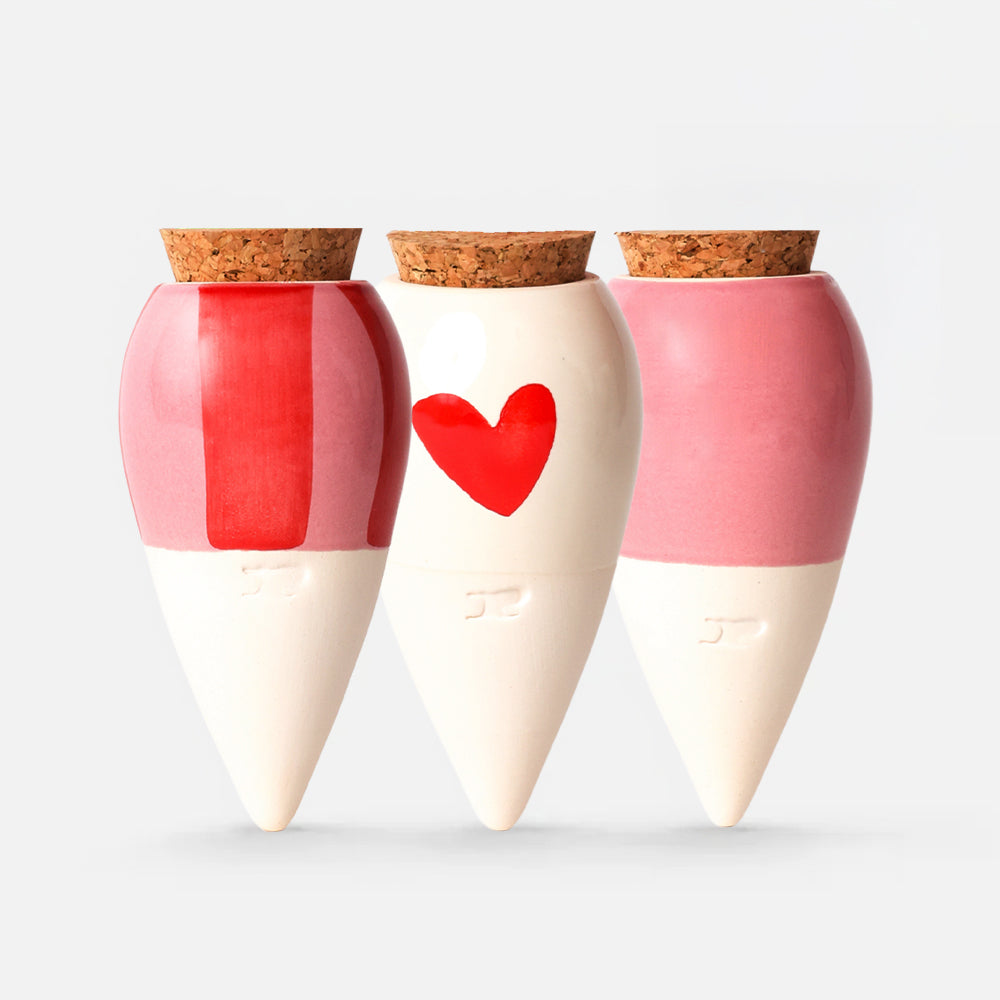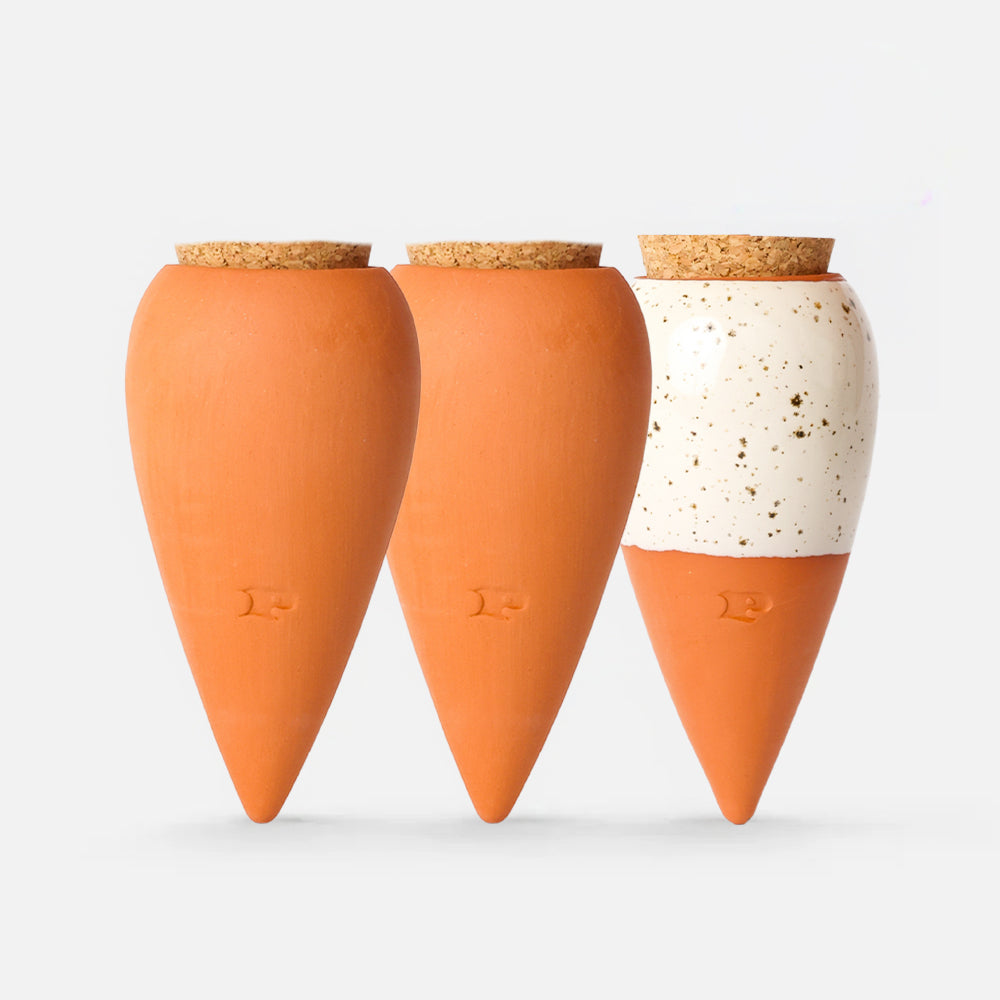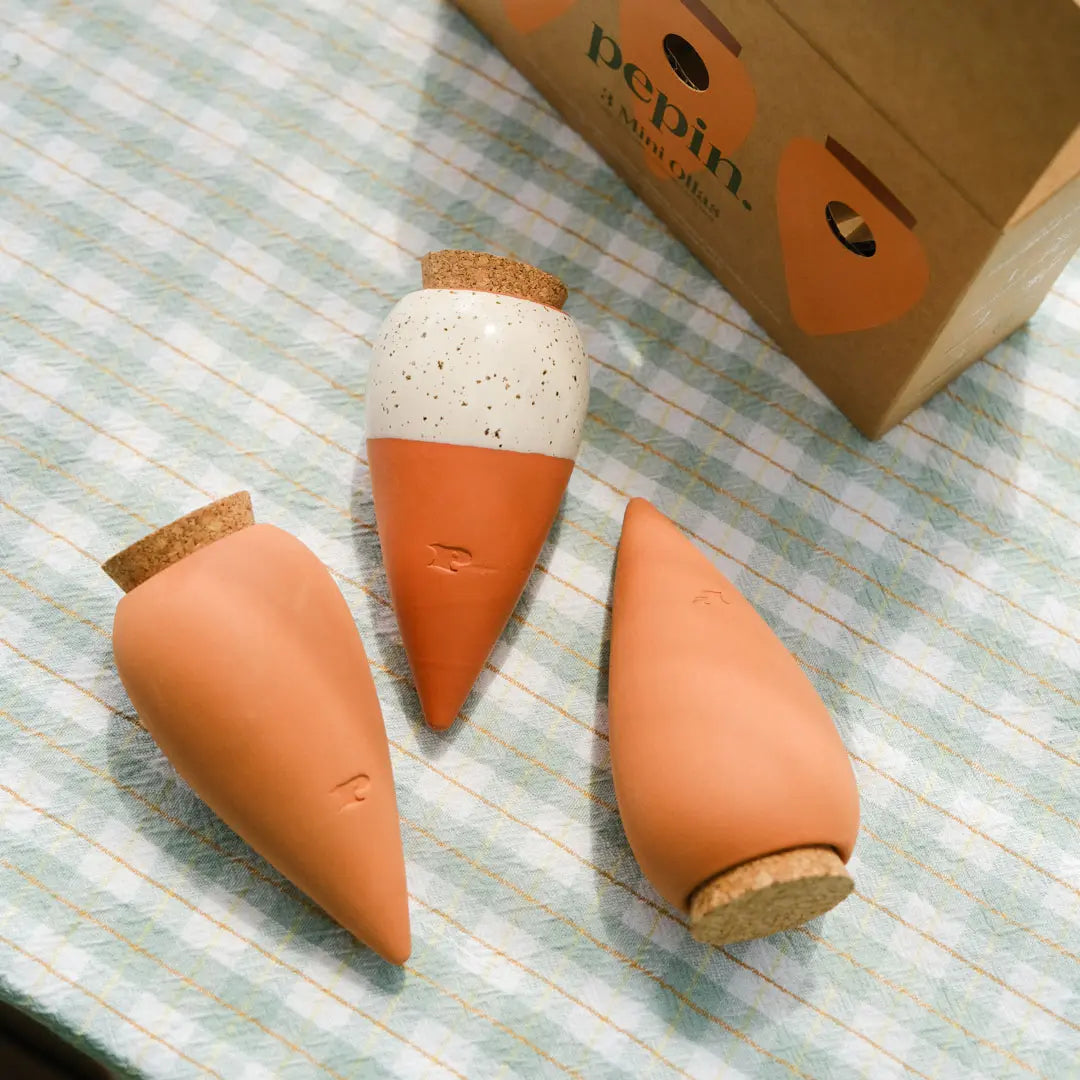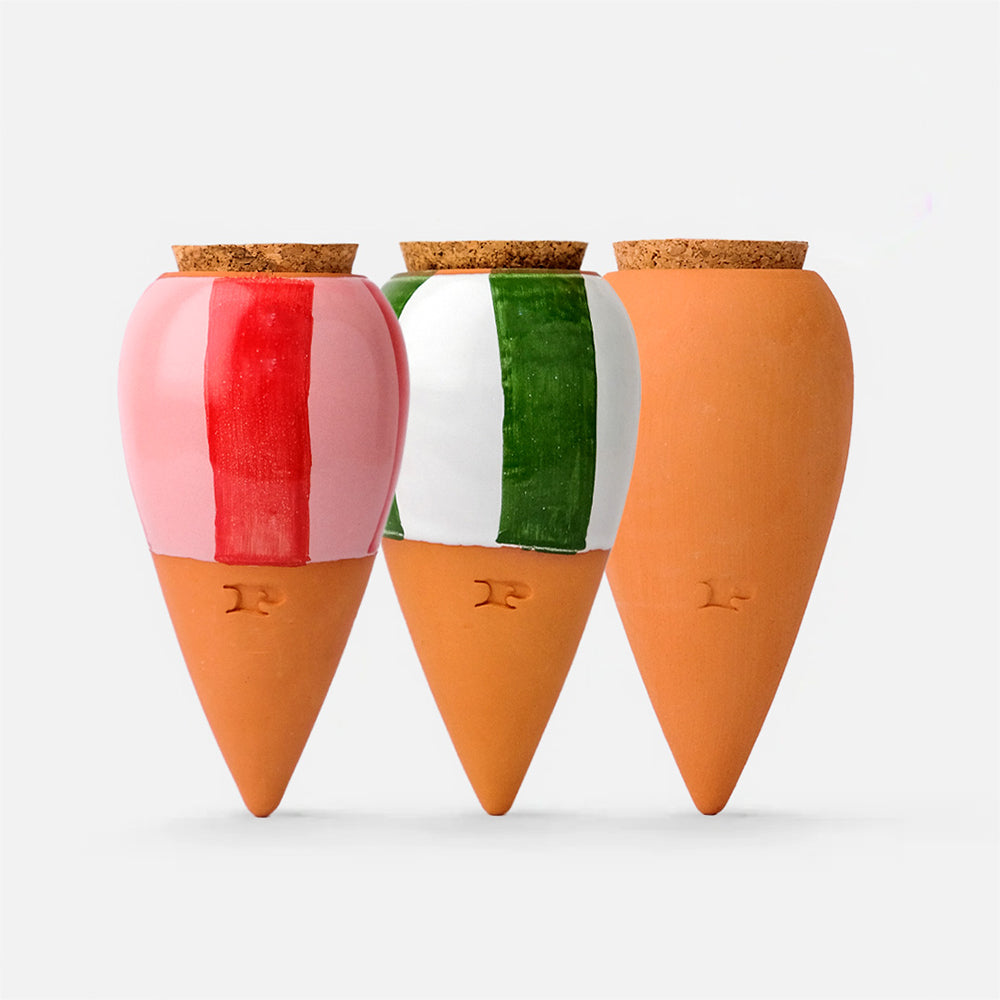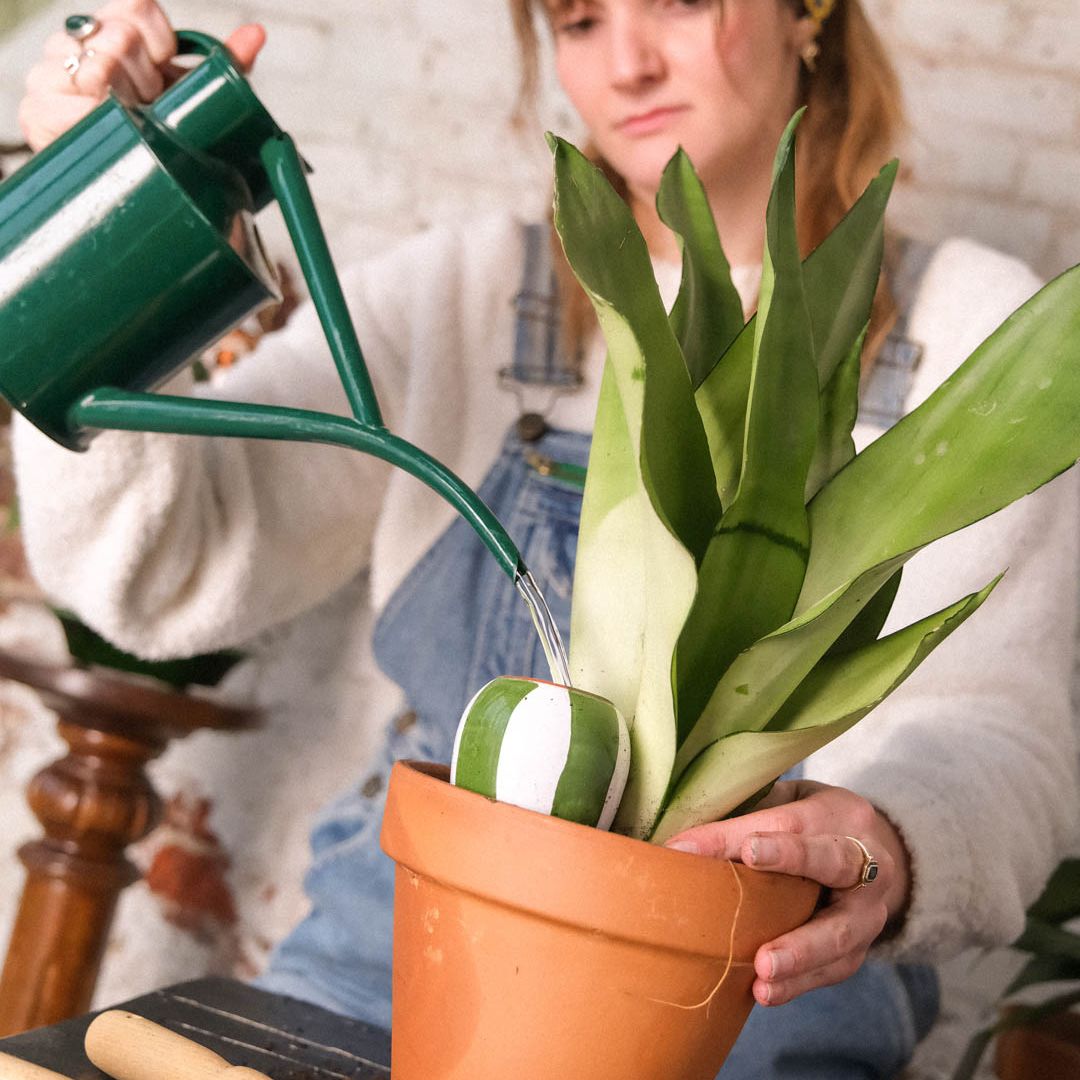

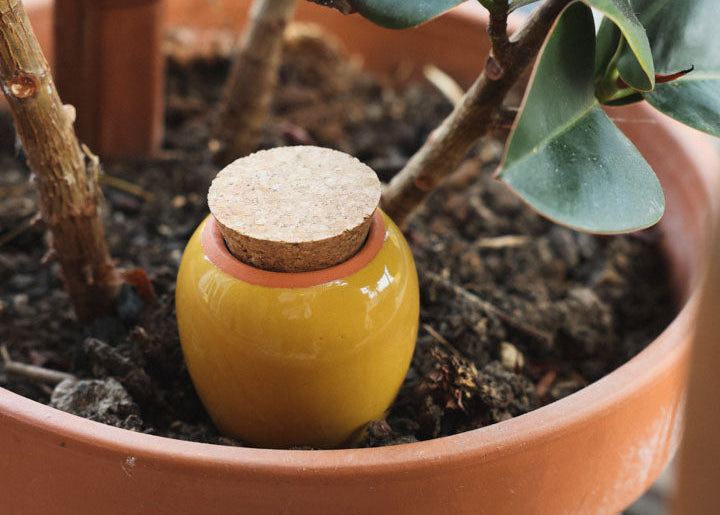
The terracotta oya – far more than a watering tool
Some objects survive centuries without showing a single wrinkle. The terracotta oya is one of them. Used for more than 4,000 years in traditional farming – particularly in North Africa and China – this little marvel of simplicity has never stopped proving its worth. The concept? A microporous terracotta diffuser that you fill with water and plant directly into the compost. The water seeps out slowly, at exactly the pace the plant needs. No tech, no sensor. Just the natural porosity of clay.
But here's what has changed: contemporary models, like those in our selection of oyas, have been entirely reimagined for indoor living. Refined finishes, elegant shapes, warm tones. The terracotta pot oya is no longer just a gardening tool: it's a fully-fledged decorative object. Imagine an ancestral, millennia-old gesture finding its place on your shelf between a vase and a candle. It's precisely this dual identity – functional and aesthetic – that makes the oya so endearing.
Material pairings: how to match terracotta with its surroundings
The beauty of a terracotta oya is its ability to converse with almost any material. You just need to know which ones to choose to create true harmony. Here are three pairings that never fail.
Terracotta and brass (or copper). Place your oya next to a small golden brass tray, a copper watering can, or a lamp with metallic accents. The warmth of the terracotta meets the subtle gleam of metal: you get a mid-century or sophisticated bohemian feel, effortlessly. The contrast between the raw material and the golden sheen creates a genuinely seductive visual tension.
Terracotta and polished concrete (or stoneware). Here, you lean into raw textures. A concrete worktop, a stoneware saucer, a terracotta oya. The palette stays neutral, mineral, almost meditative. Perfect for a loft or Scandinavian-inspired interior.
Terracotta and rattan (or pale wood). The most natural pairing of all. A rattan plant pot cover, an oak console, an oya nestled among generous foliage. You've got yourself a little indoor garden corner and décor that breathes softness and wabi-sabi. One extra tip: echo the ochre and earthy tones in your cushions or frames to create cohesion throughout the room.
oyas and interior styles: which aesthetic suits them best?
Wondering whether an oya can truly fit into your décor? The answer is yes, whatever your style. But certain aesthetics show it off particularly well.
Wabi-sabi. If you love imperfect objects, patinated surfaces and raw materials, the oya is made for you. Place it on a piece of aged wood, next to an asymmetric pottery piece or a chipped bowl you've kept out of love. Every terracotta pot oya is unique, with its small variations in shade and texture. That's precisely what makes it a wabi-sabi object par excellence.
Boho. Climbing plants, hanging macramé, light filtered through a linen curtain. In this generous, organic world, the oya becomes one more detail that reinforces the living character of the space. Tuck it into a pot overflowing with ivy or pothos, and it will blend into the décor as if it had always been there.
Minimalist. Here, form matters enormously. Opt for models with clean finishes, like a grainy white or a very smooth terracotta. The watering oya adds a touch of warmth without cluttering the space. A little trick: group three small models in the same tray to create a pared-back yet living composition. The effect is striking.
Styling ideas to show off your oyas at home
Let's get practical. How do you turn a simple terracotta oya into a genuine decorative feature? Here are a few ideas I love.
Create a plant tray. Take a lovely wooden or ceramic tray, arrange two or three oyas of different sizes on it, surround them with pale pebbles, a little moss and a few mini plants. The result is a small miniature garden, perfect for a coffee table or hallway console. Simple, beautiful, and alive.
Another option: the shelf centrepiece. A single oya, planted in a large glazed ceramic pot, placed prominently on an open shelf. Nothing else around it (or almost nothing). Let it breathe. Sometimes a single object is enough to give character to an entire wall.
For fans of windowsills, compose a row of oyas and succulents bathed in natural light. Terracotta catches the morning light like no other material.
And for a cosy desk corner? Pair an oya with a candle, an open notebook and a few dried leaves. The effect is immediate: you feel at ease. As for upkeep, a simple regular rinse is all it takes to keep your watering oya in perfect condition. It retains its authentic look over time – and that's no small part of its charm.
Choosing the right oya for your plant and pot
Now for a bit of practical advice (quick, I promise). Not all oyas suit every situation, and that's perfectly normal. The choice depends above all on the size of your pot and the type of plant you're growing.
For small indoor pots (herbs, small tropical plants, certain succulents), mini oyas do a remarkable job. They slip discreetly into the compost without taking up all the space. Models like the Trio Mini Ollas are perfect for equipping several pots at once, while a classic Olla Terracotta suits slightly larger containers.
What makes the oya watering system so clever is the natural porosity of artisan terracotta. The water doesn't simply drain away: it's released according to the moisture level in the soil. When the soil is dry, the oya diffuses more. When it's damp, the flow slows. Result: oya watering virtually eliminates any risk of overwatering – that classic mistake that rots so many roots.
And then there's this detail I particularly love: every terracotta pot oya is slightly different. Colour variations, surface grain, imperfect shape. These are handcrafted pieces, and it shows. In home décor, that's exactly what you're looking for.
Frequently asked questions about oyas
How do you water with oyas?
Nothing could be simpler: plant the oya in your pot's compost, fill it with water through the neck, then replace the stopper. The water diffuses slowly through the micro-pores of the terracotta. In summer or for thirsty plants, refill every 3 to 5 days. In winter, once a week is generally enough. Keep an eye on the water level in the neck to adjust the frequency.
What are the downsides of olla pots?
Let's be honest: the terracotta oya needs regular refilling – it's not a fully autonomous system for several weeks at a time. It's also not suited to every plant, particularly cacti during dormancy, which need virtually no water. Limescale deposits can also build up over time, but a simple rinse with clear water removes them easily. These limitations are minor compared to the watering convenience the system provides.
How many oyas do you need per m²?
For a vegetable patch or large outdoor planters, allow approximately one oya every 50 to 60 cm. This ensures even diffusion through the soil. Indoors, it's simpler: one oya per pot is enough in the vast majority of cases. Simply match the model size to the volume of your container.
Which oyas are best for tomatoes?
Tomatoes are very thirsty plants, especially when in full production. Go for larger oya models. The oya watering system works very well for demanding plants like tomatoes, as long as you check the water level every two or three days in warm weather.