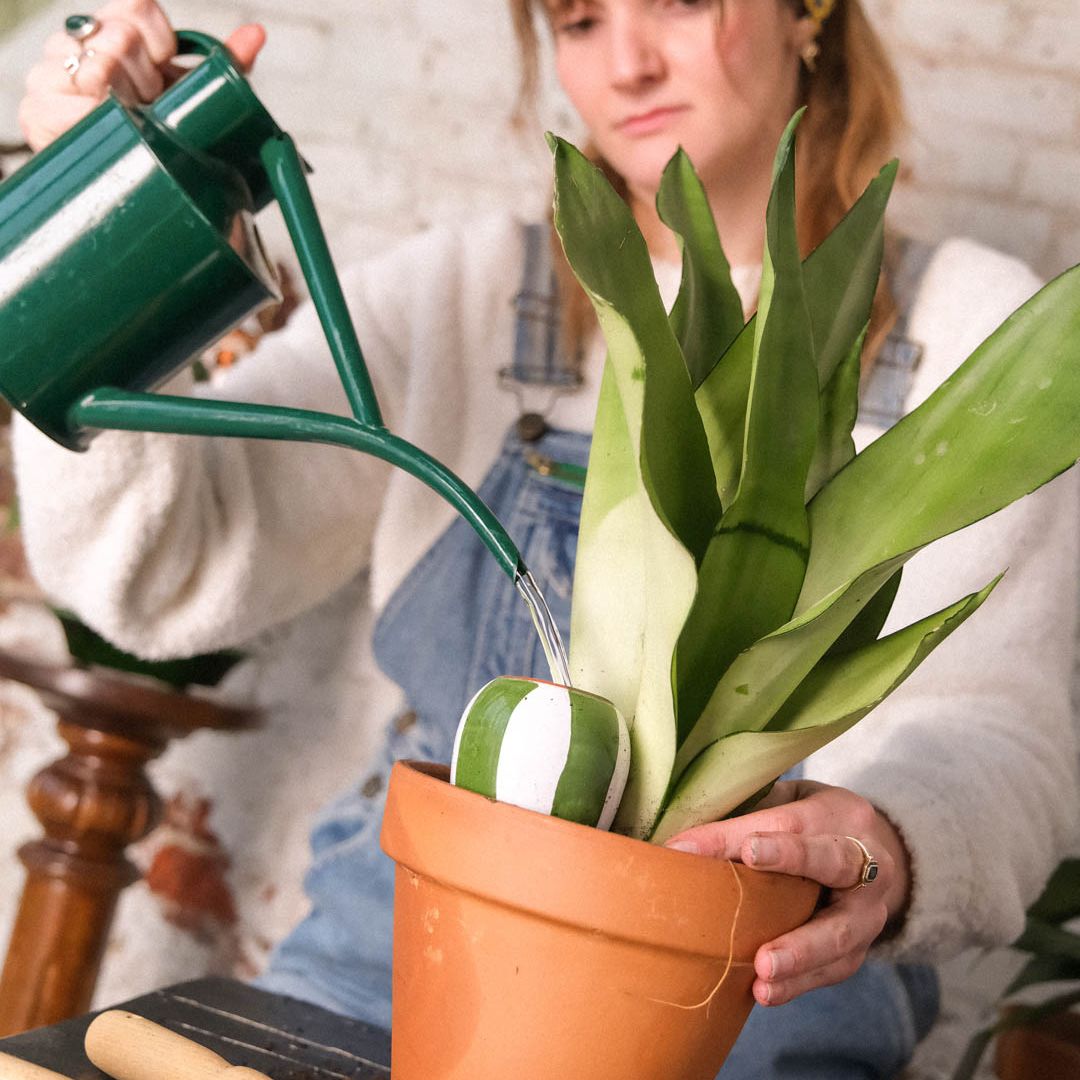


The oya, a millennia-old object at the service of your plants
Imagine an irrigation system so effective that it has survived more than 4,000 years of history. Not a tech gadget, not a recent invention: a simple terracotta jar. The oya (also known as olla, from the Spanish word meaning "jar") has been used since antiquity to irrigate crops underground. Archaeologists have found traces of this system in Iran and ancient China, as well as in North Africa and the Middle East, where every drop of water counted.
The principle is disarmingly simple: you bury a porous jar filled with water in the soil, and it slowly diffuses moisture towards the roots of plants. If this technique has survived the millennia, it's simply because it works. There's no need to reinvent it. Today, the terracotta oya is experiencing a real revival, this time adapted to our interiors and potted plants. You can also discover our selection of oyas designed specifically for indoor use. Watering with an oya reconciles an ancestral agricultural heritage with our modern lifestyles, where time is often short to tend to each plant as much as we'd like.
How an oya works: the magic of capillarity
Let me explain it simply. Terracotta is a naturally porous material, dotted with micro-pores invisible to the naked eye. When you fill a terracotta oya and plant it in a pot, water slowly passes through its walls into the surrounding substrate. This is the principle of capillarity.
But what makes this system truly clever is that it self-regulates. Think of a piece of blotting paper placed on a puddle: it absorbs water until it's saturated, then stops. Here, the opposite happens. When the soil around the oya is dry, it "draws" water through the walls. When the soil is sufficiently moist, diffusion slows, then stops. Your plant receives exactly what it needs — no more, no less.
This oya watering system therefore avoids two classic pitfalls: over-watering (enemy number one of roots) and drying out between forgotten waterings. The oya, this terracotta pot of seemingly simple appearance, actually works as an autonomous humidity regulator. No sensor, no programming. Just physics.
Why it's so much better than a classic watering can
With a watering can, you pour water onto the surface. Some evaporates, some runs off without reaching the deep roots, and if you have a heavy hand, you drown the root system. We've all been there (that poor plant that fell in battle on a Sunday evening from too much attention).
Watering with an oya changes things on several concrete points. First, water goes directly to the roots, with no surface loss. Then, agronomic studies show that irrigation with olla can reduce water consumption by 50 to 70% compared to conventional watering. That's huge. Add to that the autonomy: an oya can keep your plant hydrated for several days without any intervention on your part. Ideal for long weekends or chronic forgetfulness.
But let's be honest, the oya for watering your plants has its limits too. The limescale from tap water can clog the pores over time, which requires regular descaling. And you need to check the water level in the oya from time to time. Nothing complicated, but it's not a "forget everything for a month" system.
How to use an oya in an indoor plant pot
Wondering how to plant a terracotta oya in your pots? Here's how to do it — it's really straightforward.
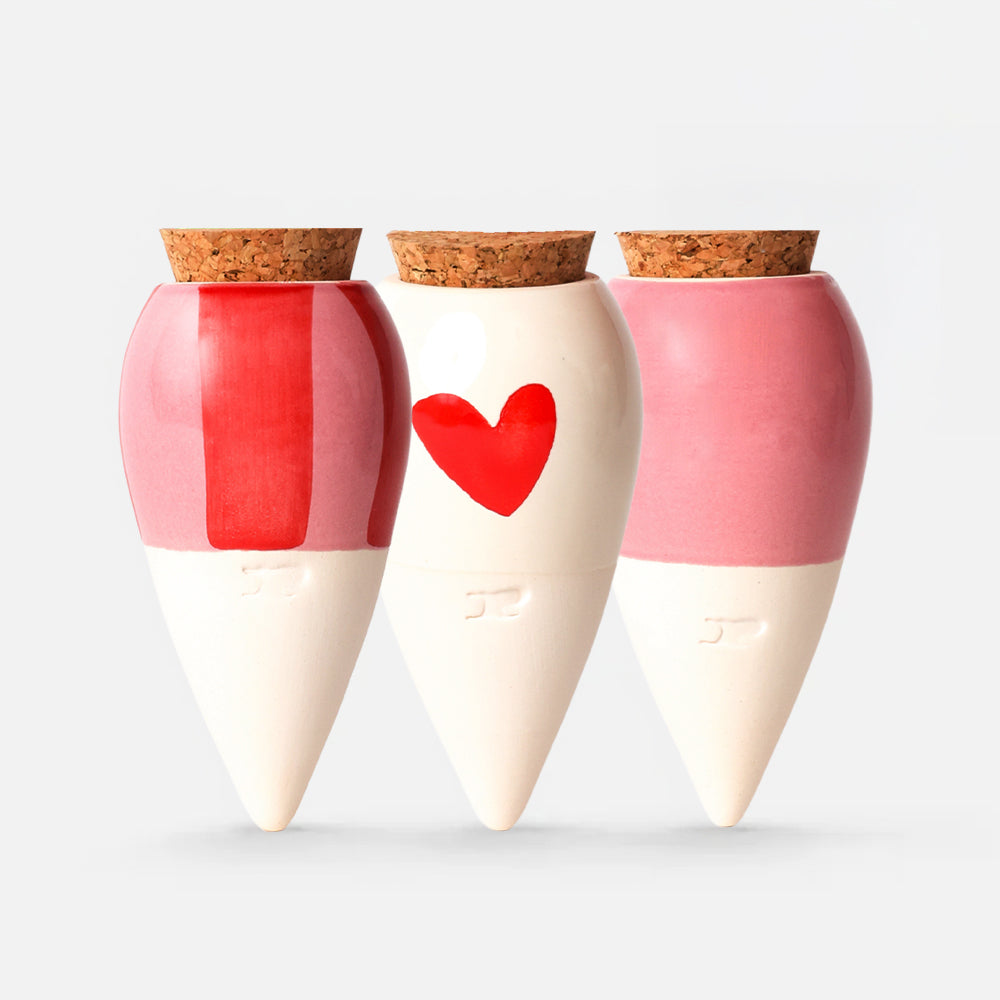
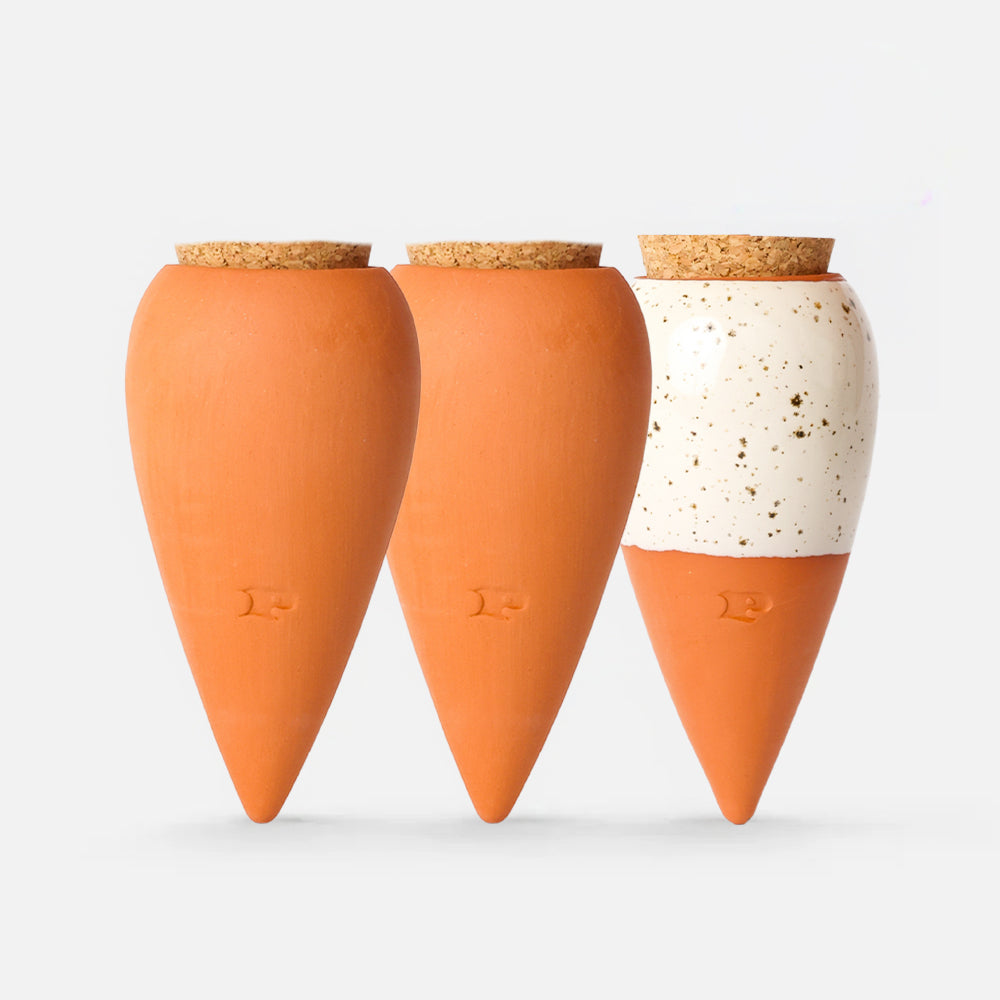
Step 1: Choose an oya suited to the size of your pot. For pots with a diameter of less than 15 cm, a mini oya is more than enough. The Trio Mini Ollas The Lovers is perfect for getting started with several plants.
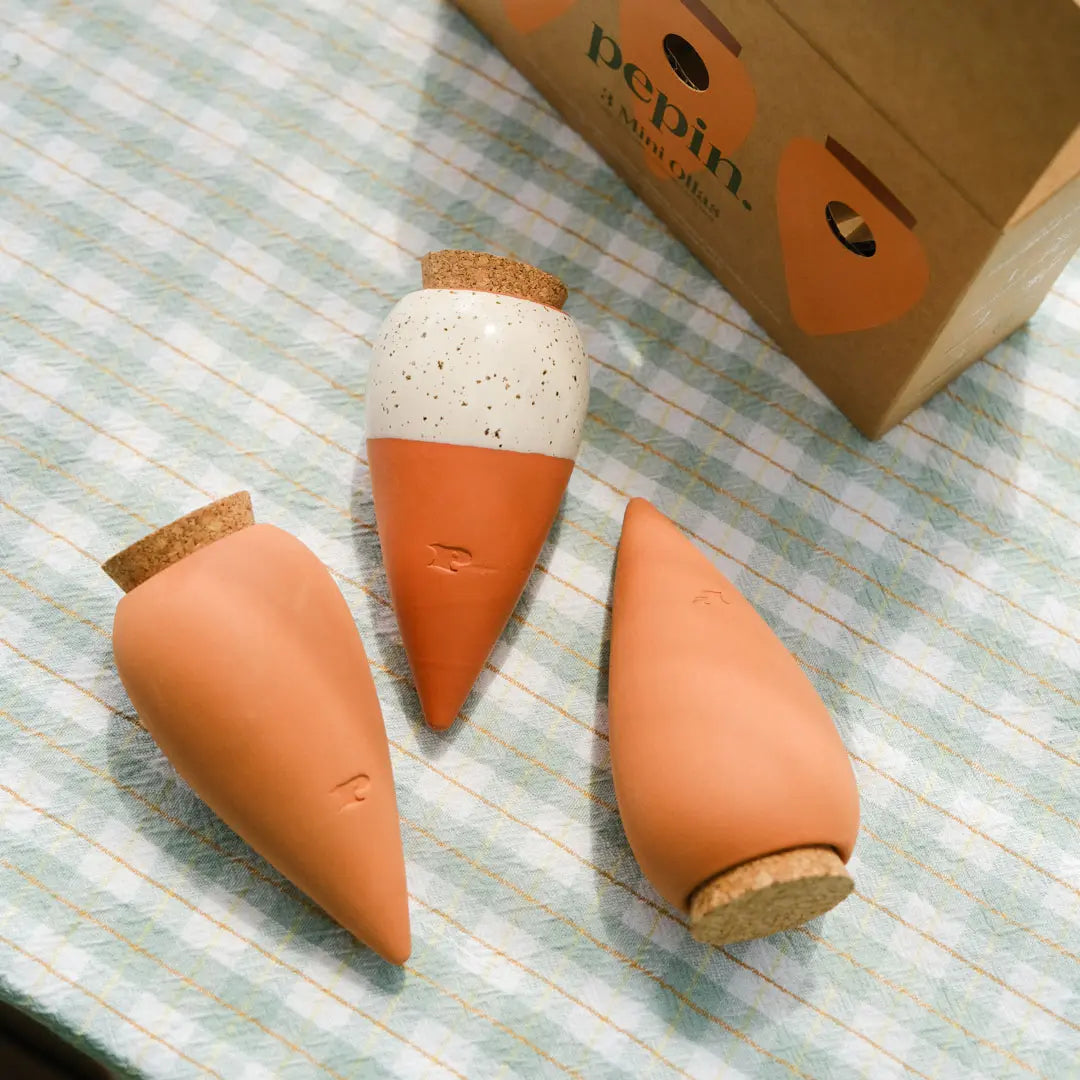
Step 2: Gently bury the oya in the substrate, leaving the neck sticking out above the surface. That's where you'll refill it.
Step 3: Check the level every 3 to 5 days and top up if needed. A tip: opt for filtered water or rainwater. Less limescale means less maintenance and a terracotta oya that lasts longer. If a whitish deposit appears, a simple rinse with clean water is enough to restore optimal porosity.
Which oya to choose depending on your plant and interior
Not all oyas are equal, and the right choice depends on both your plants and your decorating tastes. For indoor potted plants (pothos, monstera, ficus, herbs), mini oyas are ideal. If you have larger planters, look towards slightly bigger sizes.
In terms of plants, those that like consistently moist soil are the best candidates: philodendrons, ferns, calatheas, basil. On the other hand, avoid oyas for succulents, cacti, or any plant that needs to dry out completely between waterings. Constant moisture simply doesn't suit them.
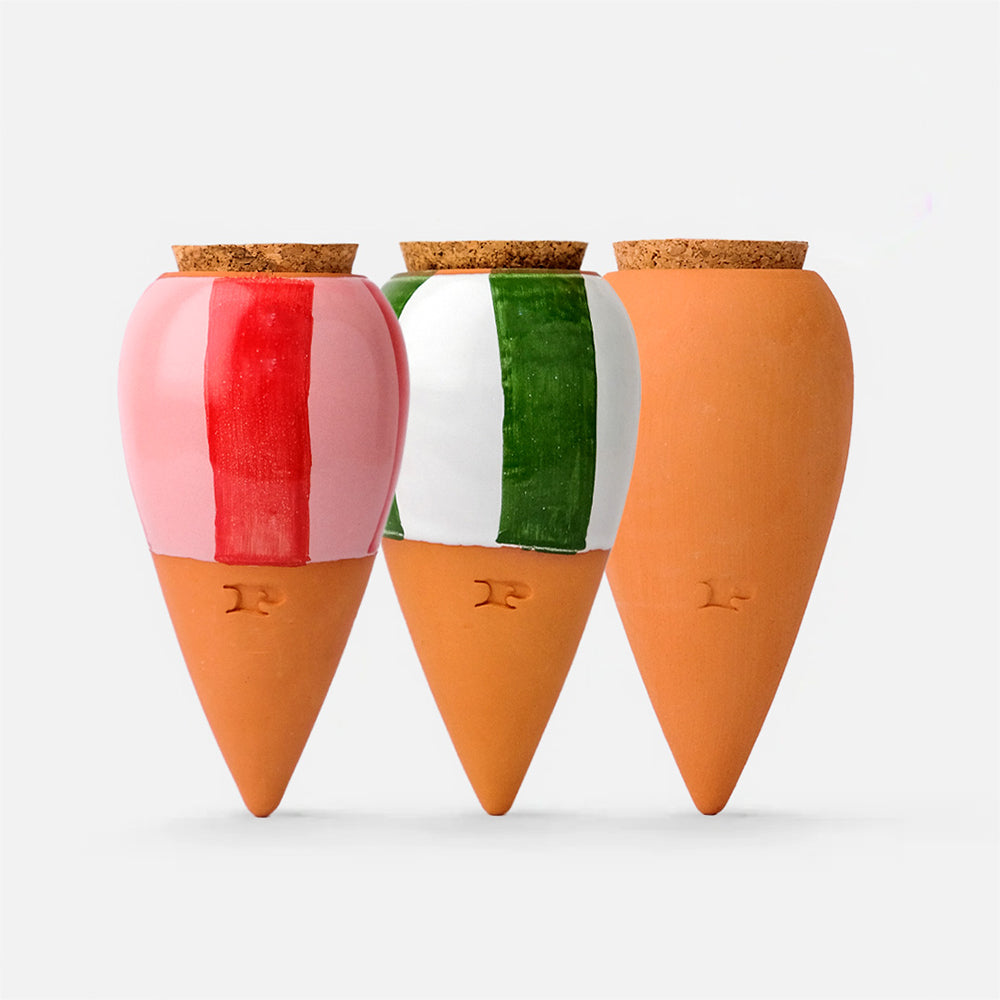
Aesthetics matter too. Your oya, this terracotta pot planted in the middle of your monstera, is part of the décor. The Trio Mini Ollas Les Rayées, for example, brings an artisanal touch that pairs well with a bohemian or minimalist interior. In terms of price, the oya for watering remains a modest and durable investment, especially compared to automatic watering systems. A clever little object that does a lot.
Frequently asked questions
What are the downsides of olla pots?
The main downsides are maintenance related to limescale (descaling with white vinegar is necessary from time to time), incompatibility with succulents and cacti that prefer dry soil, and the need to check the water level occasionally. It's not a fully autonomous system, but it remains very low maintenance.
How do you water your plants with oyas?
It's simple: fill the oya with water, push it into the substrate leaving the neck sticking out, then top up the level every 3 to 5 days. The oya diffuses water gradually according to the plant's needs. Use filtered or rainwater where possible to limit limescale.
How many oyas do you need per indoor plant?
Indoors, a single oya per pot is generally enough, provided you choose the size suited to the pot's diameter. For pots with a diameter of less than 15 cm, a mini oya works perfectly. For wider planters, you can place two classic oyas for even diffusion.
How do you water a hoya?
Be careful not to confuse hoya (tropical plant) and oya (watering system). The hoya appreciates moderate watering: let the substrate dry out slightly between waterings. A mini oya can work if you keep an eye on it, as the hoya doesn't like constant excess moisture.