
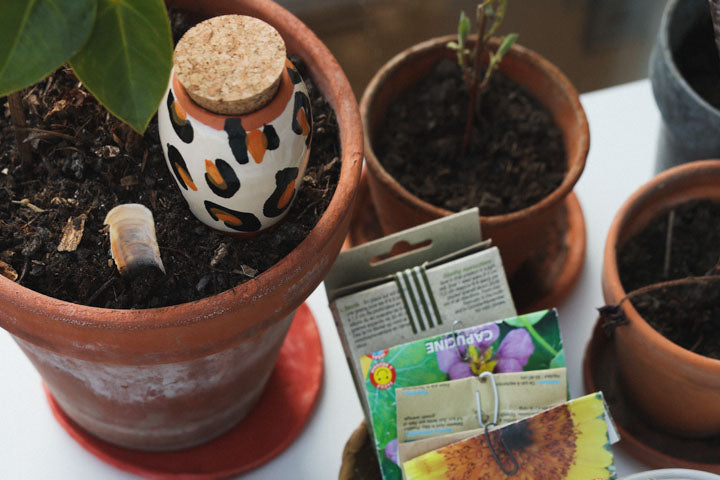
What an oya actually does in a pot (and why terracotta changes everything)
Imagine a water diffuser that reads your plants' minds. That's exactly what a terracotta oya does. The principle is simple: unglazed terracotta is naturally microporous. Water passes through its walls very slowly, drawn by the osmotic pressure created by thirsty roots. When the soil is dry, the roots "pull" the water. When it's moist, diffusion slows down. All on its own, no electronics, no programming.
This system is nothing new: it has over 4,000 years of history. Traces of porous pottery buried to irrigate crops have been found in China, Iran, North Africa and the Middle East. What's changed today is that we've adapted this ancestral principle to our houseplants with our selection of oyas designed for your living room — and, at the margins, for your balcony pots.
The key to the system is the porosity of raw terracotta. A glazed ceramic or plastic will never let a single drop through. For oya watering to work, you absolutely need untreated terracotta. It's the only material that truly regulates a plant's water needs. The size of the oya depends on the diameter of your pot. We'll get to that.
What size oya for which plant: the simple guide
It's the question everyone asks. And often, nobody answers it clearly. At Pepin, we've deliberately kept the range super easy to read with two formats, chosen based on the diameter of your pot:
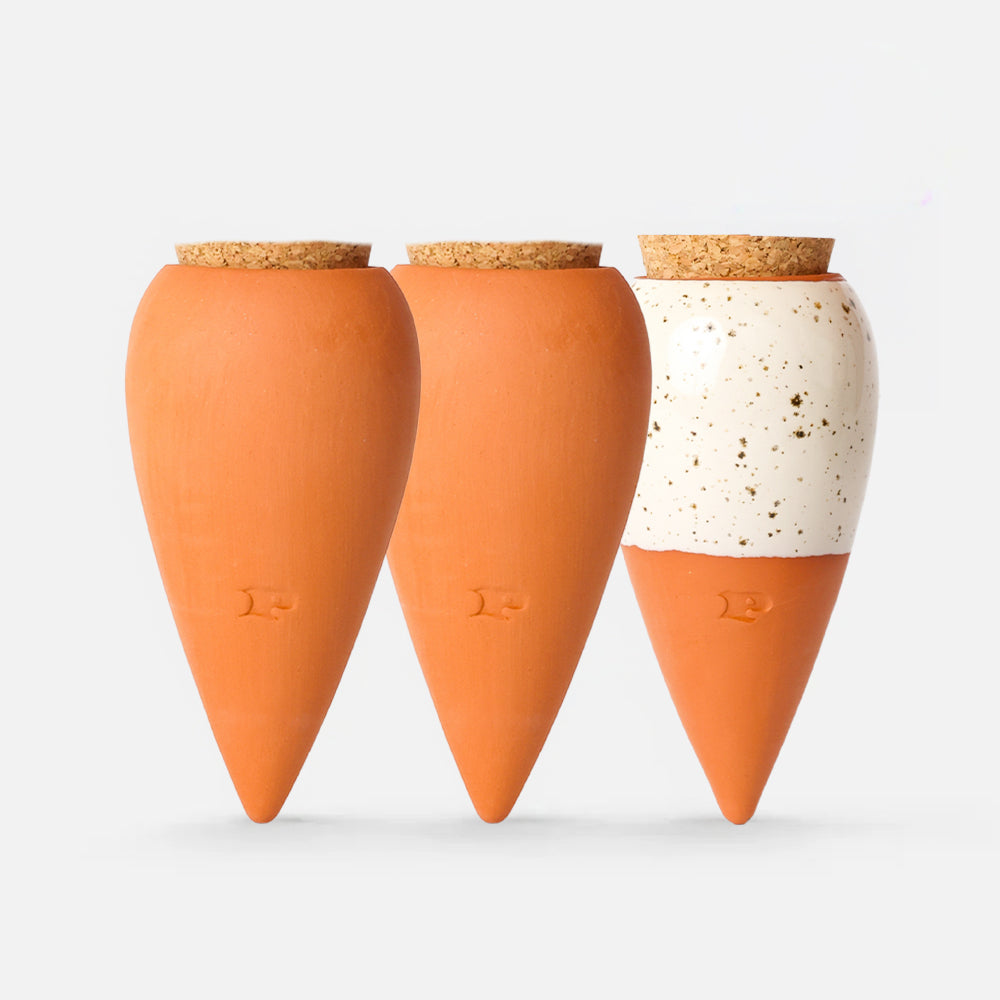
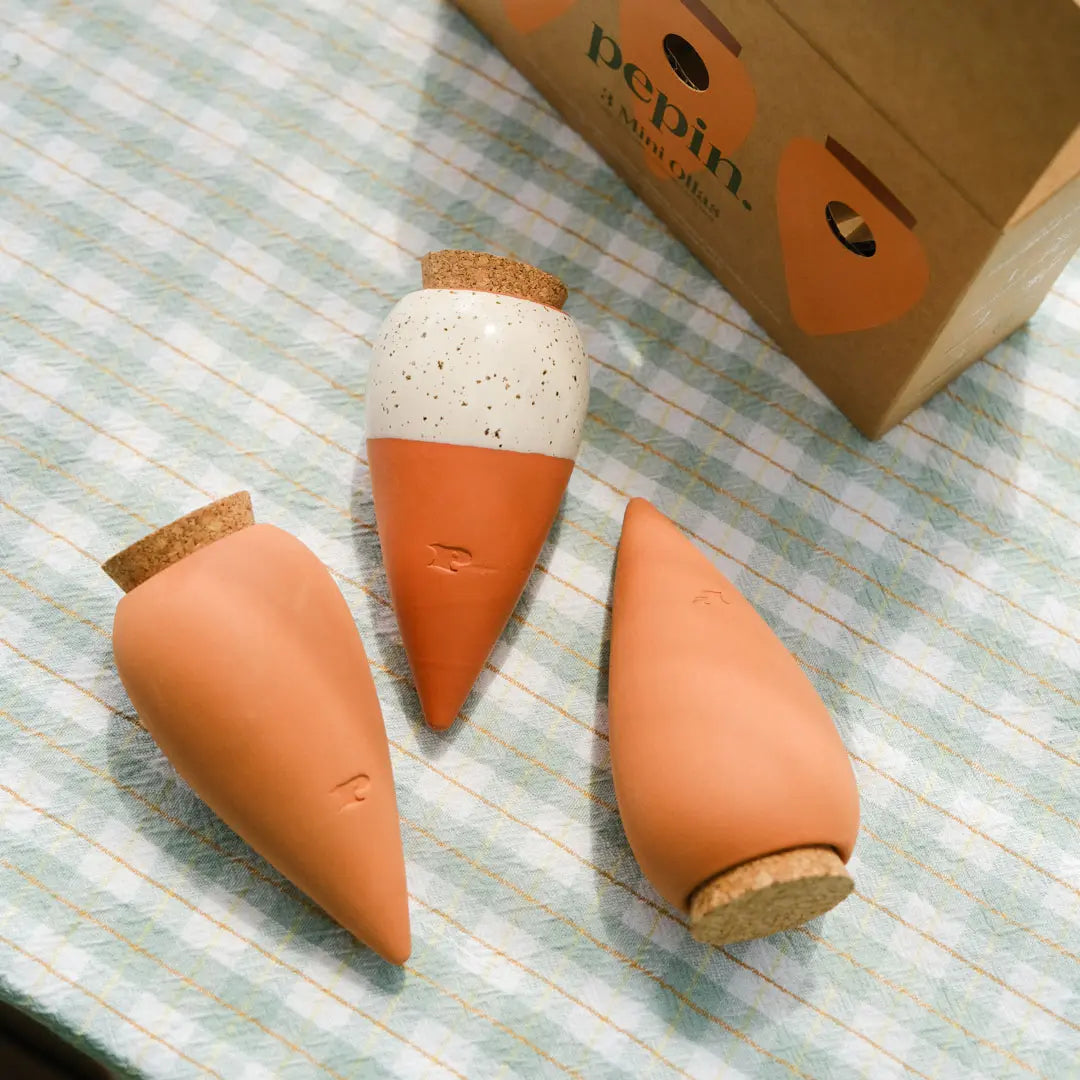
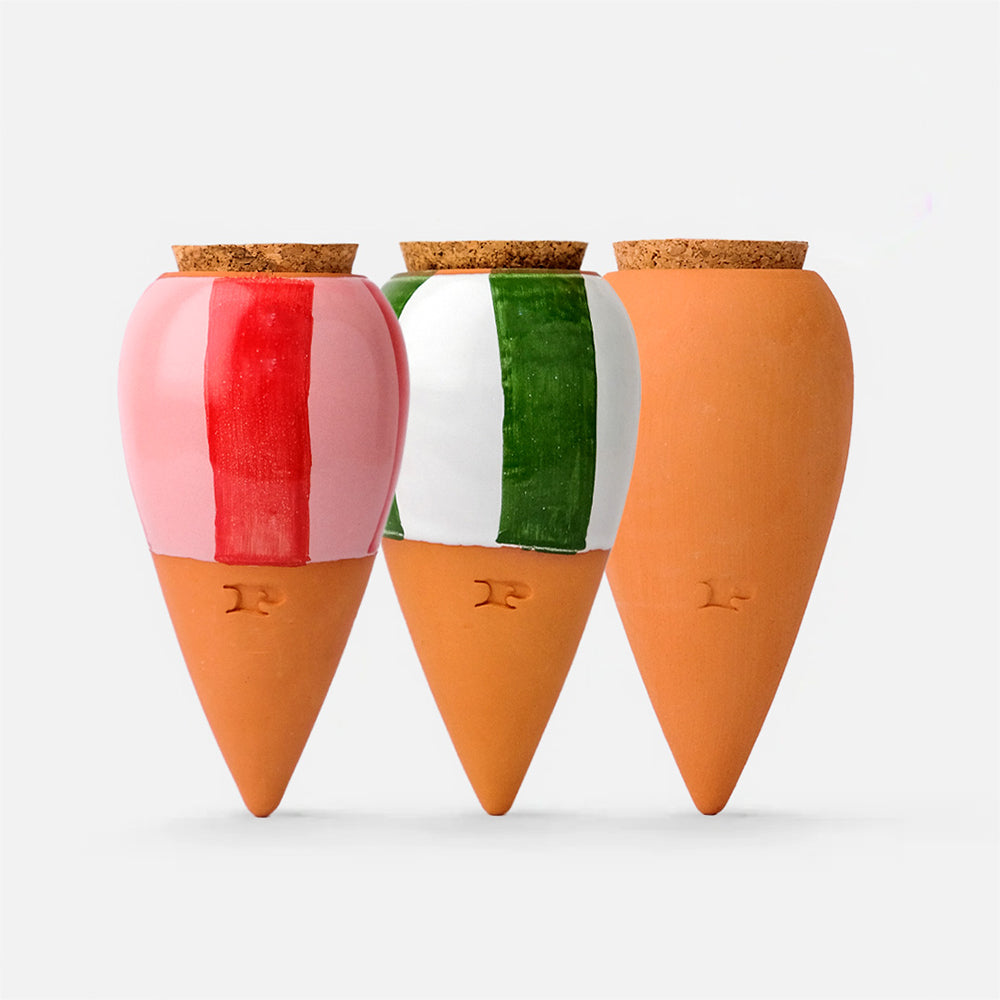
- Mini Oya — for pots under 15 cm in diameter. Perfect for small houseplants: cacti, succulents, potted herbs, small pothos or philodendrons, small succulents. It comes in a trio (because you rarely have just one small plant at home), and is available in 4 colourways: Les Iconiques, Les Lovers, Les Léopards and Les Rayées.
- Classic Oya — for pots over 15 cm in diameter. This is our hero product. Perfect for a monstera, a ficus, an adult philodendron, a rubber plant, a tropical plant, or a balcony pot. Available in a wide variety of colourways and patterns (grainy white, sage green, mustard yellow, terracotta, heart, leopard, zebra, striped…).
Knowing how to use an oya really starts with this choice of format: too small and it won't be enough; too large in a tiny pot and it risks drowning the roots. A quick look at the pot diameter is all it takes to decide. Take a look at the full range to see the colourways in real life.
The right substrate for your oya to really work
Here's a point that few articles address honestly. The terracotta oya is only effective if the substrate around it plays along. A budget universal compost, compacted at the bottom of the pot for two years? It'll block diffusion. Too compact, it prevents water from migrating to the roots. On the flip side, a substrate that drains too freely (pure sand or pumice) won't retain enough moisture around the pottery.
The sweet spot: a well-structured, airy compost, lightly moistened at the time of installation. Mixes incorporating a little coconut fibre or compost work particularly well. For a monstera, for example, standard compost mixed with a little perlite is ideal.
Special case for cacti and succulents: fill the terracotta oya only a third of the way, and space out refills to once a month at most. These plants only need a hydration signal, not a constant flow.
One last important point: before first use, soak your oya in water for 30 minutes. This step saturates the terracotta and properly primes the diffusion from the start. Without it, the first few days are disappointing. Make it a reflex every time, including with the mini oyas in a trio.
Refill frequency by season: the key benchmarks to remember
No complicated chart needed. The following benchmarks cover the vast majority of situations:
- In spring and summer, count on roughly one refill per week — a little more often if your plant is in full sun or on an exposed balcony.
- In autumn and winter, when plants consume less, every two weeks is generally enough. Up to three weeks in a cool room.
Watch out for central heating in winter: it dries out the air and speeds up evaporation far more than you'd think. A flat heated to 22°C in January may need refilling just as often as in mild autumn. Don't just go by the season — watch your plants.
The visual sign that the oya is empty? The terracotta becomes dry and slightly lighter around the neck. Easy to spot at a glance.
The 4 mistakes that stop an oya from working (and how to avoid them)
We always learn best from other people's mistakes. Here are the four most common pitfalls when starting out with a terracotta oya:
1. Installing the oya without priming it. No initial soak = almost zero diffusion for the first few days. Solution: 30 minutes in water before installation, no exceptions.
2. Installing the oya in substrate that's too dry or too compact. Contact between the porous wall and the soil is essential. If the compost is dusty and shrunken, moisten it slightly before burying the oya.
3. Filling to the brim without leaving an air gap. Keep 1 to 2 cm at the top. Without this margin, it can overflow and cause rot at the plant's collar.
4. Choosing an oya that's too large for a small pot. This is the classic mistake with cacti and small plants. Too much moisture = rotting roots. To know how to use an oya correctly in small pots, the mini oya in a trio is designed exactly for that.
Every mistake has a simple solution. The terracotta oya is a robust tool once you respect these basics.
Frequently asked questions about terracotta oyas
Are oyas really effective?
Yes, concretely. Watering with an oya can reduce water consumption by 50 to 70% compared to conventional watering. For houseplants and balcony pots, the impact is immediate: fewer watering mishaps, less water stress, more stable plants. The system is particularly useful in summer and during periods away from home.
What are the downsides of oyas?
A few limitations to be aware of: they require a suitable substrate (neither too compact nor too free-draining), can encourage excessive moisture in plants that are very sensitive to overwatering if poorly sized, and manual refilling is still necessary. It's not a 100% automatic system, but it's far more practical than conventional guesswork watering.
Can you use an oya outdoors, on a balcony or terrace?
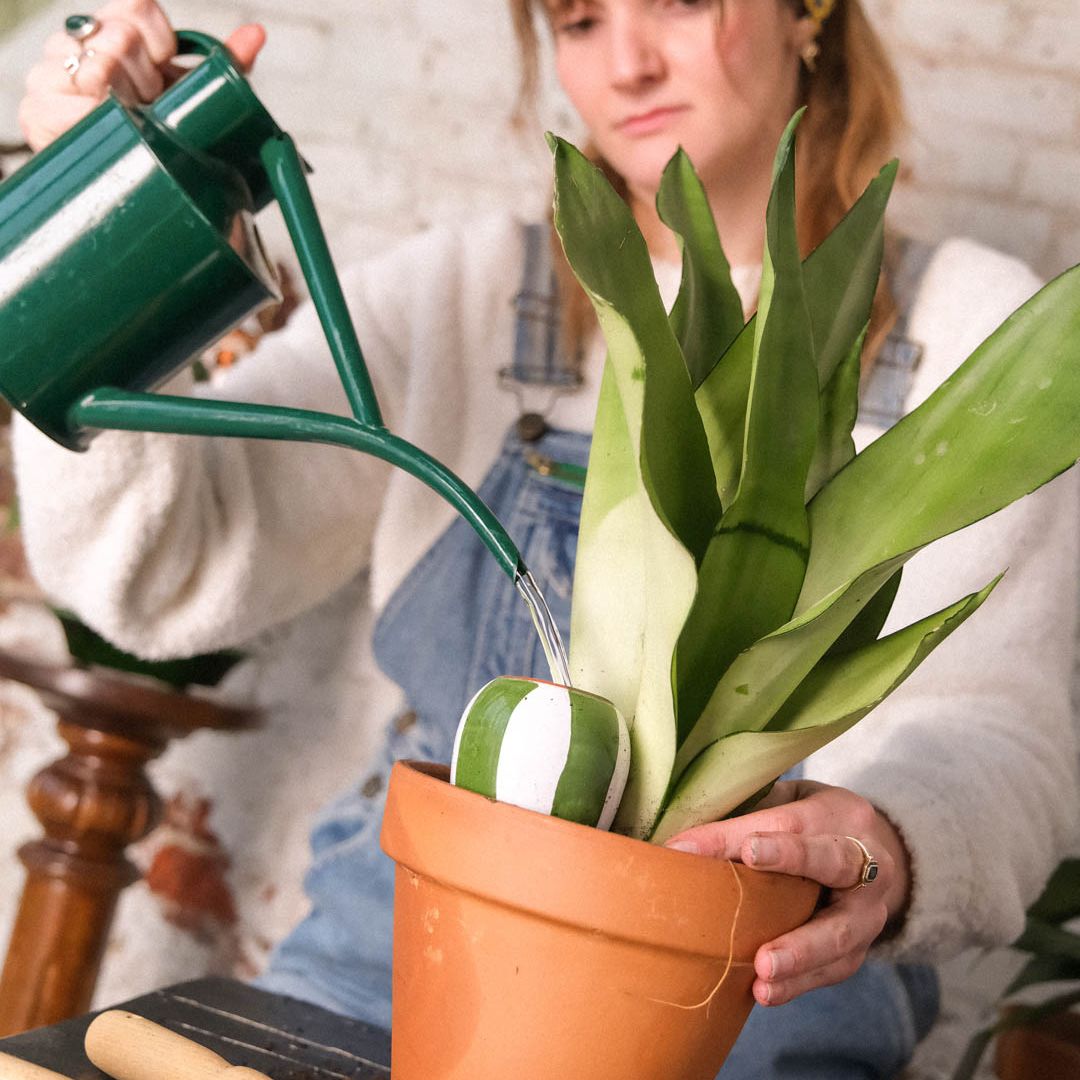
Yes, absolutely. oyas work just as well in a living room pot as in a balcony planter or terrace pot. They're even a great ally for spacing out watering during hot spells or long weekends. Bury the oya two-thirds deep in the substrate, fill through the neck, and close with the stopper provided to limit evaporation.
Does it work for cherry tomatoes in a pot?
Yes. Cherry tomatoes in balcony pots are particularly sensitive to uneven watering. A classic oya planted in the pot helps maintain more consistent moisture between refills. Nothing complicated: it's exactly the same principle as with an indoor monstera or ficus.