
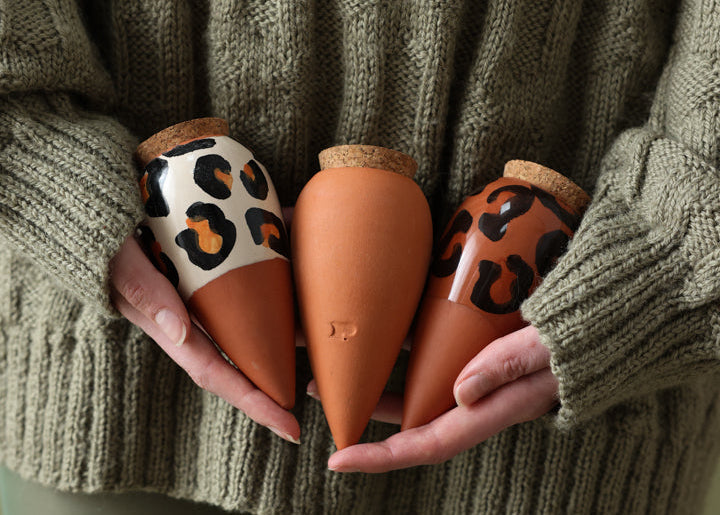
What is an oya and where does this watering system come from?
An oya (also written "olla") is a microporous terracotta pot that you bury directly in the soil or in a plant pot, filled with water. Its role? To slowly release water through its walls to hydrate the roots without any effort on your part. If you're looking to explore our selection of oyas, you'll quickly discover that this little object has stood the test of centuries.
The word "olla" comes from Spanish and simply means a jar or terracotta pot. But the principle of the oya for watering is far older than the word itself. Archaeological excavations in China and Iran have revealed similar systems dating back over 4,000 years. This technique can also be found in North Africa and the Middle East, wherever water was too precious to waste.
These jars were used on a large scale in agriculture, buried between rows of crops in arid regions. The principle hasn't changed one bit since then. What has evolved is the format: today, the oya in terracotta comes in a miniature version, designed for your houseplants. A millennia-old oya watering system, brought up to date with a careful finish. Not bad, right?
How oya watering works: the capillarity principle explained
Let me explain this simply. Terracotta is a naturally porous material. If you look at an oya very closely (really very closely), its surface is riddled with micro-pores invisible to the naked eye. These tiny channels allow water to pass through the wall, but very slowly. That's the whole elegance of the system.
The mechanism relies on capillarity. Water naturally migrates from the wet zone (the inside of the oya) to the dry zone (the soil in your pot), following the moisture gradient. Imagine a sponge placed against a dry surface: moisture gradually spreads towards the area that lacks it. Oya watering works on exactly this principle.
The result is remarkable: your plant receives water only when it needs it. When the substrate is already moist, diffusion slows down or even stops. Result: the risk of overwatering (the leading cause of houseplant death, let's not forget) is almost entirely eliminated. And since water is delivered directly to the root zone, surface evaporation becomes negligible. This is how using an oya transforms your watering routine: the oya in irrigation self-regulates, and you get to relax.
What size oya to choose and how many to get?
That's the question everyone asks, and the answer depends on one simple criterion: the diameter of your pot.
Here are the concrete guidelines: a mini oya is suitable for pots with a diameter of less than 15 cm. For pots with a diameter of 15 cm or more, a classic oya does the job. These values can vary depending on the porosity of the substrate, the type of plant (a fern and a cactus don't have the same needs), the season and the ambient temperature. In summer, diffusion speeds up; in winter, it naturally slows down.
How many to get? The basic rule: one oya per plant for watering. For very thirsty plants or large planters, you can use two. My advice: start with a single oya and observe the refill frequency for one to two weeks. You'll quickly get a precise sense of your plant's rhythm.
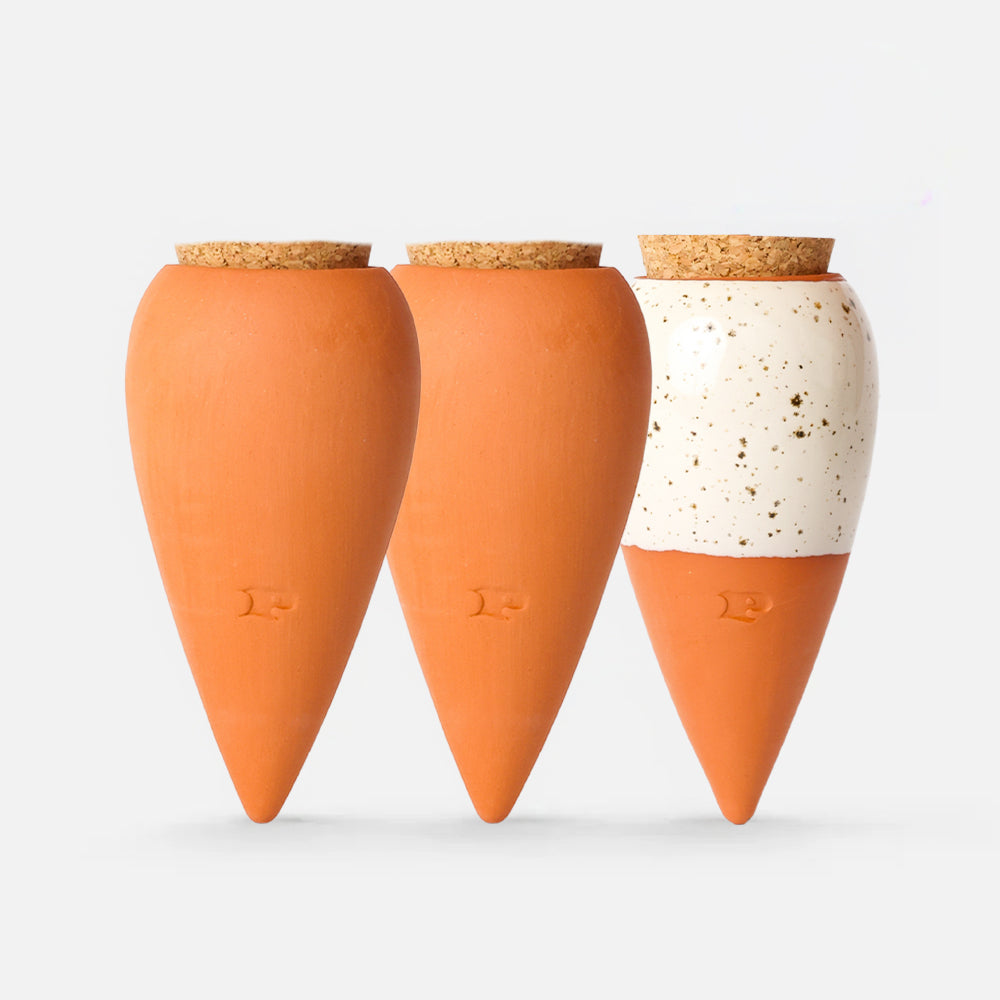
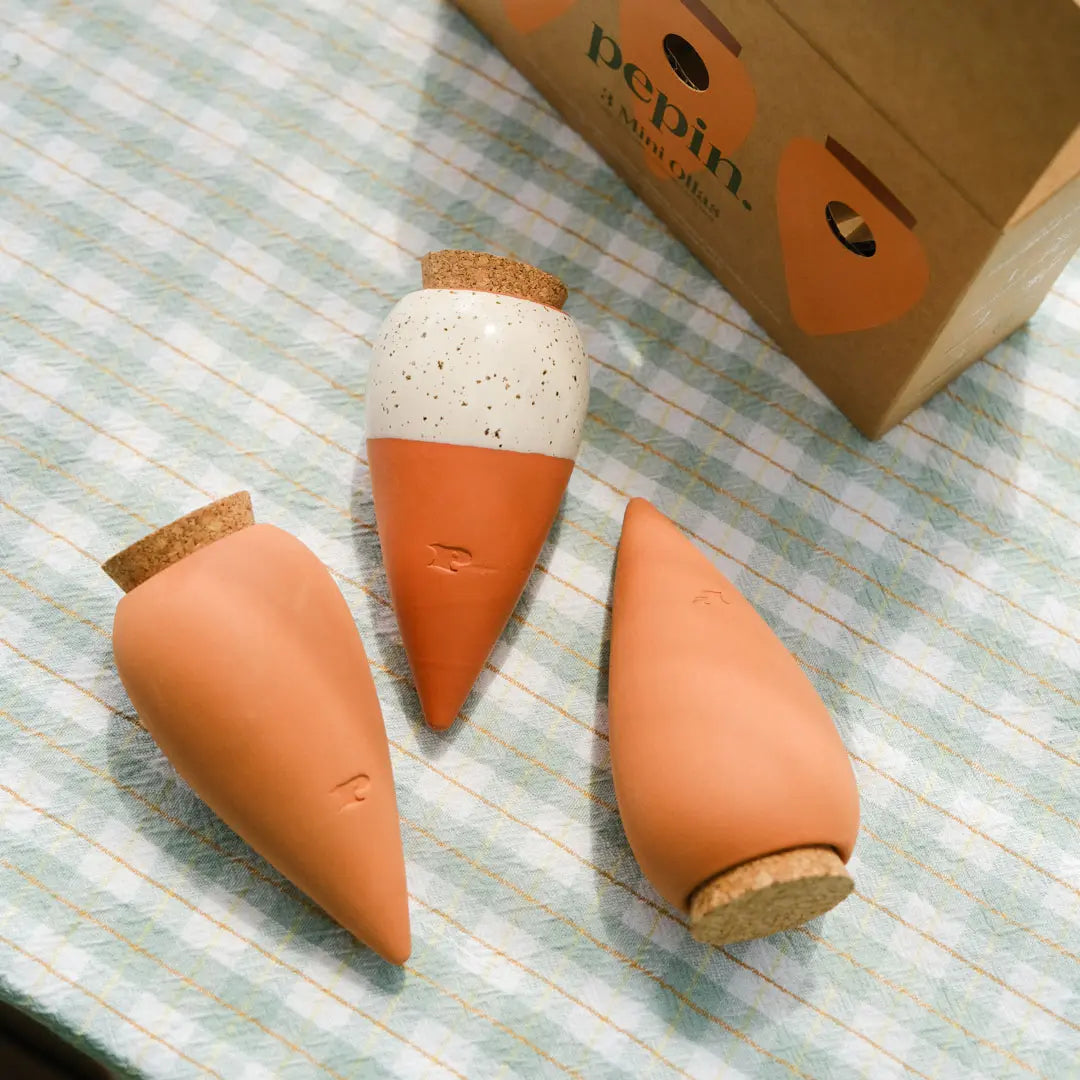
If you have several small pots to equip, the trio format is ideal. The Trio Mini Ollas Les Léopards lets you equip three pots at once, with a style that doesn't hurt either. You can also discover our terracotta oyas to find the right size for each oya for watering your plants.
How to use an oya: a step-by-step guide
Just received your first oya? Here's how to get started with this oya watering system.
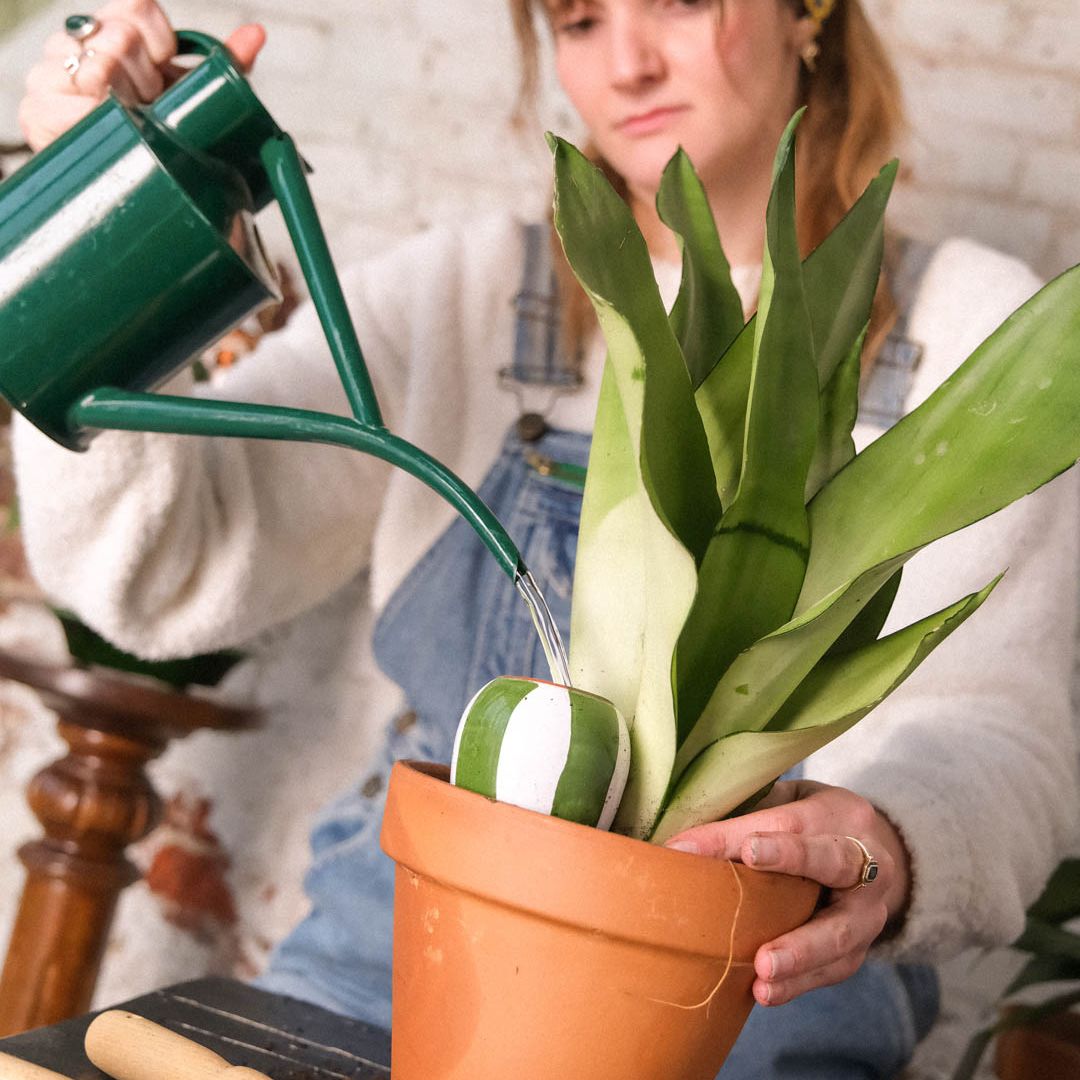
First step: plant the oya at the heart of the root ball, pushed in deep enough so that the majority of its porous surface is in contact with the substrate. The neck and stopper must remain above the surface. That's the whole principle of watering with an oya: maximising the soil-ceramic contact.
Fill with water at room temperature, up to the neck, then close with the cork stopper. This detail matters: the stopper limits evaporation from the top and prevents gnats from getting in. Opt for filtered water or rainwater: less limescale means less maintenance and an oya that lasts longer.
In terms of frequency, plan on a refill every 3 to 7 days depending on the plant and the season. In winter, some oyas can easily last ten days. To use your oya properly, a regular glance at the water level is enough. For maintenance, a simple rinse with clean water does the trick. If limescale deposits appear, soaking in a diluted water and white vinegar mixture will sort it out. Models like the Olla Terracotta or the Olla Blanc grainé are perfect for standard-sized pots.
The concrete advantages of the oya over other watering methods
Manual watering? Risk of forgetting one day, drowning the next. Electric automatic system? Expensive, complex, not always suitable indoors. Glass or plastic cones? Functional, but less precise and rarely long-lasting. The oya for watering stands out in several ways.
First, water savings. Studies on oya irrigation in agriculture estimate a reduction in water consumption of 50 to 70% compared to conventional watering. That's significant, even at the scale of a living room pot.
Then, zero overwatering. The capillarity self-regulation mechanism eliminates the number one problem for indoor gardeners. Your plant drinks what it needs, no more.
The material matters too: 100% natural terracotta, handcrafted in Portugal, plastic-free, durable and biodegradable. And let's be honest, an oya in a pretty pot looks great. It's a decorative object in its own right.
To be transparent, oya watering does have its limits. It doesn't suit all substrates (too compact or too free-draining), and still requires regular refilling. But compared to the alternatives, the simplicity-to-efficiency ratio is hard to beat.
Frequently asked questions about oya watering
What is the oya watering technique?
The principle is simple: a microporous terracotta pot filled with water is buried in the plant's substrate. The water slowly passes through the walls by capillarity, according to the plant's actual needs. When the soil is moist, diffusion slows automatically. It's a fully self-regulating oya watering system, with no electricity or programming required.
What are the downsides of oyas?
The oya requires regular refilling, every 3 to 7 days depending on conditions (and up to 10 days in winter for some plants). It may not be sufficient on its own for very thirsty plants in the height of summer. The substrate must be loose enough to allow good diffusion: soil that is too compact or too free-draining reduces its effectiveness. Finally, limescale deposits can build up over time, but cleaning with diluted white vinegar solves the problem.
How do you use an oya to water your plants?
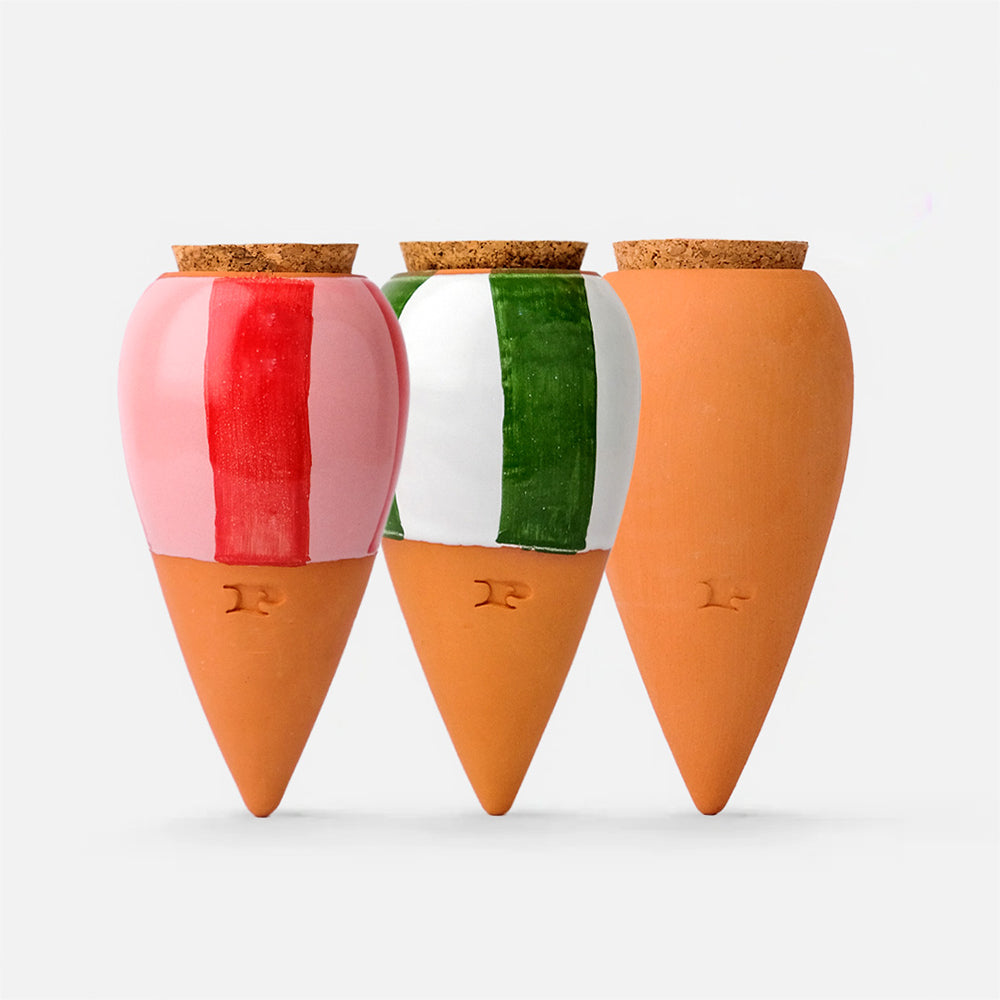
Plant the olla in your plant's substrate, pushed well into the soil, with the neck and stopper protruding above the surface. Fill with water at room temperature and replace the cork stopper. Check the level every 3 to 7 days and top up as needed. For equipping several small pots, the Trio Mini Ollas The Striped is a practical and elegant option.
What size oya should I choose for my pot?
For pots with a diameter of less than 15 cm, a mini oya is sufficient. For pots with a diameter of 15 cm or more, go for a classic oya. If your plant is particularly thirsty or you have a large planter, don't hesitate to use two. The tip: observe the refill frequency for two weeks to adjust.